
The discovery of nearly 540 million tons of lithium-bearing rock in the Jijiaoshan mining area of Hunan Province marks a seismic shift in the race for clean energy minerals and battery dominance. For years, the global supply chain has leaned heavily on the “Lithium Triangle” in South America and the hard-rock mines of Australia, but this massive find positions China to drastically reduce its external vulnerabilities. As the world accelerates its transition toward electric vehicles and massive grid-scale storage systems, the control of raw materials has become as strategically significant as oil was in the twentieth century. This new deposit is not merely a geological curiosity; it is a foundational pillar that supports China’s ambition to maintain its leadership in the battery industry. By integrating this resource into its existing manufacturing ecosystem, the nation is effectively building a closed-loop system that could insulate it from the price volatility and geopolitical leverage often wielded by other mineral-exporting countries across the globe.
Geological Richness: Assessing the Multi-Mineral Potential
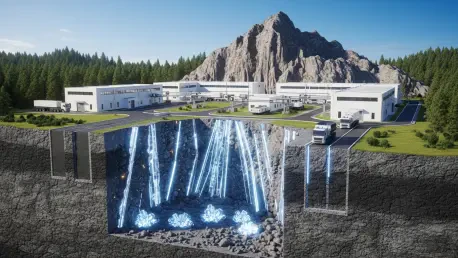
The geological profile of the Hunan deposit, specifically categorized as an altered granite-type formation, offers far more than just a high volume of lithium to the growing energy market. Researchers have confirmed that the site is rich in critical secondary metals, including significant concentrations of tungsten, tin, and rubidium, which are integrated into the same rock structures. This multi-metal composition is vital for the economic sustainability of the mining operation because it allows for a diversified revenue stream from a single site. In the high-stakes world of mineral extraction, the ability to harvest several valuable materials simultaneously acts as a natural hedge against the fluctuating market prices of any single commodity. Tungsten and tin are indispensable for advanced electronics and aerospace applications, meaning this discovery supports a broader range of high-tech industries beyond just battery production. The presence of rubidium further enhances the value, as it is increasingly sought after for specialized scientific instruments.
Despite the moderate grade of the lithium itself, the sheer scale of the Jijiaoshan area compensates for concentration through sheer volume and sophisticated logistical optimization. Engineers have calculated that the site holds approximately 3.57 million tons of lithium carbonate equivalent, a figure that places it among the most significant discoveries of the current decade. The industrial strategy here focuses on high-throughput processing, where massive quantities of ore are treated to extract the desired metals with maximum efficiency. This approach is made possible by China’s existing infrastructure and expertise in large-scale metallurgical processes, which have been refined through years of dominant market positioning. By processing these ores domestically, the country bypasses the need for long-distance transport of raw materials, which often adds significant costs and carbon emissions to the final product. This geological treasure trove essentially provides a localized “supermarket” of raw materials that fuels the entire battery manufacturing chain.
Exploration Excellence: Implementing Advanced Aerial Logistics
Securing these resources required a masterclass in modern exploration technology, as the Linwu County landscape is characterized by steep, nearly vertical mountain peaks and dense vegetation. Traditional exploration methods would have taken decades to yield results in such a hostile environment, but the deployment of heavy-duty industrial drones revolutionized the timeline. These unmanned aerial vehicles were used to ferry heavy drilling equipment, supplies, and personnel to remote locations that were previously considered unreachable by ground vehicles. This leap in logistics allowed geologists to execute an extensive exploration program, ultimately completing over 295,000 feet of drilling to map the subterranean structures with precision. The use of digital twins and 3D geological modeling further enhanced the accuracy of the findings, ensuring that the mining plan targets the most resource-dense zones first. This successful application of technology serves as a blueprint for future mineral exploration in other geographically challenging regions.
Beyond the physical challenges of the terrain, the speed at which this discovery transitioned from exploration to formal licensing highlights the efficiency of the regional administrative framework. Government authorities have already granted a mining license for the Jijiaoshan area, authorizing the extraction and processing of roughly 22 million tons of ore on an annual basis. This rapid turnaround is essential for maintaining the momentum of the green energy transition, where delays in raw material procurement can lead to production bottlenecks. The integration of advanced sensors and automated monitoring systems within the mine site ensures that the extraction process is closely tracked for safety and output consistency. By combining aerial logistics with sophisticated data analytics, the project demonstrates how the mining industry is evolving into a high-tech sector that relies as much on software and robotics as it does on heavy machinery. This technological edge provides a competitive advantage that goes beyond the physical minerals themselves.
Future Considerations: Strategic and Environmental Outcomes
The scale of the Hunan discovery significantly altered the international landscape of mineral wealth, pushing the regional share of global lithium reserves to approximately 16.5 percent. This increase moved the nation into a dominant second-place position worldwide, trailing only Chile in terms of total identified lithium resources available for extraction. This shift proved particularly consequential because it reduced the historical reliance on spodumene imports from Australia, which had served as a critical but vulnerable link in the battery supply chain. By bolstering these domestic reserves, the industry effectively created a strategic buffer against potential trade disruptions or diplomatic tensions that could have threatened energy security. For international markets, this move signaled the emergence of a more self-sufficient production model, which led to immediate shifts in global pricing dynamics as a major consumer became its own primary supplier. Other nations recognized the urgent need to accelerate their own projects.
Looking ahead, the success of the Jijiaoshan project demonstrated that securing a clean energy future necessitated a balance between aggressive resource extraction and stringent ecological stewardship. Stakeholders focused on scaling these sustainable mining technologies to other sites to ensure that the quest for green energy did not result in localized environmental degradation. Investment in lithium recycling programs also accelerated to complement primary extraction, creating a circular economy that reduced the long-term pressure on natural landscapes. As the industry progressed, the integration of artificial intelligence in ore sorting and processing efficiency further optimized resource recovery while minimizing waste. The global community learned that true energy independence was not just about finding new deposits, but about refining the methods used to bring those resources to market in an ethical and efficient manner. These efforts ensured that the mineral-rich regions could contribute to global climate goals without sacrificing the stability of their environments.