
The sudden and catastrophic loss of electrical power for more than ten thousand residents across Northeast Ohio during a record-breaking heat wave in July 2025 exposed the deep-seated vulnerabilities of a grid supposedly fortified by billions of dollars in recent capital investments. This blackout occurred just one week after state regulators denied the utility’s request to relax its service standards, creating a public relations disaster that fueled accusations of corporate negligence. Residents were left to struggle without air conditioning in triple-digit temperatures, highlighting a severe breakdown in the relationship between the provider and the community. This failure emphasizes a growing gap between massive financial outlays and actual performance. While the company claims to be modernizing its systems, recurring outages suggest that the local infrastructure remains surprisingly fragile. The situation has forced a larger conversation about how investor-owned utilities prioritize profit over the safety of the public.
Regulatory Resistance and Operational Failures
The conflict between state oversight and corporate autonomy reached a boiling point when the utility petitioned the Public Utility Commission of Ohio to significantly lower its reliability requirements. By requesting an 11.5 percent reduction in performance standards, the company essentially sought permission to allow more frequent and longer-lasting service interruptions without the threat of financial penalties. This strategy was viewed by consumer advocacy groups as a blatant attempt to move the goalposts rather than addressing the underlying technical issues that plague the regional grid. Regulators were quick to point out that the existing standards were already minimal and that reducing them would further endanger public safety during extreme weather events. The commission’s firm refusal served as a clear message that the burden of reliability rests solely with the utility, not with the customers who are already paying record rates for power.
The Pursuit of Lower Standards: A Shift in Accountability
The commission’s rejection of the proposal to relax standards was rooted in the principle that utility companies must remain strictly accountable for the quality of the service they provide to the public. If the request had been granted, the company would have been shielded from the legal and financial consequences of system failures that are often within its control to prevent. This attempt to lower the bar came at a time when the utility’s internal data showed a decline in performance across several key metrics, including the frequency of unplanned interruptions. Critics argued that the company was looking for a regulatory “safety net” to protect its bottom line from the inevitable costs of an aging and poorly maintained distribution network. By maintaining the current standards, regulators have forced the utility to confront its operational shortcomings directly. This ensures that any future rate increases must be justified by tangible improvements in reliability rather than just administrative promises.
Performance Discrepancies: The Gap Between Rates and Reliability
Despite the infusion of ratepayer-funded capital aimed at grid modernization, the actual data regarding service interruptions paints a starkly different picture of the current state of the infrastructure. The utility’s three major Ohio branches have consistently failed to meet basic benchmarks for outage duration and frequency, leaving many wondering where the investment capital has actually been spent. For years, customers have paid extra fees specifically designated for grid improvements, yet the resilience of the system appears to have stagnated or even declined in certain areas. This disconnect suggests that the current investment strategy may be misaligned with the actual physical needs of the distribution network. Regulators have expressed frustration over the company’s inability to translate high spending into better service, noting that the public interest is not being served when costs rise without a corresponding increase in reliability.
Infrastructure Erosion: The Reality of Technical Neglect
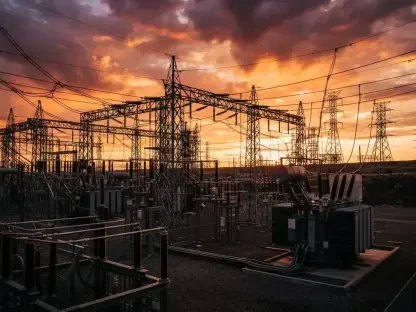
Engineering reports and technical audits indicate that the utility has long struggled with localized neglect and a failure to modernize critical components of its aging infrastructure. Specifically, the Cleveland Electric Illuminating Co. has been under intense scrutiny after being cited for failing to meet duration standards for two consecutive years due to recurring equipment failures. Local officials and independent experts argue that these blackouts are frequently caused by specific, high-risk substations and circuits that have demonstrated a clear pattern of weakness. The failure to address these known issues suggests that the company has focused more on large-scale, high-visibility projects rather than the granular maintenance required to keep local neighborhoods powered. Transformers that are decades past their intended life span continue to serve as critical failure points, highlighting a reactive maintenance culture that only addresses problems after they occur.
Human Consequences: The Vulnerability of Critical Care Patients
The technical shortcomings of the power grid have far-reaching human costs that extend well beyond mere inconvenience, particularly for the most vulnerable members of the community. In recent months, there have been documented cases where residents on medical life-support systems were placed in immediate physical danger when backup systems failed during extended outages. For the elderly and those with chronic respiratory conditions, a stable supply of electricity is necessary to power air filtration and cooling systems during the intense heat of the summer months. When the grid fails, the local social safety net is pushed to its breaking point as emergency services are flooded with calls for help from those who cannot survive without power. This reality underscores the fact that utility reliability is a fundamental component of public health and safety. The failure to maintain a resilient grid represents a significant breach of the implicit contract between a utility and the residents.
The Financial and Social Impact of Grid Fragility
Beyond the immediate operational failures, the ongoing issues with grid reliability have created a cascading effect of economic and social instability throughout the region. The lack of a dependable power supply acts as a hidden tax on everyone from individual homeowners to large industrial manufacturers who must invest in expensive backup solutions. This fragility has eroded public trust and raised serious questions about the long-term viability of the current utility management model. As the frequency of weather-related outages increases, the community is left wondering if the billions of dollars already spent on modernization were simply a way to inflate corporate assets without providing a corresponding public benefit. The financial burden of these failures is often shifted onto those least able to afford it, creating a cycle of economic hardship that stifles regional growth and leaves many feeling abandoned by the very companies they are forced to support.
Fiscal Mismanagement: The Cost of Modernization Without Progress
A significant point of contention for both regulators and the public is the lack of clarity regarding the billions of dollars that have been collected for grid modernization over the past decade. A 2019 order allowed the utility to collect millions through a special rider, but subsequent audits revealed that these funds were frequently co-mingled with general corporate accounts. This practice has made it nearly impossible for independent monitors to verify that the money was actually used to replace old poles, wires, and transformers as originally intended. When dedicated infrastructure funds are used for other corporate purposes, the physical grid inevitably suffers, leading to the very outages that the modernization efforts were supposed to eliminate. This perceived mismanagement of public funds has led to calls for more aggressive oversight and a complete restructuring of how utility spending is tracked and reported to the state and the public at large.
Economic Repercussions: The Burden on Local Small Businesses
The regional economy suffers immensely every time the grid fails, with small businesses often bearing the brunt of the financial losses associated with unexpected downtime. When power is lost, many retailers cannot process transactions, restaurants are forced to discard thousands of dollars in perishable inventory, and service providers lose valuable billable hours. These losses are rarely fully compensated, and for many struggling entrepreneurs, a single extended outage can mean the difference between staying in business and closing their doors forever. The cumulative economic impact of these service interruptions acts as a major deterrent for new businesses considering moving into the area. In an increasingly digital economy, a reliable power supply is a prerequisite for growth, and the current instability of the local grid is seen as a significant barrier to achieving long-term prosperity. Business leaders are now demanding a seat at the table to ensure their needs are prioritized.
Transparency Deficits: Investigating the Misallocation of Funds
The lack of transparency in utility spending has created a deep sense of skepticism among policymakers who are tasked with approving future rate increases. Recent investigations have focused on how the company categorizes its expenditures, with some suggesting that routine maintenance is being rebranded as “modernization” to justify higher fees for consumers. This accounting maneuver allows the utility to maintain high profit margins while the actual physical state of the grid remains precarious and prone to failure. Without a granular, line-item audit of every project, it remains unclear whether the utility is truly innovating or simply performing the bare minimum to keep the lights on. The call for greater transparency is not just about financial accountability; it is about ensuring that every dollar paid by a ratepayer directly contributes to a safer and more reliable energy future. New regulations may soon require third-party verification for all major capital projects to prevent further fund diversion.
Restoring Public Trust: Addressing Institutional Corruption
The utility’s reputation has been significantly tarnished by its historical involvement in the House Bill 6 bribery scandal, which continues to influence public perception and regulatory decisions today. This case, often described as the largest public corruption scandal in the history of the state, involved a coordinated effort to secure favorable legislation through illegal means. The legacy of this scandal has left the public wondering if current requests for lower reliability standards are merely a continuation of a culture that prioritizes political influence over operational integrity. Restoring trust will require more than just a change in leadership; it will require a fundamental shift in how the utility interacts with both the state government and its customers. The company must prove that it has moved past its history of corruption and is now fully committed to its role as a provider of a vital public service. The burden of proof now lies entirely with the utility’s executives.
Strategic Reforms: Implementing Performance-Based Utility Models
The path forward for the regional power grid likely involves a transition toward a performance-based regulatory model that ties corporate profits directly to service reliability and customer satisfaction. Under such a system, the utility would only be allowed to earn its full authorized return if it meets or exceeds strict benchmarks for outage frequency and restoration times. This would create a powerful financial incentive for the company to prioritize grid hardening and proactive maintenance over executive bonuses or stock buybacks. Furthermore, the integration of smart grid technologies and localized microgrids could provide the resilience needed to withstand the increasingly volatile weather patterns seen in recent years. By decentralizing the power supply and giving communities more control over their energy resources, the state can reduce the impact of a single point of failure within the larger network. These strategic reforms are essential for creating a modern energy system that is both reliable and accountable.
The failures observed throughout 2025 and 2026 provided a stark lesson in the dangers of prioritizing corporate convenience over the structural integrity of essential public utilities. It became clear that the traditional model of utility oversight was insufficient to prevent the systemic neglect that led to widespread outages and economic hardship. Moving forward, the most effective solution involved a fundamental shift toward rigorous, transparent auditing of every dollar designated for grid modernization. State legislators and regulators took decisive action by implementing real-time monitoring of infrastructure health and enforcing strict financial firewalls for ratepayer funds. These measures were designed to ensure that future investments resulted in physical grid hardening rather than administrative growth. The path to recovery required a renewed commitment to technical excellence and a rejection of the political maneuvering that previously clouded the utility’s primary mission. Ultimately, the focus transitioned toward decentralized energy solutions and local microgrids to provide the resilience that the centralized system failed to deliver.