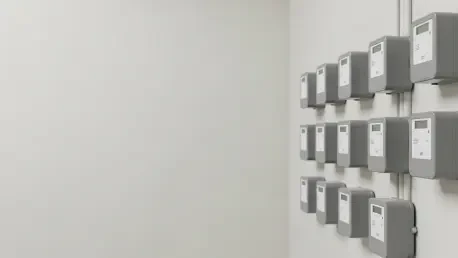

The landscape of the Australian energy sector is undergoing a profound transformation as major utility providers transition away from manual infrastructure toward highly integrated digital ecosystems. Origin Energy, a dominant force in the domestic market, has recently partnered with Landis+Gyr to launch an ambitious initiative aimed at modernizing its gas metering network. This project involves the large-scale deployment of Internet of Things (IoT) technology, converting conventional gas meters into sophisticated, connected devices. By digitizing these assets, the company seeks to drastically improve operational oversight and ensure the delivery of high-precision services to millions of residential and commercial end-users. The transition reflects a broader industrial movement toward automation, where data-driven insights replace antiquated physical inspection routines. This strategic collaboration is not merely a technical upgrade but a foundational shift that positions the Australian utility sector at the forefront of the global energy transition.
Strategic Retrofitting: Balancing Innovation and Capital Preservation
A fundamental pillar of this modernization program involves the adoption of a cost-effective retrofit model that bypasses the need for wholesale hardware replacements. Instead of discarding existing meters, which would incur massive capital expenditures and generate significant waste, the initiative utilizes intelligent IoT modules that attach directly to the legacy equipment. This approach allows the organization to breathe new life into its established physical assets while significantly reducing the logistical burden of a national rollout. By preserving the existing infrastructure, the company effectively extends the functional lifespan of its mechanical components, ensuring that the transition to a digital network is both economically sustainable and environmentally responsible. Such a strategy demonstrates a pragmatic understanding of industrial scalability, where incremental upgrades provide the same high-level functionality as brand-new installations at a fraction of the total cost.
Beyond the financial advantages, the decision to employ a retrofit strategy significantly minimizes the impact on the daily lives of consumers and business operations. Traditional meter replacements often necessitate service interruptions, requiring technicians to shut down gas supplies and perform intrusive site visits that can frustrate residents. In contrast, the installation of these smart IoT modules is a non-invasive process that does not require the disconnection of gas services or physical entry into secure areas of the property. This ensures a continuous and stable supply of Liquefied Petroleum Gas throughout the transition period, maintaining customer trust while the utility builds a more advanced monitoring network. By prioritizing the user experience, the company successfully avoids the common friction points associated with large-scale infrastructure projects. This seamless integration allows for a swift expansion across diverse geographic regions without compromising service reliability or customer satisfaction.
Operational Evolution: Navigating Technical and Digital Integration
Bridging the connectivity gap for gas infrastructure has historically presented a unique set of technical hurdles compared to the digitization of electricity networks. Unlike power meters, which have access to a constant current, gas meters must operate autonomously in locations that are frequently remote or shielded by physical barriers like concrete and metal. To solve this problem, the newly deployed modules utilize specialized low-power wide-area network technology, which is engineered for deep signal penetration and extreme battery efficiency. This standard allows the devices to maintain reliable communication links over long distances while consuming minimal energy, ensuring that they can function for years without requiring battery replacements or manual maintenance. By adopting these specific communication protocols, the utility has successfully addressed the power constraints that previously limited the scope of gas digitization. This technical breakthrough enables a level of connectivity that was previously deemed too complex or expensive for large-scale application.
The successful implementation of the IoT rollout provided a definitive framework for how traditional energy retailers managed the transition to a fully digitized infrastructure. It was observed that the primary value of such a network did not reside in the hardware itself, but in the visibility afforded by a continuous stream of granular usage data. For other utility providers looking to modernize, the project suggested that a retrofit-first approach offered the most viable path toward rapid scalability without exhausting capital reserves. The transition also emphasized the necessity of adopting low-power communication standards that guaranteed device longevity in challenging industrial environments. Moving forward, the focus shifted toward developing sophisticated analytics platforms capable of turning this raw data into predictive maintenance schedules and personalized customer insights. Ultimately, the industry moved away from reactive service models, proving that remote monitoring and automated data collection were the new benchmarks for operational excellence in the modern era.