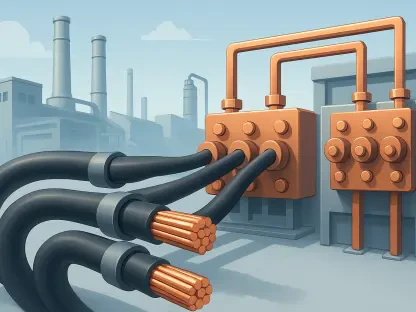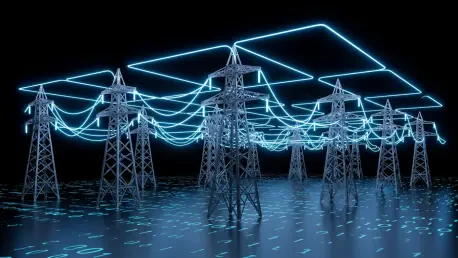

The invisible architecture of the global power grid remains one of the most significant engineering triumphs of the last century, providing the vital lifeblood for every critical service from healthcare to national defense. However, this vast network of copper, steel, and stone is currently facing a fundamental identity crisis as it attempts to integrate twenty-first-century digital intelligence with mid-twentieth-century industrial hardware. While the physical components were designed for extreme durability and predictable mechanical failure, they were never intended to exist within a world of persistent, invisible network connectivity. This collision of eras has created a dangerous paradox where the very systems meant to increase efficiency and facilitate the transition to renewable energy now serve as expansive attack surfaces. As the reliance on electricity deepens in an increasingly automated society, the fragility of the underlying technology becomes more apparent, highlighting a massive gap between our absolute dependence on power and the precarious state of the machines that deliver it to homes and businesses.
The Structural Burden: Aging Legacy Systems
Industrial control systems, including programmable logic controllers and supervisory control and data acquisition units, often remain in active service for thirty or forty years, long outlasting the software environments for which they were originally built. These aging devices represent a form of permanent security debt, as they frequently run on obsolete code bases that are no longer supported by their original manufacturers. Because these systems were deployed before the concept of cybersecurity became a mainstream industrial requirement, they lack even basic encryption and authentication protocols. Replacing this hardware is an immense logistical and financial challenge that cannot be accomplished overnight, leaving utilities with the difficult task of shielding vulnerable machines from a modern threat landscape. The difficulty is further compounded by the fact that these devices are responsible for managing physical processes that, if interrupted, could result in catastrophic damage to the equipment itself.
Maintaining these legacy systems requires a delicate balance between operational continuity and the necessity of applying security updates that may or may not be compatible with archaic hardware. Unlike a standard corporate office environment where a failed software patch results in a minor inconvenience, a similar failure in an operational setting can lead to physical explosions, fires, or the total destruction of multi-million dollar transformers. This risk profile often leads to a culture of inertia, where engineers are hesitant to modify systems that have functioned reliably for decades. Consequently, the grid is populated with thousands of “set and forget” devices that are perfectly functional from a mechanical standpoint but are completely defenseless against modern digital exploits. This stagnation creates a predictable target for adversaries who specialize in identifying and exploiting the unpatched vulnerabilities that remain prevalent throughout the decentralized architecture of the power distribution network.
The Vanishing Air Gap: Convergence of IT and OT
For several decades, the primary defense for critical infrastructure was the air gap, a physical disconnection between industrial control networks and the public internet that supposedly rendered them unreachable by remote attackers. This protective barrier has effectively dissolved as the demand for real-time data analytics, remote monitoring, and predictive maintenance has forced utilities to bridge the gap between corporate IT and operational technology. Today, thousands of industrial devices are connected to the cloud to allow for more efficient load balancing and faster response times to environmental changes. While this connectivity improves the responsiveness of the grid, it also provides a direct path for malware to jump from a simple office email account into the high-voltage control room. The loss of physical isolation means that the perimeter of the power grid is no longer a fence line, but rather a collection of digital endpoints spread across the globe.
The convergence of these two distinct environments has introduced a cultural clash between IT security professionals and the engineers who operate the physical machinery of the grid. IT teams are typically focused on the confidentiality and integrity of data, whereas operational technology specialists prioritize availability and safety above all other metrics. This fundamental difference in philosophy makes it difficult to implement standard security measures, such as multi-factor authentication or rapid vulnerability scanning, which can interfere with the low-latency communications required for grid stability. Furthermore, the use of common communication protocols in modern industrial equipment allows attackers to move laterally across a network with ease once they gain an initial foothold. By exploiting the inherent trust between connected devices, a malicious actor can gain control over sensitive subsystems without ever needing to breach a dedicated security firewall.
Strategic Infiltration: the Rise of Pre-positioning
Hostile actors have shifted their strategic objectives from immediate, noisy disruption toward a more subtle and dangerous approach known as pre-positioning within critical infrastructure. Instead of launching an attack to cause an immediate blackout, these sophisticated groups work to gain persistent access to utility networks where they can remain undetected for years. During this period of dormancy, they map out the internal logic of the grid, identify key pressure points, and develop custom exploits that can be triggered at a moment of geopolitical tension. This capability serves as a silent deterrent, essentially holding the civilian population hostage by maintaining a “kill switch” over essential services. The goal is not always destruction, but rather the creation of a psychological and strategic lever that can be used to influence national policy without ever firing a single shot. This invisible occupation of critical systems represents one of the most complex challenges for modern intelligence.
The technical methods used for this long-term infiltration often involve “living off the land” techniques, where attackers use legitimate administrative tools already present in the system to hide their activity. By avoiding the use of identifiable malware, these actors can bypass traditional signature-based detection systems that look for known threats. This makes it incredibly difficult for security teams to distinguish between a routine maintenance task performed by a legitimate technician and a malicious action intended to compromise a circuit breaker. The blurring of lines between normal operations and covert sabotage means that a grid could be compromised for years without any outward sign of a breach. Consequently, the defense of the power grid requires a continuous, high-fidelity monitoring strategy that looks for subtle behavioral anomalies rather than obvious red flags. This shift in detection strategy is essential for identifying the presence of sophisticated state-sponsored groups.
Operational Resilience: Designing for Physical Safety
Addressing the inherent vulnerabilities of the power grid requires a move away from purely digital defenses toward a strategy of cyber-informed engineering that prioritizes physical outcomes. This approach acknowledges that while software can be compromised, the laws of physics remain constant and can be used to build fail-safes that are immune to digital manipulation. For instance, utilities are beginning to implement hard-wired mechanical overrides and analog sensors that can disconnect a system if it reaches an unsafe state, regardless of what the digital control software commands. By re-introducing these “low-tech” solutions into high-tech environments, engineers can ensure that an attacker cannot cause a physical explosion or permanent equipment damage through a keyboard alone. This philosophy shifts the focus from preventing an intrusion to ensuring that no matter how deep an intruder gets, they cannot manifest a catastrophic real-world consequence.
In the final analysis, stakeholders determined that the security of the power grid was not a problem that could be solved with a single software purchase or a one-time audit. They recognized that the period of ignoring cyber-physical risks ended when the first regional outages were attributed to software exploits rather than environmental damage. Consequently, the industry shifted its focus toward hardware-based authentication and isolated control loops that prevented remote over-rides of critical breakers. Professionals established that the only way to safeguard the population was to bake security into the very physics of the equipment and the culture of the workforce. These coordinated efforts provided a clear roadmap for a resilient infrastructure that favored tangible physical stability over the risks of unfettered digital convenience. Through these actions, the paradox of the modern grid was addressed by grounding digital innovation in the unshakeable principles of mechanical safety.