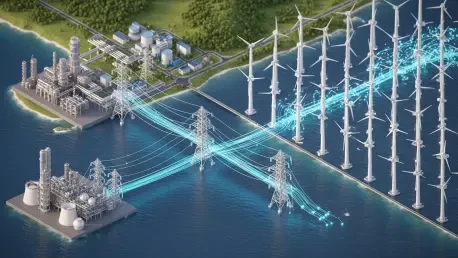

The relentless surge of global energy prices has transformed the chilling waters of the North Sea into a geopolitical chessboard where Britain’s economic survival hangs in a delicate balance. The British economy is currently reeling from an energy shock that has slashed growth projections and sent household bills soaring, yet a multi-billion dollar “treasure chest” sits just off the coast of Scotland. While the United Kingdom’s current administration has effectively padlocked this resource by banning new drilling licenses, international observers and domestic critics are questioning whether the nation is intentionally sabotaging its own energy security. The debate is no longer just about environmental policy; it has become a high-stakes tug-of-war between immediate economic survival and long-term climate goals.
The Massive Oil Field Lying Dormant Beneath the Waves
Beneath the turbulent surface of the North Atlantic lies a geological paradox that continues to haunt the British treasury. For decades, these reserves fueled a period of industrial prosperity, yet the current shift in political priorities has rendered much of this wealth inaccessible. This dormant capacity represents more than just fuel; it is a symbol of a lost industrial era that many in the northern regions of the United Kingdom are desperate to reclaim.
The refusal to grant new licenses has sparked a fierce debate over the definition of national interest. Supporters of exploration argue that the local economy is being sacrificed for an ideological purity that the rest of the world has yet to adopt. Meanwhile, the government insists that the era of fossil fuel dependence must end, regardless of the riches that might still be recovered from the seabed. This fundamental disagreement has left the energy sector in a state of paralysis, unable to commit to long-term infrastructure.
A Perfect Storm of Geopolitical Conflict and Economic Decline
The urgency of the North Sea debate is driven by the closure of the Strait of Hormuz, a move that triggered the most severe oil supply shock in modern history. As hostilities between the U.S.-Israel alliance and Iran escalated, the global energy market fractured, leaving Britain disproportionately vulnerable to price spikes and supply shortages. With the International Monetary Fund cutting the U.K.’s growth forecast to a stagnant 0.8%, the reliance on expensive Norwegian imports has shifted from a strategic choice to a financial burden that threatens the country’s industrial base.
Economic instability has trickled down to the average citizen, who faces the highest cost of living in recent memory. The sudden fragility of global shipping lanes served as a wake-up call for those who believed that globalization would always provide cheap energy. Consequently, the push for energy independence has moved from the fringes of political discourse to the center of the national security agenda, forcing a reevaluation of how the nation sources its power during times of global unrest.
The Ideological Chasm Between “Drill, Baby, Drill” and Clean Power
The conflict over the North Sea has created a sharp divide between two radically different visions for the future of British energy. On one side, proponents of fossil fuel expansion argue that domestic production is the only way to restore the economic status of cities like Aberdeen and provide a buffer against volatile international markets. On the other side, the Labour government maintains that doubling down on oil and gas is a reactive strategy that ignores the reality of climate change. Their “clean homegrown power” framework seeks to insulate the nation from global price swings by transitioning entirely to renewable sources, despite intense pressure from labor unions and opposition parties who feared the immediate loss of industrial jobs.
Energy Secretary Ed Miliband has stood firm against the calls for renewed drilling, framing the crisis as a reason to accelerate the green transition rather than delay it. This stance has drawn the ire of conservative critics who view the refusal to drill as a form of economic masochism. The political landscape is now split between those who prioritize the immediate relief of lower fuel prices and those who see the current crisis as a necessary, if painful, catalyst for structural change toward a carbon-neutral grid.
Expert Perspectives on Geological Decline and Political Rhetoric
While political figures trade barbs—with former U.S. President Donald Trump labeling the U.K.’s refusal to drill as “tragic” and “crazy”—energy experts offer a more sobering assessment of the North Sea’s potential. Geological data suggests the North Sea is a mature basin in a state of irreversible decline, meaning that even a massive influx of new licenses may not yield the “treasure chest” promised by advocates. Industry analysts pointed out that focusing on a shrinking resource might provide a temporary reprieve but fails to address the underlying structural weaknesses of the British energy grid, which remains tethered to global commodity prices regardless of local production levels.
Furthermore, the technical challenges of extracting the remaining oil are significant. As the most accessible deposits were exhausted, the cost of reaching deeper or smaller pockets increased, making the North Sea one of the most expensive regions for production in the world. This economic reality complicated the narrative of easy energy independence, as private companies required high prices and significant tax incentives to justify the risk of new offshore projects.
Frameworks for Balancing Energy Security with Economic Resilience
To navigate this crisis, policymakers implemented a strategy that balanced immediate energy needs with the transition to a low-carbon economy. A practical framework for this transition included prioritizing the maintenance of existing North Sea infrastructure to prevent a total collapse of the domestic supply chain while simultaneously scaling up subsidies for renewable energy. Protecting the workforce through targeted investment in the North East became essential to maintain social stability, ensuring that the shift away from fossil fuels did not result in an economic vacuum. Ultimately, the solution resided in a diversified energy portfolio that utilized domestic resources as a bridge to a more stable, independent energy future.
Experts emphasized that the long-term path required a total overhaul of how the nation distributed and stored power. This involved the integration of massive battery arrays and a modernized grid capable of handling the intermittent nature of wind and solar energy. By focusing on resilience rather than just production, the government sought to move beyond the binary choice of oil versus renewables. This integrated approach aimed to provide the security that the public demanded while fulfilling the environmental commitments that defined the nation’s global standing in the middle of the decade.