
Christopher Hailstone has navigated the complex corridors of utility management and renewable integration for decades, making him a primary voice in the discourse on modernizing failing infrastructure. As Puerto Rico stands at a crossroads, reeling from the legacy of Hurricane María while attempting to leapfrog into a decentralized future, Hailstone’s perspective provides a roadmap through the island’s regulatory and operational thicket. The current landscape is a precarious balancing act between three distinct forces: the slow-moving reconstruction of a century-old transmission system, an ambitious yet shifting policy framework for renewables, and the crushing financial weight of a bankrupt utility. This conversation explores the friction between those managing the wires and those generating the power, the reality of a 43% budget slash in the latest rate case, and the quiet revolution of rooftop solar that is redefining what energy independence looks like in the Caribbean.
How do the overlapping roles of the various entities currently managing the grid impact the overall stability and accountability of the system?
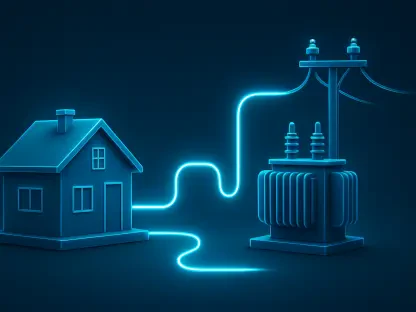
The governance of the island’s energy sector is currently a complex tapestry of fragmented responsibilities that often leaves the public wondering who to call when the lights stay off. You have LUMA Energy managing the transmission and distribution, Genera PR overseeing the thermal generation fleet, and the Puerto Rico Electric Power Authority (PREPA) still holding onto the physical assets while navigating a grueling bankruptcy. This restructuring was intended to inject private-sector efficiency and clear accountability into a broken system, but instead, it has created a environment of institutional friction. When a substation fails or a reserve margin thins during a heatwave, the overlapping jurisdictions can lead to a finger-pointing exercise that delays the urgent operational responses needed to keep the grid stable. It is a system suspended between a centralized past and a fractured present, where the administrative burden of coordinating these three entities often consumes as much energy as the grid itself generates.
With billions in federal funding available, why has the physical reconstruction of the transmission and distribution lines been so sluggish?
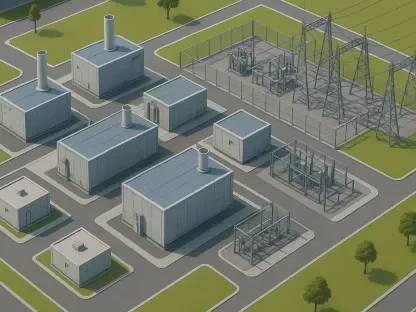
It is a profound irony that while billions of dollars in FEMA funding have been earmarked for the island, the actual boots-on-the-ground execution has moved at a pace that feels glacial to a consumer sitting in the dark. The grid remains structurally fragile because much of the infrastructure predates the catastrophic 2017 hurricane season by decades, and the sheer scale of the required modernization is staggering. We have seen measurable progress in certain areas, such as the replacement of thousands of utility poles and the slow deployment of smart-grid technologies, but these are often overshadowed by the persistent failure of aging thermal units. The bottleneck isn’t just about money; it’s about the logistical nightmare of clearing decades of overgrown vegetation and modernizing substations that were never designed for the volatile climate of the modern era. Every time a major weather event rolls through, it highlights that we are trying to build a future-proof grid on a foundation that is operationally strained and fundamentally outdated.
What does the recent decision by the Energy Bureau regarding rate hikes balance the need for grid modernization with the reality of consumer affordability?
The recent rate case is a sobering reality check for anyone who thought the transition to a modern grid would be cheap or easy. The utilities—LUMA, Genera, and PREPA—collectively asked for $3.14 billion in base-rate revenue for the 2026 fiscal year, but the Energy Bureau was incredibly firm, approving only $1.78 billion. This $1.36 billion reduction, which is roughly a 43% cut from the requested amount, signals that regulators are no longer willing to rubber-stamp “optimal” budgets that rely on unrealistic performance goals. While the bureau restructured rates so the customer charge rises from $4 to $8 in 2027 and eventually to $16 in 2028, they also dropped the energy charge by about 3.3 cents per kilowatt-hour to help soften the blow. It is a high-wire act where the regulator is trying to protect citizens from some of the highest electricity costs in the nation while still allowing enough capital for the system to not completely collapse under its own weight.
How is the shift from aggressive renewable mandates to more pragmatic interim benchmarks likely to affect the island’s energy security?
The original mandates under Act 17-2019 were among the most ambitious in the United States, targeting 40% renewable generation by 2025 and 100% by 2050, but the reality of the reliability crisis has forced a pivot toward pragmatism. Act 1-2025 has since relaxed those interim targets because there is a growing recognition that you cannot build a green future if the lights won’t even stay on today. We are seeing a “renewables first, but reliability immediately” mindset, which means that modeling now suggests we might actually need more natural gas capacity in the short term to stabilize the system. This expansion of natural gas is intended to replace those unreliable, oil-fired units that are prone to breaking down, serving as a bridge while utility-scale storage and renewable projects catch up. It is a difficult trade-off, but the priority has shifted to ensuring that the transmission backbone is resilient enough to handle the intermittency that comes with a high-renewable grid.
As residential solar and battery storage continue to explode in popularity, how is the island’s energy architecture fundamentally changing?
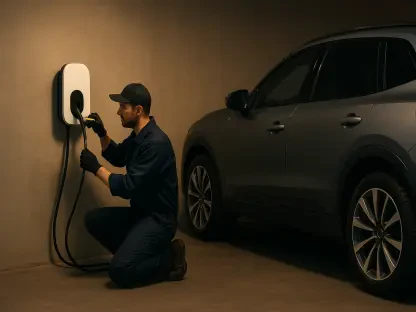
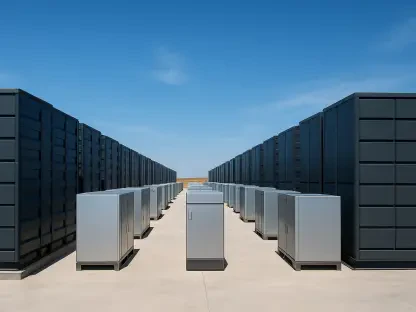
What we are witnessing is a quiet, consumer-led revolution where Puerto Ricans are effectively building the island’s future energy system themselves, one rooftop at a time. Driven by the high cost of utility power and the psychological toll of recurring outages, residential solar paired with battery storage has accelerated at a rate that far outstrips utility-scale development. This shift is moving the island toward a hybrid architecture where the old, centralized model is being replaced by a web of community microgrids and individual household power plants. By 2027, as substation rebuilds and automation come online, this distributed model will likely become the island’s most important long-term resilience strategy. It turns the traditional utility model on its head, making the consumer a critical participant in grid stability rather than just a passive recipient of whatever power the central plants manage to churn out.
What is your forecast for the Puerto Rican energy transition?
I believe that over the next two years, we will see the island emerge as one of the most decentralized and storage-dependent electric systems in the United States. The era of the monolithic, fossil-fuel-dependent utility is effectively over, and while the path forward is marred by financial disputes and the unresolved PREPA debt, the momentum toward a digital, customer-driven grid is now irreversible. If the current reconstruction efforts can finally bridge the gap between planning and execution, Puerto Rico will serve as a global case study for how island nations can survive climate risk through extreme decentralization. The real test will be whether the modernization can outpace the public’s growing fatigue with high rates and unreliable service; if it can, the result will be a grid that is finally as resilient as the people it serves.