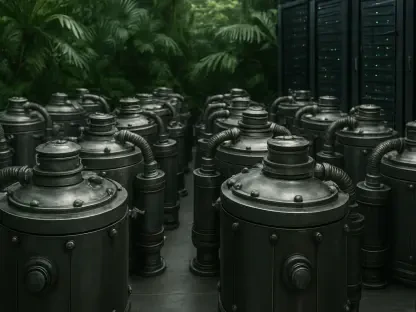
Approximately 300 specialized mining devices were found tapping directly into Mexican power lines, highlighting a sophisticated method of large-scale industrial energy theft. The clandestine operation was uncovered near the Novo-Nexaca reservoir in Puebla, revealing a facility hidden deep within a remote sector to evade public and regulatory scrutiny. Unlike legitimate cryptocurrency mining ventures that operate within the legal framework by paying for their heavy utility consumption, this specific installation bypassed all metering systems to draw power directly from a nearby hydroelectric plant. This incident represents a significant escalation in the scope of digital asset production, showing how such activities can be weaponized against the essential electrical stability of a sovereign nation. The discovery has effectively ignited a nationwide debate concerning the protection of critical energy infrastructure against high-tech, unauthorized consumers who prioritize profit over public safety.
Technical Infrastructure: The Mechanics of Industrial Energy Theft
The sheer technical scale of the Puebla operation highlights the high level of organization required to run a successful illegal farm in the current technological climate. Authorities seized a vast array of Application-Specific Integrated Circuits (ASICs) and high-end Graphics Processing Units (GPUs), hardware specifically engineered for maximum computational efficiency while requiring massive amounts of electricity. To manage the intense electrical load without triggering immediate circuit failures, the site was equipped with industrial-grade transformers and sophisticated cooling systems designed to prevent the hardware from overheating under constant stress. Because the remote location lacked traditional terrestrial internet infrastructure, the operators utilized high-bandwidth satellite antennas to maintain a constant, low-latency connection to the global blockchain. This setup ensured that the stolen power was continuously converted into digital currency, demonstrating a level of engineering expertise usually reserved for legal data centers.
While cryptocurrency exists primarily in a digital space, the physical requirements for large-scale mining make these operations increasingly difficult to conceal from modern surveillance techniques. The primary indicators of a hidden industrial farm include extreme heat signatures and a constant acoustic profile generated by high-velocity industrial cooling fans. Beyond the immediate environmental impact, the most significant tell-tale sign for utility providers is a disproportionate and unexplained load on the regional power grid that does not align with known residential or commercial zones. These energy parasites often cause localized power fluctuations and subtle damage to public utility hardware, forcing law enforcement agencies and electricity companies to collaborate on monitoring consumption patterns more aggressively. By analyzing grid harmonics and load variances, technicians are now able to detect unauthorized connections more effectively, aiming to intervene before a sudden surge causes a total grid failure.
Legal Frameworks: Multi-Agency Enforcement and Financial Crimes
In many contemporary jurisdictions, the act of mining cryptocurrency remains a legitimate business activity; however, the methodology employed in these clandestine farms crosses into serious criminal territory involving national security. The legal liability in the Puebla case stems from the unauthorized appropriation of public resources and the resulting tangible damage to national infrastructure. Due to the inherent complexity of such high-tech crimes, a coordinated response was required, involving the Federal Electricity Commission, the Attorney General’s Office, and elements of the Mexican Navy. This multi-agency approach reflects a transition toward seeing energy theft as a threat to internal stability rather than a mere white-collar crime. By combining technical expertise with tactical capabilities, the government aims to not only shut down individual sites but to dismantle the broader logistical networks that threaten the integrity of the national energy supply and bypass the rule of law.
Beyond the immediate theft of electricity, investigators are deeply concerned with the underlying financial motivations and the potential for money laundering at an institutional level. There is mounting evidence suggesting that illegal mining serves as a sophisticated mechanism for criminal organizations to obscure the origins of their capital. By converting stolen energy into privacy-focused digital assets like Monero or Bitcoin, these syndicates can effectively clean profits derived from various illicit activities. International financial watchdogs have recently noted that cartels are increasingly adopting these technical methods to fund the purchase of precursor chemicals necessary for manufacturing synthetic drugs. This shift transforms a technical exploit of the power grid into a vital tool for global criminal enterprises, allowing them move funds across borders with minimal friction. The integration of high-tech mining into traditional criminal portfolios demonstrates an evolution where energy theft becomes a gateway to more severe forms of crime.
Global Security: Protecting the Future of National Grids
The incident in Mexico reflects a growing global trend where the profitability of mining is increasingly driven by the cost of entry, specifically the price of electricity. When the expense of power is eliminated through systematic theft, the return on investment becomes high enough to attract violent criminal syndicates looking for low-risk, high-reward ventures. This shift is forcing governments to reconsider how they protect their power grids and regulate the digital asset industry as a whole. As mining hardware becomes more accessible on the global black market, the protection of national infrastructure will require a proactive combination of high-tech grid monitoring and stricter legal oversight. Authorities are moving toward implementing real-time load sensors and satellite-based thermal imaging to pinpoint illegal hubs before they can destabilize regional energy systems. These measures, alongside enhanced international cooperation, establish a more resilient defense against the digital economy’s potential to undermine safety.
To address these emerging threats, utility companies and federal agencies implemented advanced grid-monitoring technologies that utilized artificial intelligence to detect anomalous consumption in real-time. Authorities deployed a network of smart meters and distributed sensors that pinpointed the exact location of unauthorized connections before significant damage occurred to the regional transformers. Furthermore, the establishment of a specialized international task force allowed for better information sharing regarding the movement of high-end mining hardware across borders. This collaborative approach successfully deterred organized crime groups by significantly increasing the risk of detection and asset seizure. Moving forward, the focus remained on integrating renewable energy sources with decentralized grid management to reduce the vulnerability of central hubs. By prioritizing the fortification of the power grid, nations effectively neutralized the threat of illegal mining while fostering a more secure environment for legitimate technological growth.