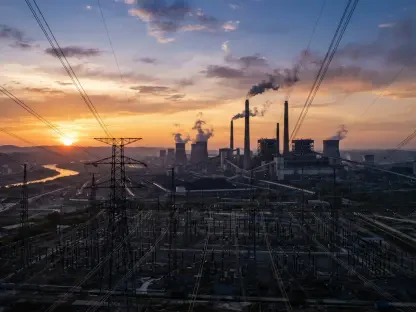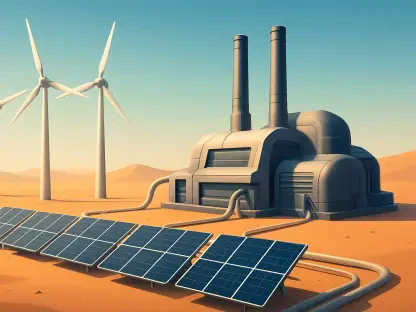

The relentless acceleration of global energy consumption has reached a critical juncture where traditional fossil fuels and even established renewable sources are no longer sufficient to power the next phase of human technological advancement. This demand is primarily fueled by the exponential growth of artificial intelligence and high-capacity computing, which require stable, high-density power far beyond the capabilities of intermittent solar or wind grids. As a result, the global industry has shifted its gaze toward the replication of stellar processes on Earth, positioning nuclear fusion as the fundamental pillar of a sustainable, high-tech civilization.
The Global Transition Toward a Star-Powered Energy Economy
The current market landscape is characterized by a dual-track approach that combines long-standing international cooperation with a surge of private sector ingenuity. Large-scale projects like ITER continue to provide essential data on magnetic confinement and Tokamak engineering, but the real momentum now resides with agile startups. These innovators are leveraging modern materials and superconducting magnets to shrink reactor sizes while increasing efficiency, effectively moving fusion from a theoretical scientific pursuit to an engineering-focused industrial race.
Rapid commercialization is no longer a distant dream but a strategic necessity driven by the voracious power appetite of decentralized data centers. AI-driven modeling has significantly reduced the trial-and-error period for new reactor designs, allowing engineers to predict plasma behavior with unprecedented accuracy. This technological synergy ensures that fusion development is not happening in a vacuum but is instead intertwined with the very computational tools it is destined to power.
Breakthroughs and Projections in the Race for Ignition
Emerging Paradigms: From Plasma Containment to Quantum Tunneling
Traditional hot fusion is facing competition from experimental paradigms that prioritize quantum-level interactions over sheer thermal force. Researchers are increasingly exploring deuterated metal environments and quantum tunneling as viable pathways to lower the activation energy required for fusion. By bypassing the extreme temperature barriers traditionally associated with plasma containment, these methodologies offer a potential shortcut to achieving net energy gain in smaller, more cost-effective facilities.
Modern AI algorithms serve as the invisible hand guiding these breakthroughs, solving the instability problem that has plagued Tokamaks for decades. These models can adjust magnetic fields in real time to prevent plasma disruptions, effectively taming the volatile forces that previously caused reactor shutdowns. Consequently, the iteration cycle for new containment vessels has accelerated, moving the industry closer to a standardized production model that favors rapid deployment over singular, massive experiments.
Mapping the Path to Commercial Viability and Grid Integration
Venture capital is flooding the sector at record levels, with investments between 2026 and 2030 projected to surpass the total funding of the previous decade. This capital infusion is earmarked for the construction of first-generation pilot plants that aim to demonstrate grid-ready power output. Market analysts forecast that these facilities will serve as the blueprint for a decentralized energy network, where modular fusion reactors provide localized, high-capacity utility services that are immune to the vulnerabilities of the traditional grid.
The transition from laboratory experiments to commercial utilities will likely trigger a radical shift in energy economics. As fusion technology matures, the marginal cost of electricity is expected to plummet, rendering energy-intensive industries like desalination and hydrogen production more viable. This abundance will facilitate a global shift away from centralized, fragile power grids toward a more resilient and distributed energy architecture that can support the needs of a growing global population.
Navigating the Physical and Engineering Barriers of Terrestrial Stars
Replicating a star without the aid of immense stellar gravity remains one of the most significant engineering challenges in human history. Containing plasma heated to millions of degrees requires magnetic pressures that push the limits of modern material science. On Earth, the absence of natural compression forces means that researchers must rely on sophisticated electromagnetic cages, which are prone to microscopic instabilities that can lead to energy loss or structural damage if not managed with absolute precision.
Furthermore, the intense neutron bombardment inherent in fusion reactions causes rapid degradation of the reactor inner lining. Managing this material fatigue, alongside the massive variance between electron and hydrogen nuclei masses, requires the development of new alloys capable of withstanding extreme conditions for years. Solving these material constraints is essential for ensuring that fusion plants remain economically sustainable over their projected multi-decade lifespans, moving the technology from the laboratory to the industrial floor.
Standardizing the Infinite: Policy and Safety in the Fusion Age
The evolving regulatory framework is carefully distinguishing fusion from traditional fission to prevent the industry from being stifled by excessive red tape. Unlike fission, fusion poses no risk of a runaway chain reaction and produces minimal long-lived radioactive waste, allowing for a more streamlined safety certification process. International standards are currently being drafted to manage the handling of tritium and the eventual decommissioning of reactor components, ensuring a transparent safety culture that builds public trust.
Government subsidies and long-term industrial policies are acting as the necessary catalyst for de-risking private sector investments in this capital-intensive field. By providing guaranteed floor prices for fusion-generated electricity and funding the shared infrastructure needed for fuel processing, nations are securing their place in the future energy hierarchy. This public-private partnership model is essential for overcoming the financial hurdles that often plague the final stages of technological commercialization.
The Philosophical and Technological Horizon of a Post-Scarcity World
Limitless energy represents the primary driver for a fundamental shift in how humanity interacts with the environment and the cosmos. With fusion power, the constraints that currently bind civilization to Earth resources will begin to dissolve, making long-duration interstellar exploration and the establishment of permanent off-world colonies a physical reality. This surplus of power will provide the foundation for planetary-scale engineering projects, ranging from atmospheric restoration to deep-space propulsion systems.
Geopolitically, the democratization of energy through fusion technology will allow developing nations to achieve industrial maturity without the heavy carbon footprint that defined the previous century. Energy independence will no longer be a privilege of resource-rich territories but a universal standard, reducing the potential for international conflict over fossil fuel reserves. This shift will redirect human focus away from competition for scarce resources and toward an era of collective innovation and scientific discovery.
Forging a New Era of Infinite Potential
The link between fusion development and the next stage of human evolution was firmly established through the successful integration of AI modeling and quantum physics research. It became clear that the cost of inaction far outweighed the investment required to master stellar energy on a terrestrial scale. Scientific communities prioritized a diversified portfolio that included both magnetic confinement and alternative quantum methodologies, which ultimately ensured a resilient and multifaceted energy future for all nations.
Actionable steps involved the rapid standardization of modular reactor components and the implementation of global protocols for tritium management. Policy makers focused on creating specialized economic zones for fusion research, which accelerated the deployment of pilot plants across various continents. These efforts transitioned the global economy toward a post-scarcity model, where the removal of energy constraints allowed for unprecedented levels of productivity and technological exploration. Future considerations now involve the application of this energy surplus to large-scale carbon capture and the expansion of human presence beyond the lunar orbit.