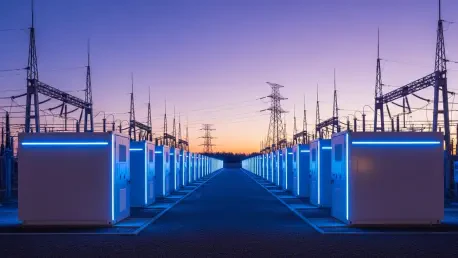

The ambition to achieve a completely decarbonized power sector by the end of this decade has placed an unprecedented strain on the United Kingdom’s electrical infrastructure, requiring a radical rethink of how energy storage connects to the national grid. Within the Clean Power 2030 framework, Battery Energy Storage Systems have emerged as a critical pillar for maintaining stability. The Department for Energy Security and Net Zero, alongside the regulator Ofgem, now faces the complex task of modernizing a network that was never designed for such rapid, decentralized growth.
The Current State of Britain’s Energy Storage Landscape
The UK battery market has moved from a niche sector to a primary driver of power modernization. This evolution is necessitated by the inherent variability of renewable energy sources, where storage acts as the essential buffer for the national grid. Strategic coordination between government departments and infrastructure providers has become the focal point for ensuring that the transition toward a cleaner energy mix does not compromise reliability or increase costs for the end consumer.
Market players range from global investment funds to local developers, all vying for limited capacity in an increasingly crowded network. Building the necessary infrastructure requires more than just physical hardware; it demands a sophisticated digital and regulatory framework capable of managing thousands of new connection points. As the demand for decarbonization intensifies, the gap between the existing grid capabilities and the requirements of a modern energy system has become more apparent.
Rapid Deployment Trends and Growing Capacity Projections
Technological Advancements and Shifting Connection Methodologies
Battery projects often progress through the planning pipeline significantly faster than traditional wind or solar farms. This speed is partially due to the smaller physical footprint of these installations and a historical set of protection measures that prioritized storage advancement. Moreover, the shift in corporate behavior, driven by stringent environmental standards, has accelerated the push for localized storage solutions that can respond to market signals in real time.
Analyzing the DatFrom 2030 Targets to the 2035 Surplus
Official projections for the 2030 horizon suggest a requirement of 23GW to 27GW of storage capacity to meet national targets. However, the current connection queue paints a different picture, revealing a projected surplus of 14.8GW for that year. Looking further ahead, the forecast indicates a staggering 61.7GW excess by 2035, suggesting that the volume of applications has far outpaced the actual infrastructure needs of the country. This saturation creates a paradox where an abundance of projects actually hinders the deployment of the most viable sites.
Navigating the Bottleneck: Why the Grid Is at a Standstill
The primary cause of the current gridlock stems from historical data errors in connection agreements, which forced engineers to rework complex network studies. This administrative backlog has left many developers in a state of uncertainty, waiting for approval while capital remains locked. To address this, technical solutions like bay-sharing have been proposed, allowing multiple storage units to utilize a single connection point to maximize the efficiency of existing substations.
Financial exit strategies are also being introduced to cleanse the queue of unviable “zombie” projects that hold capacity without the means to build. By offering incentives for these projects to vacate their positions, the regulator aims to prevent unnecessary capital expenditure on grid reinforcements that would otherwise serve no purpose. This methodology ensures that only projects with genuine deliverability move forward, reducing the overall cost of network upgrades for the public.
Government and Regulator Intervention: Policy Shifts in Motion
A joint open letter from energy authorities recently signaled a major overhaul of the connection process. The focus has shifted from a first-come, first-served model to one that emphasizes project readiness and alignment with national stability goals. This intervention is designed to restore investor confidence, which had been shaken by mounting administrative delays and the lack of a clear pathway for new capacity.
New regulatory standards are being developed to synchronize infrastructure delivery with actual energy demand forecasts. This proactive approach aims to eliminate the disconnect between the planning phase and the operational reality of the grid. By enforcing stricter compliance and transparency, the government intends to create a more predictable environment for long-term energy investments.
Looking Beyond 2030: The New Paradigm for Storage Viability
The National Energy Storage System Operator is currently consulting on stricter eligibility criteria that could redefine the market. One significant proposal includes mandatory revenue support schemes as a prerequisite for grid connection, ensuring that projects have a clear economic foundation. This shift toward a more disciplined market structure will likely favor developers who can demonstrate both technical capability and financial resilience in a changing global economy.
Emerging technologies and shifts in the global supply chain also play a role in determining future storage costs. As the industry matures, the focus will likely move toward long-duration storage and market disruptors that can offer higher efficiency at a lower price point. These factors, combined with evolving economic conditions, will dictate the long-term sustainability of the UK’s energy storage ambitions.
Balancing the Grid: Recommendations for a Sustainable Energy Future
The analysis demonstrated that the current oversupply in the connection queue required an immediate transition from speculative applications to prioritized project viability. Developers were encouraged to focus on sites with high strategic value rather than sheer volume. Industry feedback played a central role in refining the connection process, ensuring that the regulatory framework remained flexible enough to adapt to technological shifts.
Stakeholders successfully recognized that a streamlined and economically stable market was the only way to meet long-term infrastructure needs. The move toward stricter entry requirements and better technical integration provided a clearer roadmap for future investment. By addressing the gridlock through both policy reform and technological innovation, the UK established a more resilient foundation for its clean energy transition.