
Christopher Hailstone brings a wealth of experience in modernizing utility grids and securing the energy future of the Midwest. As our resident utilities expert, he understands the delicate balance between maintaining reliability for millions of residents and integrating the massive power demands of the digital economy. In this discussion, we explore the transformative deal between DTE Energy and LG Energy Solution, a $1.6 billion investment that signals a massive shift in how Michigan manages its power.
The conversation focuses on the strategic deployment of 1.5 GW of battery storage to stabilize the grid, the economic vitality brought by localized manufacturing in Holland, Michigan, and the utility’s long-term roadmap to double its storage capacity by 2042 to support major tech players like Google and Oracle.
How does the plan to integrate 1.5 GW of battery capacity fundamentally change the way Southeast Michigan handles daily fluctuations in power demand?
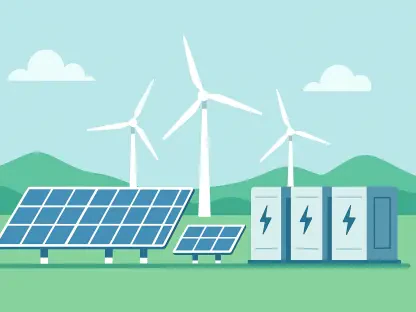
This $1.6 billion investment in energy storage is a massive step forward for the 2.3 million electric customers who rely on a steady flow of power in Detroit and across Southeast Michigan. By deploying 6 GWh of storage capacity, the utility can effectively smooth out the sharp peaks and valleys that occur when demand shifts throughout the day, significantly reducing the mechanical stress on traditional generators. Instead of the jarring and inefficient “start and stop” of older generation units to meet fluctuating needs, these eight storage projects act as a massive shock absorber for the entire grid. There is a palpable sense of progress as we move toward these clean energy goals, ensuring that the lights stay on and the system remains stable even as we transition away from older, less flexible power sources.
With major tech players seeking to expand their footprint in the region, how do these storage projects facilitate the growth of massive data center operations?
The energy landscape is shifting rapidly as companies like Oracle and Google look to Michigan for their high-density computing needs, creating a potential opportunity that is valued at up to 8.4 GW. We are currently seeing the utility await approval from the Michigan Public Service Commission for a significant 1-GW deal with Google, while Oracle has already agreed to cover the full cost of its own energy and capacity requirements through a conditional contract. These data centers run 24/7 and demand a level of reliability that only a robust storage network can provide, especially when the goal is to integrate more renewable sources into the mix. By bolstering the system with this LG partnership now, the utility is laying the groundwork for a digital economy that hums with activity without compromising the service quality for residential neighborhoods or smaller local businesses.
Beyond the technical benefits to the grid, what kind of tangible impact does this $1.6 billion investment have on the local workforce and Michigan’s industrial landscape?
The ripple effects of this deal are substantial, with projections suggesting a total economic impact of $2.3 billion across the state over the coming years. At the heart of this industrial shift is the manufacturing plant in Holland, Michigan, where approximately 1,800 people will be employed to build the very battery systems that will power our future. Additionally, more than 350 jobs will be created in the specialized fields of construction and operations as these eight distinct projects are rolled out over the next two years. There is a real sense of community pride in seeing a local supply chain thrive, especially when you consider that the utility spent $2.9 billion with Michigan-based businesses just last year to keep the state’s energy infrastructure moving forward.
How does prioritizing a local supply chain and Michigan-based businesses influence the overall security and reliability of the state’s energy infrastructure?
Investing nearly $4 billion in 2025 alone demonstrates a massive commitment to reinforcing the physical and economic infrastructure that keeps our state moving. By spending $2.9 billion of that total specifically with local vendors, the utility is not just purchasing equipment; it is supporting an ecosystem of local experts who understand the unique environmental and geographical challenges of Michigan. This localized focus helps mitigate the risks associated with global supply chain disruptions, allowing for more predictable maintenance schedules and faster response times when upgrades are needed. The result is a measurable improvement in customer reliability, as the investment stays within the state to build a more resilient, self-sufficient energy environment that can withstand the pressures of modern demand.
What is your forecast for the evolution of Michigan’s energy grid as we look toward the ambitious storage goals set for the next two decades?
By 2042, I expect to see a grid that is fundamentally different from what we have today, as the utility aims to have more than 2.9 GW of energy storage on its system. This represents more than a doubling of current storage capacity, creating a highly flexible and intelligent network that can handle the complexities of a modern, clean energy economy. As we scale from the initial 1.5 GW being deployed through the LG partnership toward these 2042 targets, the grid will become the essential backbone for both massive industrial growth and long-term environmental sustainability. This vision ensures that Michigan remains a national leader in energy innovation, providing a clear blueprint for how large utilities can successfully support the needs of high-tech giants and everyday families simultaneously.