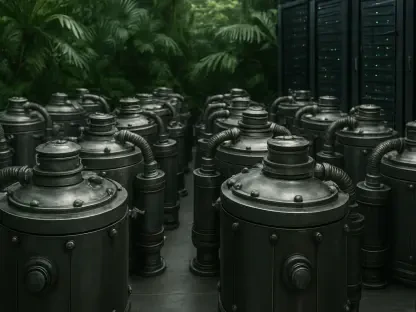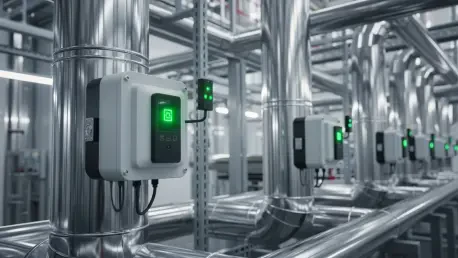

Greenhouse gas management traditionally consumes immense energy, but a breakthrough in South Korean research has inverted this paradigm by transforming carbon adsorption into a self-sustaining power source. The Gas Capture and Electricity Generator (GCEG) represents a fundamental shift in environmental engineering by merging pollution control with energy production. Developed through collaboration among multiple universities, this technology moves beyond the restrictive models of the past. It offers a decentralized solution that addresses the urgent need for both climate mitigation and autonomous power in industrial settings.
Core Mechanisms and Technical Architecture
Asymmetric Carbon-Hydrogel Electrode Systems
The structural integrity of the GCEG relies on a specialized pairing of carbon-based electrodes and hydrogel materials. This asymmetric configuration creates an electrochemical gradient that is essential for energy conversion. The hydrogel functions as a conductive medium that facilitates ion movement, while the carbon surface provides the necessary sites for gas interaction. Together, these components allow for a seamless transition from gas molecular bonding to electrical charge distribution without requiring complex mechanical parts.
Autonomous Adsorption and Power Generation
Targeting greenhouse gases like carbon dioxide and nitrogen oxides, the device operates through a passive adsorption cycle. As these molecules attach to the electrode surface, they induce an internal redistribution of charge. This physicochemical interaction generates a continuous electrical current that requires no external power source to maintain. Such a mechanism ensures that the device can operate independently in environments where consistent electrical infrastructure is unavailable or difficult to install.
Innovations in Emission-to-Energy Conversion
Traditional carbon capture methods are often criticized for their heavy energy penalty, frequently consuming a significant portion of a facility’s total output. GCEG technology eliminates this drawback by turning the capture process itself into a generator. This shift transforms waste management from a financial and energetic burden into a resource-generating activity. By redefining emissions as a fuel source, the industry sets a new standard for sustainable manufacturing and utility operations.
Real-World Applications and Industrial Deployment
Large-scale industrial environments, such as manufacturing hubs and power plants, stand to benefit most from this dual-action technology. The ability to harvest energy from flue gases allows for the deployment of self-sufficient environmental sensors and monitoring equipment. Moreover, the GCEG provides a reliable power solution for battery-free Internet of Things (IoT) devices in hazardous or remote locations. These applications reduce the need for constant maintenance and battery replacement in difficult terrains.
Technical Hurdles and Market Adoption
While the potential is significant, the scalability of hydrogel materials remains a primary obstacle for widespread commercial use. Maintaining the long-term stability of electrodes under harsh atmospheric conditions also requires further refinement in material coatings. Furthermore, the transition from laboratory success to industrial adoption faces regulatory hurdles, as current energy policies are not yet optimized for integrated capture-generation systems. Overcoming these barriers will require sustained investment in material durability research.
Future Outlook and Long-Term Impact
Research into material science is expected to increase the power density of these devices by refining the nanostructures of the carbon electrodes. As global strategies move toward strict net-zero goals, the integration of energy-harvesting capture systems will likely become a cornerstone of green infrastructure. This technology provides a scalable path for industries to offset their carbon footprint while simultaneously contributing to the local power grid. The evolution of GCEG will likely influence how future environmental regulations are drafted.
Final Assessment and Summary
The evaluation showed that GCEG effectively bridged the gap between pollution control and decentralized energy production. Experts noted that the technology provided a unique opportunity for industries to modernize their waste management without sacrificing operational efficiency. This development successfully shifted the focus from simple carbon sequestration to a more holistic model of resource recovery. The implementation of such systems offered a proactive solution for achieving long-term industrial sustainability and climate resilience.