
The unprecedented acceleration of the digital economy has reached a tipping point where the infrastructure powering our silicon intelligence is now outstripping the fundamental stability of the high-voltage transmission networks that sustain it. This rapid expansion of artificial intelligence and cloud computing has ushered in an era of intense energy demand while introducing a hidden vulnerability to the modern electrical grid. For decades, grid operators focused reliability efforts on the supply side, preparing for the sudden loss of a power plant. Today, the script has flipped. Massive data centers have created a mirror-image threat: the sudden loss of demand. Because these facilities use sophisticated power electronics designed to protect sensitive hardware, they can vanish from the grid in milliseconds during a minor disturbance. This analysis explores how this technical sensitivity poses a systemic risk and why regulatory frameworks must evolve with the speed of digital infrastructure.
The Shift From Supply Scarcity to Demand Volatility
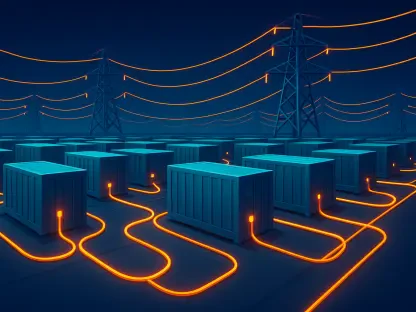
The rise of the high-density data campus has fundamentally altered the relationship between electricity consumption and generation. In a traditional power system, loads are largely predictable and sluggish, but computational centers operate with a level of agility that the physical grid was never built to accommodate. When a minor voltage fluctuation occurs, the automatic response of these facilities is to isolate themselves from the utility to protect internal components. This creates a scenario where gigawatts of load can drop off the system in a heartbeat, causing a massive imbalance that endangers regional stability.
The volatility of this demand is a direct consequence of the shift toward a software-defined economy. As the industry scales, the sheer volume of power concentrated in single locations means that the “loss of load” can be just as disruptive as the “loss of a generator.” Grid operators now face a dual challenge: they must not only find enough power to fuel these massive operations but also ensure that the sudden absence of that consumption does not trigger a cascading failure across the entire interconnection.
Historical Context and the Rise of Computational Loads
Historically, the electrical grid was designed to serve passive loads such as light bulbs, induction motors, and heating elements that behaved predictably during voltage fluctuations. As industrial economies evolved, the grid became a centralized system where reliability was maintained by managing a few large power plants. However, the last decade has seen a structural shift toward computational loads that behave according to logic rather than physics. Unlike the factories of the past, data centers are equipped with massive Uninterruptible Power Supply (UPS) systems and complex control mechanisms.
These technologies were developed to ensure five-nines uptime for data servers, prioritizing the safety of internal hardware over the stability of the external grid. This transition from mechanical to electronic load management has fundamentally changed how the grid reacts to stress, making the behavior of the consumer just as volatile as the behavior of the producer. The result is a grid that is increasingly sensitive to the software settings and protection logic housed behind the customer meter, rather than just the physical integrity of the transmission wires.
The Technical Reality of Simultaneous Disconnection
The Common-Mode Risk of Instantaneous Load Loss
A critical aspect of this new landscape is the common-mode transfer risk, where a single grid disturbance causes multiple data centers to disconnect simultaneously. When sensors detect a minor fault, the facility instantly transfers to backup batteries or diesel generators. While this protects the servers, it can cause gigawatts of demand to disappear from the grid in a heartbeat. For example, in July 2026, the Northern Virginia data center hub saw a sudden drop of over 3 GW—roughly 3% of the total regional demand—following a minor transmission event. This caused an immediate spike in system frequency, forcing other generators to react violently to maintain balance.
Lessons From Global Grid Disturbances
The risk of sudden demand loss is no longer theoretical, as evidenced by recent incidents in Texas and Ireland. Between 2020 and 2023, the Electric Reliability Council of Texas identified eight separate events where faults near industrial clusters caused demand reductions of up to 700 MW. In a more severe incident, a breaker failure led to a 1,560 MW load reduction in West Texas, largely driven by oil-and-gas operations and power-electronic loads. Similarly, in Ireland, regulators have documented several instances where data centers disconnected en masse during grid fluctuations, highlighting a trend where the grid becomes more susceptible to frequency excursions previously associated only with the failure of massive power plants.
The Policy Gap and the Lack of Transparency
One of the most overlooked complexities is the transparency gap between grid operators and data center developers. Currently, most regulatory discussions focus on interconnection—the physical process of hooking a facility to the wires. However, grid operators often have no visibility into the behind-the-meter settings of a data center’s UPS or cooling systems. If an operator does not know at what voltage a facility is programmed to disconnect, they cannot accurately model how the system will react during an emergency. This lack of verified, as-built data means that utilities are effectively flying blind, as a facility in one state might be required to ride through a disturbance while another might disconnect at the first sign of trouble.
Emerging Solutions and the Future of Grid Governance
Looking forward, the industry is moving toward a more integrated large load operating architecture to address these stability risks. Emerging trends suggest that regulators will soon mandate ride-through requirements, forcing data centers to remain connected during minor voltage sags rather than switching to backup power immediately. Technological innovations in grid-forming inverters and advanced telemetry will likely allow for real-time data sharing between the load and the operator. Furthermore, North American reliability authorities are already moving toward enforceable standards that treat large-scale computational loads with the same level of scrutiny as power plants. By 2027, the regulatory landscape will likely treat data centers not just as passive consumers, but as active participants in maintaining grid equilibrium.
Actionable Strategies for a Resilient Infrastructure
To navigate this transition, businesses and grid operators must adopt several best practices. Facility operators should move beyond simple protection logic and implement grid-friendly settings that allow for controlled responses to disturbances. Utilities must demand high-fidelity modeling of IT and cooling loads during the interconnection process to ensure accurate risk assessment. Furthermore, there must be a push for standardized notification procedures, ensuring that when a data center does go off-grid, the operator knows exactly when and how it will ramp back up. For investors and developers, prioritizing ride-through capability and advanced telemetry will likely become a prerequisite for securing grid access in high-density markets.
Conclusion: Balancing Digital Growth With Grid Reliability
The integration of massive data centers represented a fundamental shift in the philosophy of electrical engineering. The industry moved from a world where supply management dominated to a landscape where governing the behavior of demand became paramount. As this analysis explored, the very technology that ensured the uptime of the digital economy threatened the stability of the physical grid when left uncoordinated. The long-term significance of this issue remained clear; as AI continued to scale, the resilience of society depended on the ability to harmonize server room requirements with transmission line realities. This path forward necessitated a new level of transparency, ensuring that major grid events were managed by design rather than by accident.