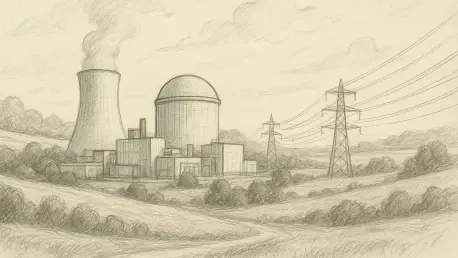

The global transition toward a decarbonized electrical grid has reached a critical juncture where the limitations of intermittent renewable sources are becoming increasingly apparent to utility providers and policymakers alike. As traditional baseload power plants retire, the industry is looking toward Small Modular Reactors (SMRs) as a potential solution to stabilize the aging infrastructure. However, the shadow of the 2023 NuScale project failure in Utah still looms large over the sector, serving as a stark reminder of how quickly costs can escalate from an initial three billion dollars to a staggering nine billion. This financial volatility remains the primary hurdle for a technology that promised to revolutionize the energy market through factory-based assembly. While the theoretical benefits are undeniable, the practical application in a high-stakes environment continues to test the patience of private investors and government agencies seeking a reliable power source.
Economic Realities and the Competitiveness Gap
Moving away from the bespoke construction cycles of traditional nuclear facilities, the SMR movement advocates for a modular philosophy centered on manufacturing rather than on-site engineering. By designing reactors that generate between 70 and 350 megawatts, companies aim to produce components in controlled factory environments where quality control and process optimization can be rigorously maintained. This approach is intended to drive down the levelized cost of electricity through volume production, mimicking the cost-reduction curves observed in the aerospace industry. Proponents argue that once a design is certified and the assembly line is operational, the speed of deployment will outpace any traditional reactor build. Nevertheless, this manufacturing dream requires a massive initial capital outlay to establish the infrastructure, and without a guaranteed order book, the economic incentive for private firms to pivot toward this unproven model remains significantly low.
Despite the clear theoretical advantages of standardization, the current SMR landscape is characterized by extreme fragmentation, with over one hundred distinct designs competing for a limited pool of investment and regulatory attention. This lack of a unified technical standard prevents the industry from achieving the learning effects necessary to compete with established technologies like utility-scale solar and onshore wind. When every developer is pursuing a unique cooling mechanism or fuel type, the supply chain remains fractured, making it impossible to consolidate the purchasing power required to lower the price of specialized materials. Furthermore, the regulatory burden for each new design is immense, requiring thousands of pages of documentation and years of safety analysis. For the manufacturing model to succeed, the market must eventually undergo a period of consolidation where only a handful of the most viable designs receive the collective support of the entire nuclear industry.
The Strategic Path Toward Nuclear Commercialization
The transition toward a commercially viable nuclear sector demanded a fundamental shift in how developers approached project management and financial transparency. Stakeholders recognized that the sector’s long-term survival hinged on the ability to achieve significant cost reductions while navigating a stringent regulatory environment that prioritized public safety above all else. Success required a coordinated effort to streamline the licensing process and secure a reliable fuel supply chain that did not depend on volatile international markets. Moving toward a carbon-free future necessitated a balanced energy portfolio where modular nuclear power complemented the growth of renewables rather than competing against them for the same limited capital resources. Industry leaders focused on transparent communication with local communities to address safety concerns and build the necessary social license for widespread deployment, ensuring that the technology was perceived as an asset.
Achieving a resilient energy infrastructure required the integration of advanced reactor designs into existing grid frameworks to provide the steady baseload power that intermittent sources lacked. Decision-makers prioritized the development of standardized components that allowed for rapid assembly and minimized the potential for the expensive delays that had characterized previous decades. This shift in strategy allowed the industry to move past the initial phase of public skepticism and focused on delivering a product that met the rigorous demands of a modern, high-capacity electrical network. By establishing clear milestones for performance and safety, the sector fostered an environment of accountability that attracted long-term investment from both public and private entities. Ultimately, the industry laid the foundation for a sustainable energy system by valuing technical reliability and economic transparency, which ensured that nuclear technology remained a cornerstone of national strategy.