
The exponential growth of generative artificial intelligence has fundamentally altered the global energy landscape, pushing legacy electrical infrastructures to their absolute breaking points. As massive data centers housing thousands of #00 and B200 GPUs hum continuously, they consume electricity at a scale previously reserved for entire metropolitan areas or industrial clusters. This surge in demand does not merely require more generation; it demands a sophisticated level of stability that traditional, aging grids were never designed to provide. The inherent irony lies in the fact that while AI-driven workloads contribute significantly to grid volatility, the very same algorithms are now being recruited to stabilize the system. Integrating these advanced computational models into the heart of the utility sector has become a necessity rather than an elective upgrade. This transition involves moving from reactive maintenance to a predictive paradigm where software anticipates surges before they occur.
Predictive Intelligence: Advanced Forecasting and Risk Mitigation
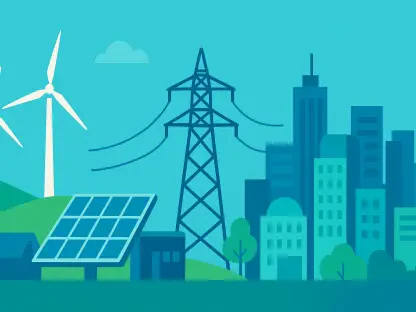
Utilities are currently deploying deep learning models to bridge the gap between volatile renewable energy sources and the constant, heavy drain of AI training facilities. These models analyze petabytes of historical weather data, real-time sensor feeds, and market price fluctuations to forecast supply and demand with unprecedented accuracy. By identifying patterns in cloud cover or wind speed changes, AI systems allow grid operators to adjust the output of natural gas turbines or battery storage reserves minutes before a deficit happens. This precision prevents the frequency deviations that often lead to cascading blackouts in regions with high solar and wind penetration. Furthermore, reinforcement learning agents are now managing the delicate balance of frequency regulation, responding to sub-second shifts in the grid with more agility than human operators could ever achieve. This automated oversight ensures that the thermal stress on transformers and switchgear is kept within safe limits even during peak usage.
Beyond mere forecasting, AI-driven predictive maintenance is revolutionizing how physical assets like transmission lines and substations are managed. Computer vision systems mounted on drones or fixed cameras now monitor power lines for structural degradation or vegetation encroachment, identifying potential failure points long before they cause a spark. By analyzing the vibration and acoustic signatures of high-voltage transformers, neural networks can predict mechanical failures months in advance, allowing for scheduled repairs instead of emergency shutdowns. This proactive approach significantly reduces the downtime associated with unexpected equipment failure, which is critical when the margin for error is razor-thin. When a major data center scales its operations, the local grid must absorb the load without compromising service to residential customers. Advanced software optimizes this distribution by rerouting power through underutilized corridors, effectively expanding the capacity of the existing hardware.
System Integration: The Shift toward Decentralized Grid Control
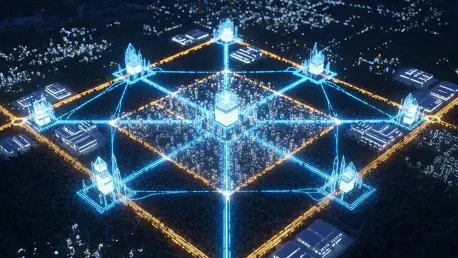
The integration of AI also facilitates the expansion of Virtual Power Plants (VPPs), which aggregate thousands of small-scale energy resources into a single, controllable entity. These systems link electric vehicle chargers, home batteries, and smart thermostats through a centralized AI hub that can throttle demand or inject power back into the grid as needed. When a high-intensity AI model starts a training run, the VPP can automatically signal residential batteries to discharge or delay water heater cycles, smoothing out the consumption spike. This orchestration transforms passive consumers into active participants in grid stability, creating a more resilient and decentralized network. By utilizing edge computing, these decisions are made locally at the substation level, reducing the latency inherent in cloud-based management systems. This decentralized logic ensures that even if a primary communication link is severed, the local grid can maintain a degree of autonomy and prevent a total system collapse through localized load balancing.
Addressing the energy deficit required a shift toward integrated AI-grid architectures that prioritized efficiency alongside capacity expansion. Engineers recognized that the hardware of the past could no longer survive without the software of the future, leading to the deployment of autonomous grid controllers across major utility zones. These systems effectively neutralized the volatility caused by high-density computing loads by synchronizing demand with carbon-free energy peaks. To move forward, stakeholders implemented standardized protocols for data center interaction with the utility sector, ensuring that large-scale energy consumers provided flexibility in exchange for reliable access. Investment focused on bidirectional charging infrastructure and high-density storage to create a buffer against unforeseen disruptions. The transition proved that while AI remained a primary driver of increased demand, it also provided the necessary tools to refine resource allocation. Moving toward a more stable future necessitated that grid operators embraced these algorithmic partners to ensure the lights stayed on.