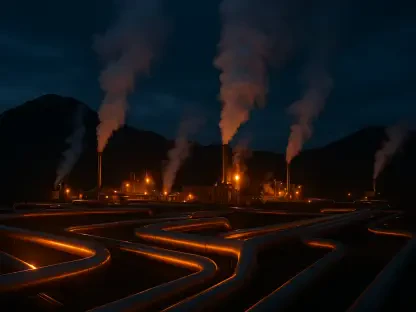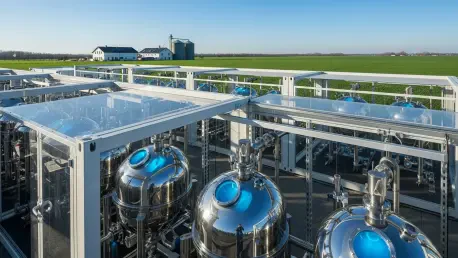

The transition from energy-hungry thermal combustion to light-harvesting chemical synthesis represents a pivot point for an aviation sector currently tethered to volatile fossil fuel markets and limited bio-feedstocks. While the aviation industry has long sought a solution to the carbon intensity of kerosene, the traditional methods of producing sustainable alternatives have often been hindered by the massive thermal requirements of steam methane reforming. These legacy processes rely on high-grade heat, typically generated by burning fossil fuels, which creates a paradoxical cycle of carbon emissions to produce “green” fuel. The emergence of photocatalytic synthesis breaks this cycle by utilizing photons to drive chemical transformations, essentially replacing the flame with high-intensity light and offering a pathway toward a truly low-carbon chemical industry.
This shift is not merely a change in power sources but a fundamental reimagining of chemical kinetics. By moving from thermal-intensive reactions to light-driven ones, the industry is entering a phase where chemical plants can be smaller, more modular, and significantly cleaner. The broader technological landscape is currently witnessing a push for electrification, yet traditional electrification often struggles with the high temperatures required for industrial-scale reforming. Photocatalysis provides a middle ground, leveraging renewable electricity to power light-emitting diodes that activate catalysts at much lower ambient temperatures, thereby preserving the integrity of the energy input and maximizing efficiency in a way that thermal systems cannot match.
The Fundamentals of Photocatalytic Chemical Production
At the heart of this technological evolution is the principle of photochemistry, where light energy is used to overcome the activation barriers of chemical reactions. Unlike traditional catalysts that require intense heat to vibrate molecules into a reactive state, photocatalysts harness the energy of specific light wavelengths to excite electrons. This electronic excitation triggers the necessary bond-breaking and bond-forming processes required to transform feedstocks into fuel. The context of this emergence is rooted in the urgent need to decarbonize “hard-to-abate” sectors like aviation, where batteries and hydrogen fuel cells currently lack the energy density required for long-haul transport.
The relevance of this technology in the modern landscape cannot be overstated, as it represents a departure from the “brute force” approach of 20th-century industrial chemistry. By utilizing light, chemical production becomes more surgical, targeting specific reaction pathways without the wasteful byproduct of heat loss. This efficiency is critical as the world transitions away from fossil-fuel reliance, demanding that every kilowatt of renewable energy be used with maximum precision. Photocatalytic synthesis thus stands as a bridge between the existing liquid fuel infrastructure and the renewable energy grid of the future.
Key Technological Components and Innovations
The Rigel Photocatalytic Reactor and Plasmonic Catalysis
The most significant advancement in this field is the development of light-operated reactor systems, such as the Rigel reactor. This system employs plasmonic catalysis, a sophisticated method where metallic nanoparticles act as tiny antennas that capture and concentrate light. These “plasmonic” properties allow the catalysts to drive reactions that would normally require temperatures exceeding 800 degrees Celsius, all while the reactor itself remains at a fraction of that heat. This innovation allows for the use of interchangeable catalysts, meaning the same hardware can be adapted to produce different chemical outputs simply by swapping the catalytic material.
The performance metrics of these reactors are particularly impressive when producing high-purity hydrogen and syngas. By maintaining a lower operating temperature, the system avoids much of the coking and catalyst degradation that plagues traditional steam methane reforming. Furthermore, because the energy input comes from light rather than combustion, the carbon footprint of the production process is reduced by a staggering margin. This allows for a cleaner output that meets the stringent purity requirements of the chemical and fuel industries without the heavy environmental toll of legacy infrastructure.
Multi-Feedstock Versatility and E-Reforming
A defining feature of the photocatalytic approach is its ability to handle diverse and often “dirty” feedstocks. Traditional refining processes are highly sensitive to impurities and specific feedstock compositions, but photocatalytic e-Reforming can process waste gases like methane and carbon dioxide from landfills, dairies, and even wastewater treatment plants. This versatility transforms environmental liabilities into valuable assets. By capturing methane—a potent greenhouse gas—from agricultural runoff and converting it into fuel, the technology provides a double benefit for climate mitigation.
The technical significance of e-Reforming lies in its capacity to create “drop-in” replacements for kerosene jet fuel. Unlike first-generation biofuels that competed with food crops for land and water, e-fuels produced via photocatalysis rely on waste products and renewable electricity. This method bypasses the logistical and ethical hurdles associated with limited bio-feedstocks, offering a scalable solution that can be deployed wherever waste gas and power are available. It represents a shift from biological constraints to industrial scalability, ensuring that the fuel supply can grow in tandem with technological deployment.
Current Industry Trends and Geopolitical Drivers
The trajectory of photocatalytic technology is being heavily influenced by a shifting global energy reality. Recent geopolitical tensions and the resulting volatility in global oil markets have exposed the vulnerabilities of centralized fuel supplies. The potential for disruptions in vital shipping lanes has forced nations to reconsider their energy security strategies. This atmosphere has significantly narrowed the “green premium,” as the cost of conventional fossil fuels rises and the price of renewable alternatives becomes more competitive.
Moreover, the shift toward energy security is driving a trend toward domestic resilience. Governments are increasingly looking for ways to produce fuel within their own borders using local resources. Photocatalytic synthesis fits perfectly into this paradigm, as it allows for decentralized fuel production that is not dependent on international pipelines or deep-water ports. This move from global dependency to domestic autonomy is a powerful driver for the adoption of light-driven chemical innovations, positioning them as strategic assets rather than just environmental experiments.
Real-World Applications and Circular Economy Integration
Agricultural Synergy: The NovaSAF-1 Case Study
The implementation of photocatalytic synthesis is already yielding results in the agricultural sector, as seen in projects like NovaSAF-1 in Uruguay. By integrating a photocatalytic plant with a large-scale dairy operation, the facility captures biogas from manure and converts it into sustainable aviation fuel. This creates a highly efficient circular economy model where the waste from food production directly fuels the transport sector. The environmental impact is profound, with the resulting fuel boasting a lifecycle carbon footprint that is up to 90% lower than traditional petroleum-based kerosene.
The economic implications of this synergy are equally important. Long-term offtake agreements with global commodity firms provide the financial stability needed to scale these projects. By securing a guaranteed buyer for the fuel years in advance, these facilities can attract the necessary investment for construction and expansion. This model proves that sustainable fuel production is no longer a localized niche but a commercially viable industry that can support local economies while serving global markets.
Global Expansion and Modular Scaling
The scalability of photocatalytic technology is being tested through a “lather-rinse-repeat” model of modular deployment. In regions like Brazil, agreements are in place to convert sugarcane residue into fuel, while in Mexico, projects focus on landfill-to-fuel conversions. These modular reactors can be manufactured in a factory setting and shipped to the site of the feedstock, significantly reducing the lead time and capital expenditure required for new facilities. This approach allows for a rapid ramp-up in production capacity across diverse geographies.
By focusing on modularity, the technology avoids the pitfalls of “mega-projects” that are often prone to delays and budget overruns. Instead, developers can deploy multiple smaller units to reach massive annual production volumes. This strategy is essential for meeting the ambitious targets of the aviation industry, which requires millions of tons of sustainable fuel to meet its decarbonization goals. The ability to scale horizontally, by adding more reactors rather than building larger ones, provides a level of flexibility that traditional refineries simply cannot match.
Technical Barriers and Policy Considerations
Despite its potential, the technology faces significant hurdles, particularly regarding the logistics of modular scaling and the complexity of international fuel mandates. Coordinating the deployment of thousands of reactor units across different jurisdictions requires a robust supply chain and a standardized regulatory framework. Furthermore, the varying definitions of “sustainable” fuel across different countries can create confusion for producers and buyers alike. Navigating these policy waters is a critical challenge for the widespread adoption of photocatalytic synthesis.
Domestic energy policies also play a pivotal role. Frameworks that prioritize energy dominance and domestic resource utilization provide a favorable environment for bio-based and electric-driven innovations. However, shifts in political leadership can lead to changes in subsidies and tax incentives, creating uncertainty for long-term investments. For photocatalytic fuel synthesis to reach its full potential, it requires consistent policy support that recognizes its contribution to both environmental goals and national security.
Future Outlook and Global Impact
The potential for photocatalytic synthesis to produce over one million tons of sustainable aviation fuel annually by 2035 is a realistic target if current growth trends continue. Future developments are likely to focus on increasing the efficiency of the light sources and expanding the range of feedstocks that can be processed. As LED technology continues to improve, the energy requirements for the Rigel reactors will likely decrease, further improving the economic and environmental profile of the fuel.
In the long term, the decentralization of fuel production could fundamentally alter global shipping lanes and energy trade. By producing fuel locally from waste, countries can reduce their reliance on imported oil, leading to a more stable and resilient global energy market. The impact of this shift will be felt not just in the aviation sector, but across the entire chemical industry, as light-driven synthesis becomes the standard for producing a wide array of essential products.
Summary and Strategic Assessment
The review of photocatalytic fuel synthesis revealed a technology that moved beyond theoretical research into the realm of large-scale industrial application. It was demonstrated that the transition from thermal to light-driven chemistry offered a superior pathway for decarbonizing the aviation sector while enhancing energy security. The integration of modular reactors with local waste streams proved to be a resilient model that bypassed the limitations of traditional bio-feedstocks.
Strategic assessments indicated that the success of this technology was heavily dependent on the intersection of geopolitical necessity and technological innovation. The closing of the “green premium” and the push for domestic autonomy provided the necessary momentum for commercial adoption. Ultimately, photocatalytic synthesis established itself as a cornerstone of the future energy landscape, providing a scalable and sustainable solution to one of the most pressing environmental challenges of the modern era. The verdict was clear: the era of light-driven fuel was no longer a distant prospect but a present reality.