
The aviation industry faces an existential challenge as it balances the necessity of global connectivity with the urgent requirement to eliminate carbon footprints from high-altitude combustion. Sustainable Aviation Fuel (SAF) serves as a critical drop-in replacement for traditional kerosene, requiring no modifications to existing aircraft engines or infrastructure. This compatibility allows for a seamless transition toward greener operations without the prohibitive costs of redesigning entire fleets.
Technical Components and Implementation Frameworks
Renewable Feedstocks and Production Methods
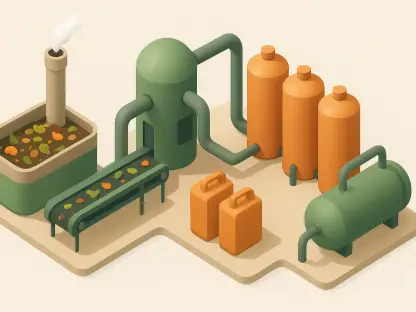
SAF is primarily synthesized from organic waste and residues, such as used cooking oils or agricultural byproducts. By utilizing materials that would otherwise end up in landfills, the production cycle achieves a circular economy. This method reduces lifecycle greenhouse gas emissions by up to 80 percent compared to petroleum-based fuels, addressing the environmental impact from source to exhaust.
The Book and Claim Decarbonization Model: Scaling Adoption
To overcome logistical hurdles, the book and claim system decouples the physical fuel from its environmental benefits. This framework allows organizations to purchase SAF credits even if the fuel is physically used elsewhere in a global network. Consequently, companies can claim verifiable carbon reductions, effectively scaling the green fuel market despite geographic production imbalances.
Emerging Trends in Low-Carbon Aviation
Modern corporate sustainability programs, such as DHL’s GoGreen Plus, are now driving market demand through transparent reporting. Large-scale freight forwarders and passenger carriers are shifting their behavior to prioritize verifiable metrics over simple carbon offsets. This evolution indicates a move toward more rigorous accountability in corporate environmental claims.
Real-World Applications and Strategic Collaborations
Partnerships between logistics giants like DHL Express and Malaysia Aviation Group demonstrate the practical viability of SAF across major trade routes. These collaborations target significant reductions in CO2e emissions, specifically aiming to cut 300 metric tons over the next several years. Such initiatives bridge the gap between theoretical goals and operational reality in the United States, Europe, and the Asia-Pacific region.
Barriers to Widespread Adoption and Market Obstacles
Despite its benefits, SAF faces significant scaling issues due to the limited availability of high-grade feedstocks and higher production costs. Conventional kerosene remains cheaper, creating a financial barrier for smaller carriers. However, ongoing investments from energy leaders like BP and Neste are helping to stabilize the supply chain and improve refinery efficiencies to mitigate these limitations.
The Future Trajectory of Sustainable Flight
Looking ahead, the development of synthetic fuels and advanced e-kerosene promises even greater efficiency gains for the sector. These innovations will likely become the primary tools for long-haul transport, where electric or hydrogen alternatives are currently unfeasible. The path toward net-zero relies heavily on the maturation of these refinery processes and consistent global policy support.
Final Assessment of SAF Technology
The synergy between logistics providers and airline operators proved that SAF was more than just a niche alternative. While costs remained a concern, the technological foundation provided a clear roadmap for decarbonizing a sector once thought impossible to change. The transition toward cleaner skies was finally grounded in tangible, scalable engineering solutions.