
The potential for capital lock-in creates a significant economic risk where decades of investment in gas pipelines might prevent the expansion of renewable energy grids. As the South African Parliament actively deliberates on the Gas Bill [B6-2026], the nation finds itself at a historical crossroads that will dictate its industrial and environmental trajectory for the remainder of the century. The release of the “Beyond Gas” toolkit by Africa Change Lab provides a necessary counter-narrative to the government’s rapid push for fossil fuel expansion. This resource arrives at a moment when the reliability of the national grid is under intense scrutiny, and the pressure to meet international climate targets has never been higher. Policymakers are now forced to weigh the immediate promise of energy stability against the long-term danger of being tethered to a carbon-intensive infrastructure. The debate is no longer merely about whether gas is available, but whether it is a prudent choice for an economy that desperately needs a modern, agile, and inclusive power system. This tension is further amplified by the shifting global landscape where capital is increasingly flowing toward green technologies, leaving fossil fuel projects at risk of underfunding and public opposition. By investigating the intersection of legislative intent and economic reality, this analysis explores how the current energy strategy might either secure South Africa’s industrial future or burden it with obsolete assets in a net-zero world.
The Legislative Push and Strategic Advocacy
Modernizing the Fossil Fuel Framework: The Gas Bill [B6-2026]
The Gas Bill [B6-2026] is currently the centerpiece of South Africa’s energy policy overhaul, designed to replace the antiquated Gas Act of 2001 with a framework suited for a competitive, modern market. The Department of Electricity and Energy has positioned this legislation as a vital tool for creating a predictable regulatory environment, which is essential for attracting the large-scale capital required for gas-to-power projects. Proponents argue that the bill provides the necessary legal certainty to ensure that gas development aligns with the Integrated Resource Plan, effectively strengthening the mandate of the national energy regulator to manage complex supply chains. This modernization effort is not merely a bureaucratic update; it is a strategic attempt to integrate fossil gas as a stabilizing force while the country transitions away from its heavy reliance on aging coal-fired power stations. The legislation aims to facilitate the construction of Liquefied Natural Gas (LNG) terminals and extensive pipeline networks, which are viewed by some as the only viable way to provide “firm” capacity to a grid that is increasingly incorporating variable renewable sources. However, the speed of this legislative push has sparked intense debate regarding whether the bill sufficiently addresses the environmental and social safeguards required for such a massive industrial shift.
Empowering Stakeholders Through Research: The “Beyond Gas” Initiative
In direct response to the government’s legislative momentum, the Africa Change Lab has introduced a comprehensive toolkit titled “Beyond Gas,” which functions as a strategic pedagogical resource for civil society. This initiative is designed to demystify complex energy concepts and provide community leaders, journalists, and researchers with the data needed to interrogate the long-term implications of gas infrastructure. The toolkit focuses on four critical dimensions: ownership structures, financial exposure, risk distribution, and evidence-based inquiry. By providing message banks and detailed case studies, the resource encourages stakeholders to ask difficult questions about who truly stands to profit from multi-billion-dollar pipeline projects. It challenges the prevailing narrative by highlighting how ownership often favors multinational corporations rather than promoting local economic participation or decentralized energy ownership. Furthermore, the initiative seeks to shift the conversation from technical feasibility to social justice, ensuring that the voices of those most affected by energy policy—local communities and low-income consumers—are heard in the halls of Parliament. This advocacy framework provides a counter-balance to industry lobbying, creating a more democratic space for debating South Africa’s energy future and the potential for alternative pathways that prioritize community-led renewable projects over centralized fossil fuel assets.
Economic Risks and the Transition Fuel Debate
The Danger of Capital Lock-In: Long-Term Financial Exposure
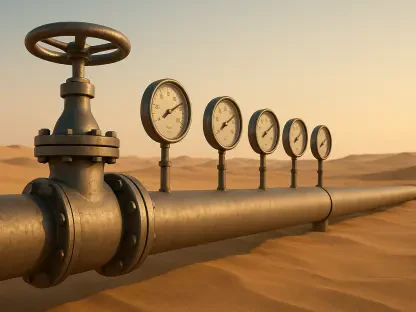
A recurring theme in the critique of South Africa’s gas strategy is the concept of “capital lock-in,” a phenomenon where massive upfront investments in physical infrastructure create an inescapable path dependency. When the government commits to extensive pipeline networks and processing facilities, it is essentially making a 30-to-40-year bet on the continued relevance of fossil gas. This creates a significant opportunity cost, as every rand spent on gas infrastructure is a rand that cannot be invested in modernizing the national transmission grid to accommodate wind and solar energy. Economic analysts warn that if international carbon taxes increase or if the cost of battery storage continues its rapid decline, these high-capital gas projects could quickly become “stranded assets.” These are facilities that become economically unviable or physically unusable long before they have paid for themselves, potentially leaving the state or public utilities like Eskom with massive debts. The financial vulnerability inherent in this model is particularly concerning for a developing economy, as the burden of paying for these underutilized assets often falls on the taxpayer or is passed on to consumers through significantly higher electricity tariffs. The long-term fiscal health of the nation depends on its ability to remain flexible, a trait that large-scale, rigid fossil fuel infrastructure fundamentally lacks.
Evaluating the Bridge Fuel Narrative: Environmental and Grid Realities
The South African government frequently utilizes the “bridge fuel” narrative, characterizing gas as a necessary transitionary step that provides flexible capacity to balance the intermittency of renewable energy. While gas-fired plants can be ramped up or down more quickly than coal stations, the environmental benefits of this “bridge” are increasingly under fire. Environmental scientists point to the high global warming potential of methane, which often leaks during the extraction, transport, and processing of fossil gas. If these leakages are not strictly controlled, the total greenhouse gas footprint of gas-fired power could rival or even exceed that of modernized coal facilities, undermining South Africa’s international climate commitments. Furthermore, the debate is shifting toward the technical sequencing of the energy transition, with critics questioning whether gas is a necessary detour or an expensive distraction. As battery storage and green hydrogen technologies advance, the window of opportunity for gas to serve as a bridge is rapidly closing. The challenge for policymakers is to determine if the multi-decade lifespan of gas projects is compatible with the urgent need to decarbonize. If gas is integrated too late or at too large a scale, it risks extending the fossil fuel era rather than facilitating its end, potentially locking the country into a high-carbon trajectory precisely when the rest of the world is moving toward net-zero.
Socioeconomic Impacts and Market Evolution
Prioritizing Social Equity and Inclusion: Beyond Elite Capture
South Africa’s energy transition is inextricably linked to its historical struggle against economic inequality, placing Broad-Based Black Economic Empowerment (B-BBEE) at the heart of the Gas Bill [B6-2026]. The legislation explicitly aims to use infrastructure development as a vehicle for job creation and local industrialization, yet the realization of these goals remains a point of contention. There is a deep-seated concern among labor unions and community organizations that the benefits of the burgeoning gas industry will be captured by a narrow political and economic elite, leaving marginalized communities to deal with the environmental fallout. To prevent this, advocacy groups are calling for transparent ownership structures and robust procurement policies that prioritize small-scale, local operators over established multinational players. Additionally, the impact on electricity prices is a major socioeconomic factor; if the transition to gas leads to higher tariffs, it could exacerbate energy poverty for millions of low-income households. For the transition to be truly “just,” it must ensure that energy remains affordable and that the shift in the labor market provides high-quality, sustainable jobs for those currently employed in the coal sector. Public participation is not merely a procedural requirement but a necessary safeguard to ensure that the dividends of energy reform are distributed equitably across all sectors of society.
Regional Leadership and Market Reform: The SADC Context
The gas debate in South Africa is unfolding against the backdrop of a significant restructuring of the domestic electricity market, which is transitioning toward a more competitive and decentralized model. As the country moves away from a single-buyer system dominated by Eskom, the role of large-scale, centralized gas projects faces new competition from distributed renewable energy and independent power producers. This market evolution has profound implications for the Southern African Development Community (SADC), where South Africa serves as both a major energy consumer and a regional economic leader. Neighboring countries with significant gas reserves, such as Mozambique, are closely watching South Africa’s policy shifts to determine the future of regional energy trade. Decisions made in Pretoria will set a precedent for how African nations can balance the urgent need for industrialization with the global imperative of climate responsibility. By championing development pathways that are African-led and focused on local ownership, South Africa can model a transition that avoids the pitfalls of external debt-driven infrastructure projects. The goal is to create a regional energy market that is resilient to global price shocks and centered on the long-term stability of the Southern African economy, rather than short-term gains for external investors.
Future Outlook for Energy Governance
Shifting Away from Binary Thinking: Scale and Flexibility
The national dialogue regarding energy has reached a stage of maturity where it is moving beyond the simplistic “pro-gas versus anti-gas” binary. Instead, the conversation is now centered on a sophisticated analysis of scale, timing, and financial flexibility within a diverse energy portfolio. Experts argue that the most resilient energy system is one that avoids over-reliance on any single fuel source, especially one tied to volatile international markets. This shift toward “informed skepticism” requires every proposed infrastructure project to be scrutinized for its long-term viability in a world that is rapidly moving toward decarbonization. Policymakers are being urged to adopt a modular approach to energy planning, prioritizing investments that can be scaled or adapted as technology evolves. For instance, rather than building massive, permanent gas pipelines, the focus could shift toward smaller, localized gas-to-power solutions that can be easily phased out as renewable storage becomes more cost-effective. This flexibility is crucial for maintaining South Africa’s industrial competitiveness, as global trade partners increasingly implement carbon border adjustments that penalize products manufactured with high-carbon energy. The ability to pivot quickly in response to technological breakthroughs and shifting global standards will be the hallmark of a successful energy strategy in the mid-21st century.
Navigating Toward a Resilient Energy Policy: Actions for Progress
Decision makers throughout the previous legislative period recognized that the success of South Africa’s energy transition depended on a careful balance between industrial necessity and environmental stewardship. They established that for fossil gas to play any constructive role in the national mix, the regulatory framework had to be robust enough to enforce strict environmental compliance and prevent market monopolization. Stakeholders concluded that the Gas Bill [B6-2026] served as a foundational step, but they also highlighted that its implementation required a strengthened energy regulator capable of protecting consumer interests against price volatility. The government subsequently shifted its focus toward integrating gas only where it provided the highest value for grid stability, while simultaneously accelerating the expansion of the renewable energy transmission network. This dual-track approach ensured that the nation did not become trapped in an obsolete fossil fuel pathway but instead utilized gas as a limited, strategic tool. Moving forward, the focus remained on transparency and public accountability, ensuring that the “just” element of the energy transition was not treated as a secondary concern. By prioritizing local ownership and decentralized energy systems, the nation successfully began to build an economy that was both resilient to global shocks and inclusive of its citizens’ needs. This proactive stance on governance ultimately provided a blueprint for other emerging economies to navigate the complex realities of the global energy shift.