
The widening gap between well-funded commercial agribusinesses and small-scale farmers remains a primary hurdle in the equitable distribution of water conservation technologies across rural provinces. This internal friction highlights the complex reality of a nation that sits at a precarious crossroads of environmental risk and proactive governance. Morocco currently operates as a high-risk yet high-readiness state, where the macroeconomic consequences of ecological shifts are no longer distant projections but immediate fiscal realities. The region is warming significantly faster than the global average, creating a situation where traditional rainfed agriculture is under constant threat. With approximately one-third of the domestic workforce employed in this sector, any fluctuation in precipitation leads to immediate shocks in rural income and consumer demand. This volatility forces the government to balance urgent social needs with long-term infrastructure investments.
Addressing the Escalating Crisis of Water Scarcity
To mitigate the impact of consecutive multi-year droughts and a projected twenty percent decline in annual precipitation, the Moroccan government has accelerated its focus on non-conventional water sources. Central to this strategy is the massive expansion of desalination capacity, with facilities powered increasingly by the nation’s abundant solar and wind resources. These plants provide a stable supply for urban centers and critical agricultural zones, reducing the reliance on depleting underground aquifers and erratic seasonal rainfall. Parallel to these efforts is the development of the Sebou-Bouregreg water highway, a feat of hydraulic engineering designed to transfer surplus resources to drought-stricken regions. By prioritizing water security as a matter of national sovereignty, the state aims to decouple its economic growth from the whims of the climate. This transition requires not just physical pipes but a complete rethink of how water is valued and distributed.
Beyond the inland agricultural challenges, Morocco faces significant risks along its extensive Atlantic and Mediterranean coastlines. Rapid urbanization in these regions has made them particularly vulnerable to rising sea levels, coastal erosion, and the saltwater contamination of low-lying groundwater reserves. Protective measures now include integrated coastal zone management plans that combine hard infrastructure with nature-based solutions like dune restoration and mangrove protection. These initiatives are vital because the coastal economy supports millions of residents and a burgeoning tourism industry that is essential for foreign exchange. However, the costs associated with fortifying these areas are immense, often requiring sophisticated international financing and technical cooperation. The state continues to navigate these environmental pressures by embedding climate adaptation directly into its urban planning and development frameworks to ensure long-term stability.
Sustainable Transitions and Financial Innovation
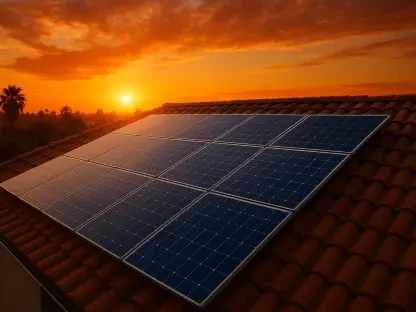
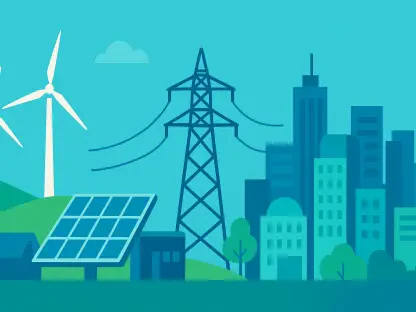
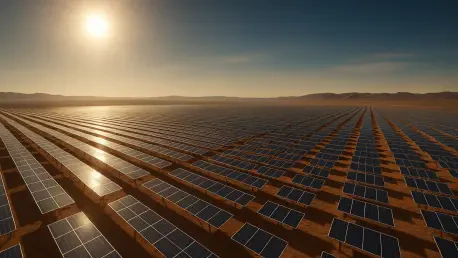
Morocco’s commitment to an aggressive energy transition serves as a regional benchmark, with a goal to ensure that more than half of its total electricity capacity originates from renewable sources by 2030. This objective is anchored by world-class solar complexes and wind farms that take advantage of the country’s unique geographical positioning. From 2026 to 2028, the expansion of high-voltage transmission lines will connect remote renewable hubs with industrial zones, providing the foundation for the emerging green hydrogen sector. This sector is positioned to become a major export product for European markets seeking decarbonized energy. The transition is also supported by a sophisticated Nationally Determined Contribution that targets a 51 percent reduction in greenhouse gas emissions within the decade. Such institutional foresight has turned a potential vulnerability into a competitive advantage, attracting global investors interested in sustainable industrialization.
The journey toward total climate readiness demanded a synthesis of bold engineering and rigorous fiscal policy that eventually redefined the regional economic landscape. Stakeholders realized that building resilience was not merely a matter of environmental stewardship but a fundamental requirement for national survival in an era of rapid warming. The implementation of large-scale desalination and the expansion of renewable energy capacity provided the necessary foundation for this transformation. As the nation moved forward, the integration of parametric insurance and green bonds stabilized the financial sector against inevitable shocks. It became clear that the most effective path involved empowering rural communities with the tools and knowledge to adapt their livelihoods to a more arid reality. Looking ahead, the focus shifted toward deepening these technological roots and ensuring that every sector of society participated in the green transition. This proactive stance offered a blueprint for other nations.