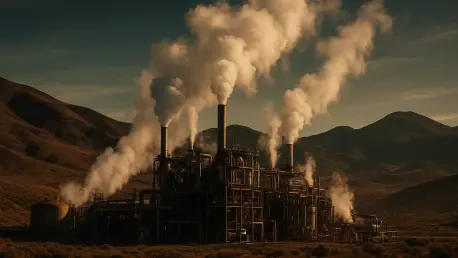

Deep beneath the sun-scorched basins of the American West lies a subterranean ocean of heat that could finally break the grid’s dependence on intermittent weather patterns. As the nation grapples with the transition to a sustainable economy, geothermal energy has moved from the periphery of the conversation to the absolute center of the renewable energy strategy. Unlike solar and wind, which are subject to the whims of the atmosphere, geothermal energy provides a firm power source—a consistent, 24/7 supply of carbon-free electricity generated from the internal heat of the planet. This renaissance is currently defined by a next-generation surge, heavily influenced by technological transfers from the oil and gas industry and fueled by the immense energy demands of global technology giants.
The American West serves as the epicenter for this shift, transforming from a landscape of experimental projects into a critical pillar of the clean energy transition. As developers eye the rugged terrains of the Mountain West and the Sierra Nevada, they encounter a complex regulatory and environmental landscape where the promise of infinite heat meets the reality of finite water. This sector is no longer just about tapping into visible steam vents or hot springs; it is about engineering the deep crust of the Earth to mimic the reliability of traditional power plants without the associated carbon footprint.
However, the rapid expansion of this industry is forcing a confrontation with the region’s most precious and dwindling resource: water. The transition toward enhanced geothermal systems requires a delicate balance between extracting thermal energy and managing hydrological stability. This analysis explores how the industry is navigating these technical and environmental hurdles to secure a place in the future of the American power grid.
Driving the Boom: Tech Giants and the Evolution of Heat Extraction
The primary driver of the current geothermal expansion is the rapid proliferation of data centers operated by companies like Google, Meta, and Oracle. These entities are aggressively pursuing net-zero targets that require a move away from natural gas-fired peaker plants. Geothermal energy has emerged as the preferred solution for providing the constant baseload power necessary to keep global digital infrastructure operational every second of the day. Recent massive power purchase agreements signal that tech companies are now the anchor tenants making large-scale geothermal projects financially viable.
This demand creates a symbiotic relationship where the technology sector provides the capital and long-term stability needed for geothermal developers to scale their operations. As these tech giants expand their footprints in states like Nevada, Utah, and New Mexico, they are directly funding the drilling and infrastructure that will eventually benefit the entire regional grid. The shift in energy procurement strategies reflects a broader corporate recognition that meeting climate goals requires more than just buying renewable energy credits; it requires the physical development of 24/7 carbon-free resources.
The Search for Firm Power: Data Centers as Industry Catalysts
Data centers represent one of the fastest-growing segments of energy demand in the Western United States. To maintain the reliability of cloud services and artificial intelligence processing, these facilities require a level of energy stability that traditional renewables struggle to meet alone. Geothermal energy fills this gap perfectly, offering a capacity factor that rivals coal or nuclear power while remaining entirely carbon-neutral. This reliability is the core reason why contracts, such as Google’s nearly 400-megawatt deal in Utah, have become the new industry standard.
Moreover, the integration of geothermal power allows tech companies to decouple their growth from the volatility of natural gas prices. By locking in long-term power purchase agreements with geothermal developers, these companies are effectively hedging against future energy market fluctuations. This trend is accelerating as more tech firms realize that geothermal is the only scalable, firm renewable resource currently capable of meeting their intense, around-the-clock operational requirements.
Performance Indicators and the Shift Toward Scalable Systems
Market data suggests a pivot from traditional hydrothermal resources—which are geographically rare—toward Enhanced Geothermal Systems (EGS) and closed-loop technologies. While traditional geothermal is limited to natural hot springs, EGS utilizes hydraulic fracturing to manufacture reservoirs in hot, dry rock, vastly expanding the potential geographic footprint of the industry. Projections indicate that if these next-gen technologies can overcome high upfront drilling costs, geothermal could contribute significantly to state-level mandates, such as California’s requirement for 100% clean electricity by 2045.
The development of these scalable systems is benefiting from a cross-pollination of talent and technology from the petroleum sector. Horizontal drilling, advanced sensors, and high-temperature drill bits developed for shale oil are now being repurposed to tap into the Earth’s thermal energy. This shift is lowering the barrier to entry for projects in regions that were previously thought to be geologically unsuitable for geothermal power, paving the way for a much broader regional energy integration.
The Thirsty Frontier: Navigating the Water-Energy Nexus
The most formidable obstacle facing the industry is the massive water requirement inherent in next-gen geothermal extraction. In the arid West, where water rights are strictly governed and droughts are persistent, the water footprint of Enhanced Geothermal Systems is under intense scrutiny. EGS projects can lose significant volumes of water to underground fractures; even a highly efficient gigawatt-scale project could consume tens of millions of gallons of water daily. This creates a double burden in water-stressed regions, where both the power plant and the data center it serves require vast amounts of local water for operation and cooling.
Public opposition is mounting as communities express concern that the thirst of the clean energy sector could jeopardize local aquifers and agricultural supplies. This tension is particularly acute in states like New Mexico and Nevada, where every gallon of water is already accounted for in complex legal compacts. Developers must now prove that their projects will not deplete the local water table, often requiring them to purchase expensive water rights or invest in advanced recycling technologies to mitigate their environmental impact.
The Regulatory Landscape: Compliance and Environmental Standards
As geothermal development moves onto public lands, it must navigate a dense thicket of federal and state regulations. The Bureau of Land Management (BLM) is overseeing record-breaking lease auctions, while state regulators in places like California and New Mexico are balancing clean energy mandates against strict water conservation laws. Compliance is no longer just about carbon output; it now involves rigorous reporting on water loss, groundwater protection, and the impact on local aquifers. Furthermore, federal research projects are critical in setting the technical standards that will dictate how the industry manages its environmental footprint.
Regulators are increasingly requiring geothermal operators to provide real-time monitoring of subsurface activities to prevent seismic events and ensure that injected fluids do not migrate into potable water supplies. These stringent requirements are designed to build public trust but also add to the complexity and cost of project development. Navigating this landscape requires a sophisticated understanding of both environmental law and the specific geological challenges of the American West.
Engineering the Future: Innovations in Water Efficiency and Scalability
The future of the industry hinges on solving the efficiency-versus-scale trade-off. Closed-loop systems, which circulate fluid through sealed pipes, offer a near-zero water loss solution ideal for drought-prone areas, yet they currently struggle to match the high power output of EGS. Emerging innovations in well spacing and injection techniques are being tested to mitigate water scarcity issues. Additionally, advancements in secondary fluid turbines may allow plants to generate power at lower temperatures, further broadening the potential for regional energy integration.
Engineers are also exploring the use of supercritical carbon dioxide as a working fluid instead of water, which could theoretically eliminate the need for water in the subterranean loop altogether. While these technologies are still in the demonstration phase, they represent a significant step toward making geothermal energy a truly water-neutral resource. If these innovations can be scaled, the industry will be able to operate in even the most arid environments without competing with local communities for water.
Technological Disruptors: Closed-Loop vs. EGS Designs
The competition between closed-loop and EGS designs is driving rapid innovation across the sector. Closed-loop systems are praised for their environmental friendliness, as they do not require fracturing the rock or losing fluid to the surrounding environment. However, their lower heat exchange efficiency means they currently require more wells to produce the same amount of power as an EGS project. This makes the choice between the two technologies a matter of balancing geological risk, water availability, and capital expenditure.
Meanwhile, EGS developers are refining their stimulation techniques to create more predictable and contained reservoirs. By using advanced seismic monitoring and precision drilling, they are reducing the amount of water that escapes into the deep crust. These improvements are essential for proving to regulators and the public that EGS can be a responsible neighbor in water-constrained basins.
Economic Forecast: Risk Mitigation and Global Trends
Geothermal’s trajectory will be influenced by its ability to de-risk exploration. While drilling remains a high-capital endeavor, the integration of oil and gas expertise is reducing geological uncertainty and shortening the time from lease to generation. As global economic conditions favor domestic energy security and carbon-free firm power, geothermal is positioned as a key growth area for institutional investment. The industry’s success will likely depend on whether it can successfully decouple power generation from freshwater consumption.
Investment is flowing from diverse sources, including traditional energy companies looking to diversify their portfolios and venture capital firms betting on the next breakthrough in deep-heat extraction. The economic viability of these projects is also being bolstered by federal tax credits and state-level incentives that prioritize reliable clean energy. As the cost per megawatt-hour continues to fall, geothermal is becoming a competitive alternative to other forms of baseload generation.
Balancing Heat and Hydration: Final Industry Outlook
The industry successfully recognized that its long-term survival was inextricably linked to its water management strategies. To realize the full potential of geothermal energy as a global disruptor, developers prioritized the deployment of hybrid cooling systems that slashed evaporation rates by over sixty percent compared to early designs. The sector shifted toward the extensive use of non-potable saline aquifers, which preserved precious freshwater for local municipalities and agriculture. This strategic pivot ensured that the expansion of the energy grid did not come at the expense of regional water security.
Regulatory bodies established a standardized water-accounting framework that compelled all operators to provide transparent data on fluid loss and aquifer health. This data-driven approach fostered a new level of community trust, allowing projects to proceed with fewer legal delays. The industry also benefited from the widespread adoption of closed-loop modular designs in the most sensitive ecological zones, proving that subterranean heat could be harvested with minimal surface impact. Ultimately, these actions demonstrated that the marriage of digital infrastructure and carbon-free heat could thrive even in a drying landscape through radical technological efficiency and proactive environmental stewardship.