
With a targeted completion timeline of just 18 months, stakeholders are moving rapidly to modernize the energy entry points for the landlocked Ethiopian nation. This $660 million venture represents a significant shift in the regional energy landscape, involving the Ethiopian government, the Republic of Djibouti, and the Dangote Group. By establishing a direct link between coastal supply points and inland demand centers, the project aims to solve long-standing infrastructure bottlenecks that have hindered economic progress. The strategy involves building a 120-kilometer refined petroleum products pipeline that will fundamentally alter how fuel moves through the Horn of Africa. This initiative is not merely about transportation; it is about creating a resilient energy corridor that supports a burgeoning industrial sector. As the region seeks to stabilize its domestic markets against the volatility of international oil prices, the construction of this pipeline emerges as a cornerstone of economic modernization and regional cooperation.
Enhancing Regional Logistics: Economic Efficiency and Reliability
Streamlining the Movement of Petroleum
The current reliance on road-based haulage for fuel needs has created a systemic inefficiency that hampers the broader economy. Ethiopia, as a landlocked nation with an expanding industrial footprint, has historically depended almost exclusively on tanker trucks to transport refined products from coastal ports. This dependency leads to exorbitant logistics costs, as moving fuel by road is significantly more expensive per unit than pipeline transport. High fuel consumption by the trucks themselves, frequent maintenance requirements, and rising labor costs contribute to a heavy overhead that eventually trickles down to businesses and individual consumers. Furthermore, the sheer volume of tankers necessary to meet national demand creates severe congestion along the primary corridor connecting Ethiopia and Djibouti. This traffic accelerates the degradation of expensive road networks and increases the risk of accidents, which often lead to tragic losses and environmental damage.
Technical Infrastructure: Scope and Capacity
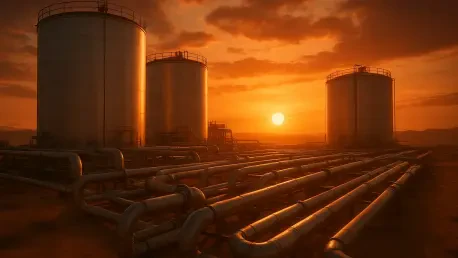
To rectify these logistical hurdles, the 120-kilometer pipeline project introduces a dedicated conduit for refined petroleum products, effectively bypassing the constraints of road infrastructure. The technical scope of the project focuses on high-volume liquid transport coupled with massive storage capabilities at both ends of the line. On the Djiboutian side, the Damerjog terminal is being developed to house approximately 375,000 cubic meters of storage capacity. Conversely, the facility at Dewele on the Ethiopian side is designed to offer a much larger capacity of roughly 800,000 cubic meters. Together, these facilities provide a cumulative storage buffer of 1.175 million cubic meters. This intentional scale allows both nations to maintain significant strategic reserves, which are essential for stabilizing the market during shipping delays or international price spikes. The ambitious 18-month timeline for operational status reflects the urgency felt by all involved parties.
Strategic Partnerships: Industrial Expansion and Capital
Synergies: Sovereign Wealth and Private Capital
The project is spearheaded by Ethiopian Investment Holdings in partnership with the Dangote Group, showcasing a powerful synergy between sovereign wealth and private industrial capital. EIH, which manages some of Ethiopia’s most valuable state assets, brings the weight of governmental backing and regulatory support to the table. This collaboration allows Ethiopia to leverage the immense technical expertise and financial resources of a major African multinational without relying solely on traditional developmental aid or external loans from Western or Asian entities. By partnering with the Dangote Group, the Ethiopian government ensures that the project is managed with an industrial mindset focused on efficiency and long-term profitability. This approach represents a new model for African development, where domestic and regional players take the lead in solving local infrastructure gaps. It signifies a move toward greater economic self-reliance and the strategic management of national energy security.
Reliability: Driving Industrial Growth
Moving beyond simple cost reduction, the transition to a pipeline-centric model offers a level of reliability that truck transport cannot match. Road logistics in the region are frequently susceptible to weather disruptions, such as seasonal flooding or extreme heat, which can stall essential fuel deliveries for days. Mechanical failures and logistical delays at border crossings further complicate the supply chain, leading to unpredictable shortages that stifle productivity. For the burgeoning industrial sector in Ethiopia, having a predictable and continuous flow of energy is a fundamental prerequisite for sustained growth. Modern factories and processing plants require stable energy inputs to maintain their operational schedules and meet international export commitments. By providing a dedicated and weather-resistant energy conduit, the pipeline ensures that industrial zones remain functional regardless of the external conditions that typically plague road-based haulage.
Strengthening Energy Security: Geopolitical Bonds
Strategic Reserves: Securing National Safety
Beyond the obvious logistical and economic benefits, the pipeline serves a vital function in strengthening national energy security through its massive storage capabilities. In an era marked by increasing maritime uncertainty in the Red Sea and the Gulf of Aden, the ability to store over a million cubic meters of refined products is a critical strategic advantage. For Ethiopia, a nation that depends on consistent energy imports for its survival, having high-capacity storage inland at Dewele provides a safety net against external disruptions. This buffer ensures that essential sectors, including national defense, emergency services, and transportation, can continue to function even if coastal supply routes are temporarily compromised. The storage facilities act as a hedge against global supply chain shocks, providing a level of sovereignty over energy resources that road-based transport could never offer. This proactive approach to energy storage is a necessary response to the geopolitical complexities of the modern market.
Future Outlook: Interdependence and Regional Stability
Stakeholders recognized that the successful completion of the pipeline required immediate attention to cross-border regulatory frameworks and environmental safety standards. They prioritized the establishment of joint management committees to oversee the ongoing operational logistics and ensure that the 18-month timeline remained achievable. Future considerations focused on expanding this network to include other neighboring states, potentially transforming the Horn into a centralized energy hub. Investors looked toward the integration of smart monitoring technologies to prevent leakage and ensure the integrity of the line across diverse terrains. The project served as a definitive blueprint for how regional cooperation and private-sector engagement solved legacy infrastructure gaps. By securing high-capacity storage and efficient transport, the partners laid the groundwork for a resilient industrial economy that was no longer at the mercy of logistical bottlenecks. This initiative proved that strategic infrastructure investments were the most effective way to foster stability.