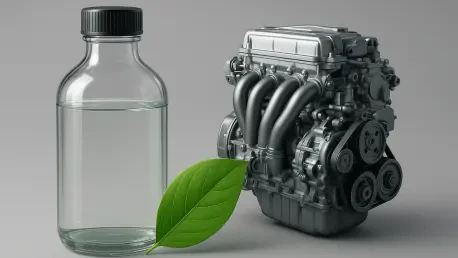

Proponents of renewable ethanol argue that domestic liquid fuels are essential for balancing industrial survival with the urgent requirements of the Green Deal’s climate goals. As the European Union moves through the critical mid-point of this decade, the debate over the future of the automotive industry has reached a fever pitch. The initial vision of a total transition to battery-electric vehicles is currently being re-evaluated through the lens of economic practicality and resource availability. This legislative shift centers on the revision of CO2 emission standards, which aims to reconcile ambitious environmental targets with the reality of existing internal combustion engines and hybrid fleets. By exploring a multi-pathway approach, the European Commission is signaling a potential departure from a strict technological mandate, recognizing that a variety of carbon-reduction tools will be necessary to meet the 2030 and 2035 milestones without alienating the broader industrial sector or leaving the European consumer behind.
Navigating the Legislative Evolution of Article 5a
The primary focus of the current policy debate is Article 5a of the European Commission’s proposal, which serves as a cornerstone for the revised CO2 standards. Under previous mandates, new cars and vans were expected to achieve a 100% reduction in average fleet emissions by 2035, essentially mandating a total shift to zero-emission vehicles. However, recent adjustments have proposed lowering this target to 90%, thereby leaving a 10% flexibility margin. This specific margin is intended to be addressed through a complex system of compliance credits linked to the use of sustainable renewable fuels and low-carbon steel manufactured within the European Union. For the ethanol industry, this revision is viewed as a vital opportunity to prove that liquid fuels, which already adhere to the stringent sustainability criteria of the Renewable Energy Directive, must be fully integrated into the transition rather than sidelined in favor of an exclusively electric strategy for the future.
The renewable ethanol sector argues that excluding crop-based biofuels from this credit mechanism creates an artificial hierarchy that treats proven solutions as secondary. Advocates suggest that the current proposal’s point of contention lies in the eligibility of these fuels, which have consistently demonstrated their ability to reduce lifecycle greenhouse gas emissions. By allowing manufacturers to count renewable ethanol toward their compliance targets, the EU could provide a more realistic path for the automotive sector to meet its obligations. This approach would also address the significant portion of the vehicle fleet that will still rely on internal combustion technology for years to come. Ensuring that these vehicles utilize the cleanest possible fuels is a pragmatic way to achieve immediate carbon reductions while the electrical infrastructure continues to scale. This legislative nuance is critical for maintaining industrial stability during a period of intense global competition.
Promoting Strategic Autonomy and Energy Security
A recurring theme among European policymakers is the concept of technology neutrality, which posits that no single entity should dictate which technology dominates the market. A singular focus on battery-electric vehicles is increasingly seen as a strategic risk, as it intensifies Europe’s dependency on critical raw materials and battery supply chains where external global players currently hold a dominant position. By diversifying the transition to include renewable ethanol, the EU can leverage its own vast agricultural resources, thereby enhancing its homegrown energy security. This shift is particularly relevant given the current geopolitical instabilities that underscore the urgent need for Europe to rely on domestic production. Ethanol provides a ready-to-use solution that utilizes the existing internal combustion engine and hybrid technology, as well as the current fueling infrastructure, avoiding the massive immediate capital expenditure.
By embracing a more inclusive technological framework, the European Union can safeguard its sovereignty while pursuing its environmental objectives. The consensus among many industry leaders is that the transition must not replace one form of energy dependence with another. Promoting the use of sustainable biofuels allows Europe to maintain its industrial lead in high-efficiency engine manufacturing while simultaneously developing its electric capabilities. This balanced strategy ensures that the European automotive sector remains resilient against supply chain shocks and price volatility in the global market for rare minerals. Furthermore, the integration of ethanol into the fuel mix provides an immediate buffer for energy prices, offering consumers a more affordable alternative during the transition. Ultimately, strategic autonomy is achieved by cultivating a diverse energy portfolio that makes the most of local innovation and agricultural productivity.
Analyzing Economic Growth and Environmental Gains
The economic case for renewable ethanol is intrinsically linked to the health of the European agricultural sector, providing essential revenue streams for farmers and supporting rural development across the continent. Beyond the economic benefits, the environmental credentials of the fuel are significant, with industry data showing that members of the renewable ethanol association have achieved an average lifecycle greenhouse gas saving of 82% compared to traditional fossil fuels. These figures highlight that ethanol is not merely a bridge technology but a core component of a carbon-neutral transport sector. The production of ethanol also yields high-protein animal feed as a co-product, which reduces Europe’s need for imported soy and further strengthens the domestic food and feed supply chain. This synergy between energy and agriculture demonstrates that decarbonization can be a driver for regional economic stability and sustainable land management.
However, the industry currently faces regulatory hurdles, such as the 3% ceiling on renewable-fuel credits, which many experts view as an arbitrary barrier to further progress. If a fuel delivers genuine and verified greenhouse gas savings, manufacturers should be permitted to utilize it to the fullest extent possible to meet their regulatory targets. Removing these restrictive caps would encourage additional investment in the biofuel sector, fostering innovation in second-generation ethanol and other advanced biofuels. Such advancements would likely lead to even higher emission savings and more efficient production processes. By aligning regulatory frameworks with scientific performance, the EU can create a marketplace that rewards the most effective decarbonization solutions. This would not only accelerate the reduction of the carbon footprint of the transport sector but also ensure that the economic benefits of the Green Deal are distributed more equitably.
Observing Operational Success in Regional Markets
Practical success stories across Europe demonstrate the viability of ethanol as a high-blend fuel that is both accessible and consumer-friendly. In France, the rapid expansion of E85, a blend containing up to 85% ethanol, has shown that drivers are eager to adopt lower-cost, sustainable alternatives when they are made available. With thousands of filling stations now offering E85 at a retail price significantly lower than conventional petrol, the French model serves as a clear blueprint for how other member states can integrate renewable fuels. This implementation has proven that the existing vehicle fleet can be adapted with minimal investment, providing an immediate solution for reducing emissions without requiring the purchase of a new, expensive electric vehicle. The success of E85 demonstrates that market-driven solutions, supported by clear policy signals, can lead to rapid shifts in consumer behavior and significant environmental benefits.
Technological innovation continues to push the boundaries of ethanol’s potential, with case studies highlighting near-zero carbon impact through optimized supply chains and partnerships with agricultural cooperatives. Technical evidence suggests that higher ethanol blends, such as E20, can operate over long distances with improved cost-efficiency and no mechanical drawbacks to engine reliability. These operational success stories refute the notion that liquid fuels are a relic of the past, instead positioning them as a sophisticated and evolving technology. As the automotive industry continues to refine hybrid and plug-in hybrid systems, the role of high-quality ethanol becomes even more critical in ensuring that the liquid fuel component of these drivetrains is as sustainable as possible. These developments emphasize that the path to decarbonization is not a choice between electric or liquid fuels, but rather a collaboration between all available low-carbon technologies.
Formulating Next Steps for Sustainable Transport
The shift toward a technology-open framework in the European Parliament signaled a growing recognition of the diversity of the European vehicle fleet and the immediate potential of sustainable fuels. Legislative bodies previously focused on a narrow path, but the emerging consensus favored a more inclusive strategy that utilized all certified renewable resources to reach the 2035 climate targets. Decision-makers successfully identified that a diversified approach protected the industrial base while offering consumers more affordable ways to participate in the green transition. By moving away from restrictive mandates and toward performance-based standards, the policy environment began to foster a more competitive and innovative atmosphere. This transition period was marked by a commitment to pragmatic solutions that balanced environmental urgency with the socioeconomic realities of a complex, interconnected market across the entire European Union territory.
To build on this momentum, the European Union must prioritize the removal of arbitrary regulatory caps that hinder the full adoption of high-performance biofuels. Stakeholders should focus on harmonizing fuel standards across all member states to ensure that high-blend ethanol is available to a wider demographic of drivers. Investment should be directed toward scaling up the production of advanced ethanol and optimizing the carbon footprint of the entire supply chain through carbon capture and sustainable farming practices. Policymakers must also ensure that the credit system for CO2 standards remains transparent and accessible to all manufacturers, encouraging a race to the top for emission reductions. By fostering a stable and predictable regulatory environment, Europe can attract the necessary capital to lead the global market in renewable energy technology. The future of transportation will depend on a sophisticated mix of electrification and sustainable liquid fuels.