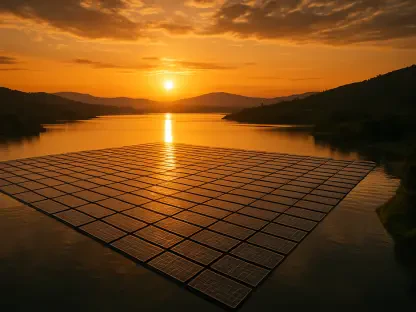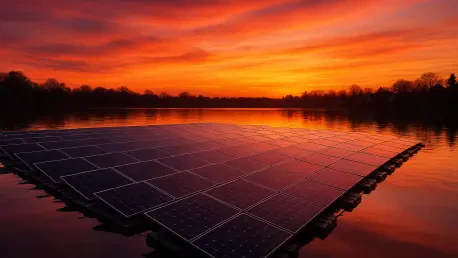

The installation of three massive floating platforms on a local reservoir has established Monroeville as the site of the largest floating solar array in the state of Ohio. This engineering feat marks a significant shift in how small Midwestern communities approach energy independence and land stewardship. By deploying 9,222 high-efficiency solar panels across the surface of the village reservoir, the project adds 6 megawatts of clean capacity to the local power grid. For a community of approximately 1,300 residents, this expansion elevates Monroeville’s solar capacity to roughly 13 times the state average per capita. Developed through a partnership between D3Energy and Appalachian Renewable Power, the facility now ranks as one of the five largest floating solar installations in the country. This technological milestone highlights the village’s commitment to modernizing its infrastructure while maintaining the rural character that defines the region’s identity and economic base.
Maximizing Resource Efficiency: Floating Photovoltaics
Spatial Optimization: Solving the Land-Use Dilemma
By utilizing the water’s surface, the village effectively bypassed the need to occupy 30 acres of prime real estate that a traditional ground-mounted system would require. This specific spatial efficiency is crucial in areas where terrestrial development is either restricted or prohibitively expensive. Beyond the space-saving benefits, placing solar panels on water creates a synergistic cooling effect that improves the operational efficiency of the photovoltaic cells. As temperatures rise during peak summer months, the water beneath the arrays acts as a natural heat sink, preventing the panels from overheating and ensuring a more consistent energy output compared to land-based counterparts. Furthermore, the presence of these structures helps to significantly reduce water evaporation from the reservoir, preserving a vital local resource while simultaneously generating the electricity needed to power the surrounding homes and businesses. This dual-purpose infrastructure represents a major leap in utility management.
Environmental Performance: Benefits of Aquatic Arrays
The floating technology, often referred to as floatovoltaics, provides a unique solution for regions where agricultural preservation is a top priority. In “farm country,” the competition for fertile soil often pits renewable energy developers against local producers. By shifting energy production to the reservoir, Monroeville demonstrated that municipal assets can serve multiple roles without encroaching on the surrounding fields. This approach not only protects the local agricultural economy but also mitigates the environmental footprint of new utility construction. The floating platforms are designed to withstand the varying weather conditions of the Midwest, including wind and ice, ensuring long-term durability. By shielding a portion of the water surface, the panels also inhibit the growth of harmful algal blooms, which can plague standing bodies of water during the warmer months. This creates a cleaner aquatic environment while the village benefits from a stable and sustainable source of power.
Regional Economic Impact: Community Energy Resilience
Policy Alignment: Navigating Rural Zoning Restrictions
In regions heavily reliant on agriculture, the competition for land between food production and energy generation often creates friction among local stakeholders. The Monroeville project addressed this tension directly by repurposing a non-agricultural asset for utility-scale power. Ohio legislation has previously granted local authorities the power to restrict large-scale solar developments on fertile farmland, reflecting a broader trend of protecting the state’s agricultural heritage. By shifting the focus to water-based arrays, the village avoided the land-use conflict that has slowed renewable adoption in other rural counties. This approach demonstrates a viable pathway for farm country to embrace technological progress without sacrificing the ground that provides their primary livelihood. The success of this model suggests that rural municipalities can achieve high rates of renewable penetration by identifying underutilized aquatic surfaces that do not interfere with the traditional crop cycles.
Sustainable Future: Actionable Municipal Insights
The successful implementation of this floating array provided a clear roadmap for other American towns facing similar geographical and regulatory constraints. While the project initially focused on meeting immediate power needs, the broader implications suggested that water-based solar could become a standard component of municipal water management across the Midwest. Local officials emphasized that the collaboration between private developers and public utilities was essential for navigating the technical complexities of floating hardware and aquatic anchoring systems. As the state’s total floating solar capacity climbed toward 10 megawatts with additional projects in Delaware and Lima, the precedent set by Monroeville became a primary reference point for state-wide policy discussions. Ultimately, the village proved that size was not a barrier to innovation, demonstrating that even a small community could lead a movement. The project concluded with the establishment of protocols that ensured the reservoir served its dual purpose for decades.