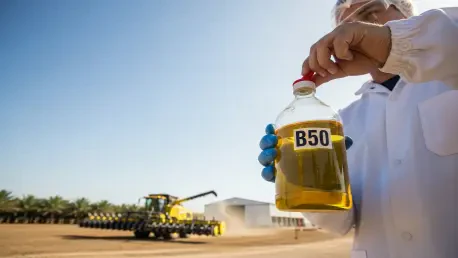

The lush green horizons of the Indonesian archipelago are no longer just a backdrop for agriculture but serve as the engine for a monumental shift toward total energy independence. As the nation prepares for a landmark transition, the traditional reliance on imported petroleum is being replaced by the vast potential of domestic palm oil. This change represents more than an environmental policy; it is a fundamental restructuring of the national identity, turning a major commodity exporter into a self-reliant energy giant.
Beyond Raw Exports: Indonesia’s Radical Shift Toward Energy Autonomy
Indonesia is rewriting its economic playbook by moving away from being a simple supplier of raw materials to becoming a sophisticated global energy player. On July 1, the nation officially implements the B50 mandate, requiring a fifty percent palm oil blend in all domestic diesel fuel to ensure a stable energy future. This bold move fundamentally alters the country’s trajectory, prioritizing domestic consumption over the export of crude palm oil to foreign markets.
By internalizing the supply chain, the government builds a protective shield around the national economy. This strategy transforms the humble oil palm fruit into a high-tech energy source, proving that a developing nation can lead the world in renewable fuel adoption. It marks a definitive end to the era of passive exporting and the beginning of a period characterized by industrial maturity and technological pride.
Strengthening National Resilience by Cutting Ties with Fossil Fuel Volatility
The pursuit of B50 is rooted in the practical necessity of decoupling the national budget from the erratic fluctuations of the global petroleum market. Frequent price spikes in international crude oil have historically drained the national treasury, forcing the government to spend billions on subsidies to keep transportation costs manageable. By switching to homegrown biodiesel, the country effectively neutralizes these external shocks, ensuring that local industry remains competitive regardless of geopolitical tensions abroad.
Moreover, the transition creates a self-sustaining loop where energy production supports the very farmers who provide the raw materials. This resilience is not just about fuel; it is about creating a predictable economic environment where businesses thrive without the constant fear of sudden energy shortages. The focus on domestic palm oil guarantees that the fuel powering the nation’s trucks and machinery is harvested just a few miles from the refineries.
The B50 Mandate: Maximizing Domestic Value and Reducing Foreign Exchange Drain
Financial stability serves as the backbone of this energy transition, as evidenced by the massive amounts of foreign exchange saved through biodiesel initiatives. Since the initial push toward renewable blends, the reduction in diesel imports has prevented the outflow of approximately IDR 722.9 trillion in national wealth. This capital is now being redirected toward internal infrastructure and social programs, strengthening the domestic economy from the ground up.
The economic ripple effect extends far beyond the savings at the gas pump. Processing palm oil locally into high-quality biodiesel has generated an additional IDR 114 trillion in added value, creating a sophisticated industrial sector that did not exist a decade ago. By mandating the B50 blend, the government ensures that the profits from the palm oil industry stay within the country, fueling prosperity for millions of citizens instead of enriching foreign oil producers.
Decades of Progress: Documenting Carbon Reductions and Rural Job Creation
Environmental stewardship and social welfare are the dual pillars of the nation’s biodiesel journey. The cumulative impact of these renewable fuel policies has resulted in a staggering reduction of over 228 million tonnes of carbon dioxide emissions, significantly advancing the progress toward international climate targets. This reduction demonstrates that large-scale industrial growth and aggressive environmental protection can indeed coexist when a nation prioritizes its natural resources.
Furthermore, the logistical demands of the B50 supply chain have turned the palm oil sector into a massive employment engine, supporting the livelihoods of nearly 11 million people. This workforce spans from the plantation workers in remote provinces to the highly skilled engineers in urban refineries. By revitalizing rural communities through stable energy demand, the program effectively reduced urban migration and fostered regional development in previously underserved areas.
A Master Plan for Sustainability: From Replanting Initiatives to High-Yield Innovation
To maintain the momentum of the B50 program, a comprehensive framework managed by the Palm Oil Plantation Fund Management Agency focused on long-term viability. A central component of this plan was the People’s Palm Oil Replanting program, which aimed to increase productivity on existing land through the use of genetically superior seedlings. This approach ensured that the increased demand for biodiesel did not lead to further deforestation, but rather to a more efficient use of current agricultural resources.
The strategy also placed a heavy emphasis on intellectual capital and technological modernization to keep the industry on the cutting edge. Investment in specialized human resource training and climate-resilient crop research equipped the next generation of farmers and scientists with the tools needed to face evolving challenges. As the infrastructure for biodiesel production continued to expand, the nation prioritized a transparent energy ecosystem that balanced industrial output with ethical stewardship.