
Strategic collaboration between public agencies and private corporations has turned the northern Spanish coast into a technology playground for the next generation of energy. The transformation of the Basque Country from a traditional industrial region into a sophisticated center for renewable innovation serves as a masterclass in economic evolution. By moving away from its historic reliance on heavy steel and shipbuilding, the region has reinvented its existing manufacturing DNA to meet the demanding requirements of global decarbonization. This transition was never about luck or geography alone; rather, it was a calculated move supported by long-term policy frameworks and massive capital investments that began decades ago. Today, the area functions as a vertically integrated ecosystem where every link in the value chain—from initial research and development to final assembly—operates within a concentrated geographic footprint, attracting international attention as a blueprint for sustainable industrial growth and localized technological expertise.
Strategic Infrastructure and Logistical Mastery
The Port of Bilbao serves as the physical foundation upon which the region’s wind dominance is built, offering a unique logistical advantage that few other maritime facilities can match. Spanning over four million square meters, the port has undergone a radical reorganization to accommodate the sheer scale of modern wind turbine components. Approximately 38% of the available land with usage rights is now controlled by entities within the wind energy sector, marking a shift toward high-tech specialized logistics. This massive spatial commitment allows for the storage and movement of oversized equipment that is practically impossible to transport via standard highways or inland rail lines. By centralizing operations within a maritime hub, the Basque Country bypasses the typical bottlenecks of energy infrastructure. The facility provides deep-water berths capable of handling specialized installation vessels, ensuring that the massive components produced nearby can be shipped directly to offshore sites across Northern Europe.
Within this logistical framework, a highly efficient manufacturing-to-export pipeline has emerged, significantly reducing the lead times for major energy projects. Industrial players like Haizea Wind have established state-of-the-art facilities directly on the dockside to manufacture monopiles and tower sections that can reach ten meters in diameter. These massive steel structures are joined by specialized logistics centers operated by Siemens Gamesa, where 70-meter turbine blades are staged for global distribution. This proximity between the production floor and the shipping vessel eliminates the high costs and logistical risks associated with moving heavy loads through urban centers. Consequently, the region has become a preferred staging ground for developers who prioritize supply chain reliability. This streamlined approach not only enhances the competitiveness of local manufacturers but also solidifies the port’s reputation as a vital node in the global energy network as the industry moves further into the current year.
Industrial Clusters and the Power of Major Corporations
A defining characteristic of the Basque success story is the “tractor effect,” a phenomenon where large, globally influential corporations pull an entire network of smaller suppliers into their orbit. The region is the ancestral home of Iberdrola, which remains one of the world’s largest power utilities, and Siemens Gamesa, a titan in turbine manufacturing. These companies act as anchors, providing a stable source of demand that encourages smaller firms to specialize and innovate. Since the 1990s, this dynamic has been nurtured by a series of regional industrial policies designed to create a dense cluster of expertise. Today, this cluster comprises more than 150 specialized manufacturing firms and service providers that support every facet of wind farm construction. Whether it is high-precision electronic connectors or complex gearbox assemblies, the ability to source every component within a 50-mile radius creates an unparalleled level of efficiency that drives down the overall cost of energy.
Strategic synergy between the public sector and private enterprise further distinguishes the Basque model from more laissez-faire economic approaches. A current example of this cooperation is Aixeindar, a joint venture between the Basque Energy Agency and Iberdrola that focuses on expanding domestic onshore capacity. This partnership is driving the development of the Labraza wind farm, a project valued at roughly €59 million that represents a major milestone in local power generation. By sharing the financial risks and administrative hurdles associated with such large-scale developments, the state ensures that renewable energy projects remain viable even during periods of global economic fluctuation. This collaborative framework extends beyond mere financing; it involves a shared vision for energy security and industrial resilience. The success of these joint ventures demonstrates that when the government acts as a partner, it can accelerate the deployment of clean energy while securing high-quality industrial jobs for the workforce.
Leading the Future of Offshore Technology
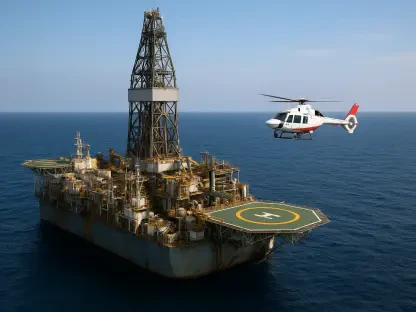
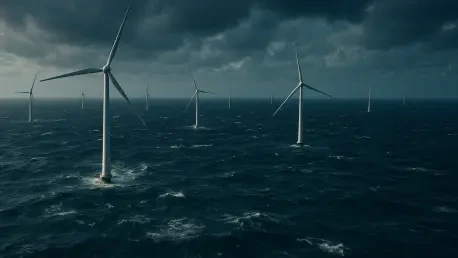
As the wind industry moves further out to sea, the Basque Country has positioned itself at the cutting edge of floating offshore technology. Because many of the world’s most promising wind resources are located in deep waters where fixed-bottom foundations are technically unfeasible, floating platforms are the next frontier for the sector. To address this challenge, the region established the Biscay Marine Energy Platform (BiMEP), a world-class open-sea testing site. Located off the coast of Armintza, this facility allows companies to test full-scale prototypes in the grueling conditions of the Atlantic Ocean. BiMEP is fully grid-connected, providing developers with the data they need to prove both the durability and the commercial viability of their designs. Notable successes, such as the DemoSATH project, have demonstrated that floating turbines can reliably generate power for thousands of homes. By providing this testing ground, the region ensures its companies remain leaders in the global offshore market.
The Basque model successfully proved that regional governments can serve as active architects of industrial ecosystems by integrating logistical infrastructure, financial incentives, and advanced research environments. This holistic strategy transformed a localized manufacturing base into a global center of excellence that defined the standards for wind energy implementation. By focusing on high-value engineering and specialized maritime logistics, the region secured its place as a critical supplier for international markets through 2026. Looking forward, the next steps for other regions involved adopting this “one-stop shop” approach to minimize supply chain fragmentation and foster deep-sea technological breakthroughs. The initiative demonstrated that the transition to green energy was as much about industrial policy as it was about environmental science. Ultimately, the Basque Country established a resilient framework that turned complex engineering hurdles into a sustainable engine for economic growth.