
The tectonic plates of global energy infrastructure are shifting as Turkey effectively eclipses the European Union in the race to establish a dominant solar manufacturing foothold across the continent. This development disrupts long-held assumptions regarding the industrial hierarchy of renewable energy production in the region. Recent data from 2026 highlights a significant divergence between strategic intent and industrial reality, signaling that the center of gravity for photovoltaic assembly moved southeast.
The Shifting Tides of European Photovoltaic Production
Current assessments of solar module assembly reveal a landscape where operational capacity is increasingly concentrated outside the political borders of the European Union. While the “Made in Europe” label remains a powerful marketing tool for the bloc, Turkey’s rapid industrialization created a measurable gap that challenges this narrative. The most recent industry mapping confirms that Turkey now commands 13.2 GW of operational solar module capacity, a figure that dwarfs the European Union’s combined total of 9.7 GW.
This disparity underscores the strategic importance of regional self-sufficiency and the speed at which Turkey implemented its manufacturing roadmap. Major players within the Turkish market leveraged favorable local conditions and supply chain advantages to outpace their neighbors. In contrast, many assembly lines across the EU faced delays or financial hurdles, preventing them from reaching the scale necessary to match the output of the Anatolian facilities.
Analyzing Market Dynamics and Production Milestones
Geographic Displacement and the Rise of the Anatolian Solar Hub
The movement of manufacturing dominance from Western Europe to Turkey represents a fundamental geographic displacement in the solar industry. For years, nations like Germany and Italy were considered the pioneers of photovoltaic technology, yet Turkey now produces more than the combined output of Germany, Italy, France, Spain, and the Netherlands. This shift occurred as Turkish manufacturers streamlined their operations and capitalized on their position as a bridge between Asian component sources and European demand.
Localized supply chains played a pivotal role in this transition, allowing Turkey to offer competitive pricing and reliable delivery schedules. Regional market preferences began to tilt toward Turkish modules due to their availability and the growing perception of Turkey as a reliable industrial hub. This momentum effectively redefined the Anatolian region as the primary manufacturing engine for the broader European market.
Quantifying the Capacity Gap and Growth Projections through 2030
Statistical breakdowns of current manufacturing volumes illustrate a growing gap between realized projects and the ambitious targets set by the EU for 2030. While the EU aims for significant domestic production, Turkey is already on a trajectory toward 23.2 GW of capacity. This projection is supported by high performance indicators from operational facilities that are already contributing to the regional energy mix, rather than remaining as speculative announcements on a developer’s desk.
Evaluating the success of these projects involves looking at the ratio of realized capacity versus planned volumes. In Turkey, the conversion rate from proposal to operational plant remained high, whereas the EU saw a larger percentage of projects stall in the planning phase. This difference in execution speed suggests that Turkey will maintain its lead as it moves toward the end of the decade.
Navigating Bottlenecks and the Upstream Supply Chain Crisis
A severe shortage in cell and wafer production within the EU continues to hinder its ability to compete on a global scale. While module assembly is the most visible part of the process, the lack of upstream components creates a vulnerability that relies on external sources for raw materials like polysilicon. Currently, the EU holds a negligible portion of the global wafer market, which forces manufacturers to import critical parts, often from the very markets they seek to replace.
Financial instability exacerbated this crisis, leading to a wave of insolvencies among established European manufacturers who could not withstand the pressure of high production costs and volatile material prices. To match Turkey’s downstream assembly capabilities, the EU must find a way to scale its upstream segments. Without a robust domestic supply of cells and wafers, the assembly plants remain susceptible to global supply chain shocks and pricing fluctuations.
The Strategic Framework of the Net-Zero Industry Act
The role of the Net-Zero Industry Act (NZIA) was designed to define domestic content boundaries and provide a protective framework for European manufacturers. It set a 40% domestic production mandate to be achieved by 2030, a goal that appears increasingly difficult to reach given the current capacity deficit. Regulatory compliance and security standards are being used to shape the competitive landscape, yet these tools have not yet triggered the massive investment required to catch up with Turkey’s output.
EU trade policies further complicate the situation by balancing the need for cheap solar imports to meet climate goals against the desire to protect local manufacturing. While incentives exist, they often fall short of the comprehensive support seen in other regions. Consequently, the strategic framework of the NZIA serves more as a set of aspirations than a realized industrial policy at this stage of the energy transition.
Assessing the Pipeline: Innovation versus Realized Capacity
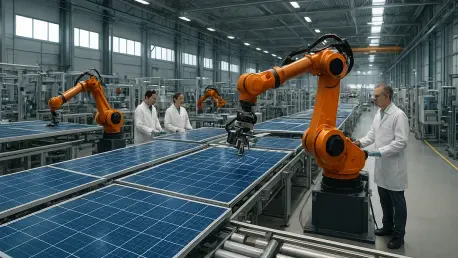
Distinguishing between announced projects and operational facilities is essential for understanding the true state of the market. While the pipeline for future European capacity looks impressive on paper, operational sites like the JTPV 5 GW plant in Turkey provide tangible evidence of growth. These facilities are not just assembling components; they are increasingly integrating new technological innovations in cell and wafer manufacturing to stay ahead of market disruptors.
Consumer and industrial shifts toward vertically integrated solar solutions favored manufacturers who could control the entire production process. As global economic conditions shifted, investment flowed toward projects with proven track records and existing infrastructure. This preference reinforced Turkey’s position, as its established facilities offered a lower risk profile compared to the speculative ventures still seeking funding within the EU.
Reevaluating Europe’s Path to Renewable Energy Sovereignty
The analysis indicated that Turkey established a sustainable lead by focusing on industrial execution over legislative debate. Success came from the ability to integrate manufacturing within specialized economic zones, which provided the agility that the EU lacked during this period. Future energy security required a shift in investment toward domestic ingot and wafer production to reduce dependence on external suppliers. These findings illustrated that regional sovereignty depended on physical infrastructure rather than just regulatory frameworks. Stakeholders moved toward a more realistic assessment of the supply chain, recognizing that the Anatolian hub became a permanent fixture of the European solar landscape. Decisions in the coming years were shaped by the need to bridge the upstream production gap through targeted high-tech innovation.