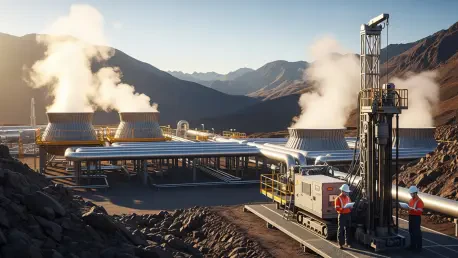

The tectonic shifts occurring beneath the American West represent far more than mere geological curiosities because they are now serving as the bedrock for a revolutionary regional energy strategy involving Colorado, New Mexico, Utah, and Wyoming. These four states have officially entered into a formal memorandum of understanding to harmonize their regulatory frameworks and technical expertise in a bid to unlock the immense heat energy stored miles beneath the Earth’s surface. This partnership comes at a critical juncture when traditional baseload power sources are being phased out in favor of more sustainable options that do not suffer from the intermittency issues common to wind and solar installations. By pooling resources, the consortium aims to streamline the permitting process and share the substantial financial risks associated with deep-well exploration and drilling operations. This collaborative effort signifies a departure from siloed state energy policies toward a unified regional front that treats the geothermal reservoir of the Rocky Mountains as a singular, high-value asset capable of powering millions of homes.
Subsurface Mapping: The Foundation of Thermal Energy
Achieving the ambitious goals set by the Mountain West Geothermal Consortium requires an unprecedented level of data transparency and the deployment of advanced subsurface mapping technologies across the region. Current initiatives focus on the utilization of magnetotelluric sensors and enhanced seismic imaging to create high-resolution three-dimensional models of hydrothermal systems and hot dry rock formations. These technologies allow geologists to identify optimal drilling locations with significantly higher precision than was possible in previous decades, thereby reducing the likelihood of “dry” holes that often plague geothermal projects. Furthermore, the four participating states are standardizing their geological databases to ensure that information gathered in the Paradox Basin or the Rio Grande Rift is accessible to researchers across state lines. This shared technical foundation is expected to accelerate the development of Enhanced Geothermal Systems (EGS) by providing a roadmap for future investments in areas previously deemed too difficult for conventional extraction.
Beyond the immediate mapping of physical heat sources, the consortium is prioritizing the refinement of closed-loop geothermal technologies that minimize water consumption while maximizing thermal exchange efficiency in arid climates. These systems involve circulating a working fluid through a series of sealed pipes located deep underground, where the fluid absorbs heat from the surrounding rock before returning to the surface to drive turbines. This specific approach is particularly attractive in the Western United States, where water rights are heavily contested and the environmental impact of large-scale water extraction is a primary concern for local communities and regulators alike. By focusing on these low-impact extraction methods, the member states hope to secure broader public support and faster regulatory approval for new projects situated near sensitive habitats or agricultural lands. The integration of advanced materials, such as corrosion-resistant alloys for well casings, also plays a vital role in ensuring the longevity and economic viability of these deep-bore installations.
Economic Resilience: Integrating Geothermal into the Regional Grid
The transition toward a geothermal-heavy energy mix provides a robust solution to the stability challenges currently facing regional electrical grids as they incorporate higher percentages of variable renewable energy sources. Geothermal plants offer a unique advantage by providing consistent, 24/7 baseload power that can be ramped up or down depending on demand, a characteristic often referred to as “firm” renewable energy. This flexibility allows grid operators to maintain a steady frequency and voltage without relying on gas-fired peaker plants, which helps in meeting aggressive decarbonization targets set for the period from 2026 to 2030. Economically, the consortium is positioned to revitalize former mining and oil-producing communities by repurposing their existing skilled workforce for the geothermal sector. The similarities between drilling for hydrocarbons and heat mean that thousands of workers can transition with minimal retraining, preserving the economic vitality of rural areas that might otherwise face decline during the transition.
The strategic implementation of the Mountain West Geothermal Consortium successfully moved the needle on regional energy independence by proving that multi-state cooperation was the most effective path toward scaling deep-earth technologies. Policymakers and industry leaders recognized that the next logical step involved the immediate expansion of pilot programs into full-scale commercial operations across the diverse geological terrain of the Rocky Mountain front. They emphasized the necessity of maintaining rigorous environmental monitoring to ensure that long-term heat extraction did not adversely affect local seismic activity or groundwater quality. Future considerations were directed toward the potential for co-producing valuable minerals, such as lithium, from geothermal brines, which created secondary revenue streams and supported the domestic battery supply chain. By prioritizing these integrated solutions, the consortium offered a replicable model for other regions, demonstrating how shared geological assets could be transformed into a sustainable engine for growth.