
The fundamental tension between aggressive climate mandates and the economic survival of heavy industry is currently tearing through the political fabric of the European Union as nations debate the future of carbon permits. This struggle highlights the immense difficulty of balancing environmental goals with the practical realities of industrial production.
At the center of the controversy is a proposal to drastically reduce the number of free carbon allowances. This move could potentially reshape the continent’s manufacturing sector for decades, forcing a rapid evolution in how goods are produced and sold on the global market.
The Shifting Landscape of European Heavy Industry and Carbon Markets
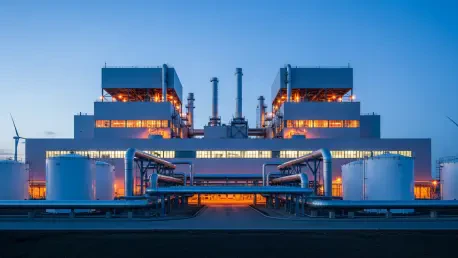
The European industrial sector currently stands at a critical juncture, balancing the aggressive pursuit of climate neutrality with the necessity of maintaining global competitiveness. Major players in steel, cement, aluminum, and chemical production are heavily influenced by the Emissions Trading System, which serves as the primary regulatory framework for controlling pollution.
As the European Commission pushes for a cleaner economy, the distribution of free carbon allowances has become a flashpoint for member states. This highlights the significant role of these industries in the regional economy and the technological shift required to sustain them against rising global competition.
Key Drivers Shaping the Transition to Low-Carbon Manufacturing
Current trends indicate a widening gap between climate policy ambitions and the practical availability of green energy infrastructure. Emerging technologies like hydrogen-based steel production and carbon capture are promising, yet they have not reached the commercial scale needed to replace fossil-fuel-dependent processes across the continent.
Furthermore, shifting geopolitical tensions have fundamentally altered energy supply chains, forcing industrial players to navigate a market defined by volatile costs. This push for rapid decarbonization may outpace current operational capabilities, leaving many factories in a vulnerable position as they attempt to modernize their infrastructure.
Measuring the Impact of Shrinking Allowances on Market Performance
Financial projections suggest that a 50% reduction in free carbon permits through 2030 will significantly increase the overhead for heavy emitters. Market data points to a heightened risk of carbon leakage, where production shifts to jurisdictions with less stringent environmental standards, potentially undermining global climate efforts.
Forward-looking indicators emphasize that unless industrial output is decoupled from high carbon costs through innovation, growth prospects for European manufacturing may stagnate. Compared to global competitors who are not subject to similar regulatory constraints, the cost of compliance could become a decisive factor in long-term viability.
Structural Obstacles Facing the EU’s Industrial Decarbonization Strategy
The primary challenge lies in the precarious state of manufacturing, where high energy prices and the lack of affordable green alternatives threaten the survival of core industries. Dissenting nations, including Poland, Greece, and the Czech Republic, argue that the current pace of reform exceeds technological readiness and economic capacity.
To mitigate these risks, industry leaders are proposing a temporary freeze on benchmark values and a redesign of how production capacities are calculated. Such changes would better reflect the realistic energy needs of modern factories while preventing the immediate deindustrialization of regions heavily dependent on traditional manufacturing.
Deciphering the Regulatory Tightrope of the Emissions Trading System
The regulatory landscape is undergoing a massive overhaul as the European Commission seeks to tighten the framework to meet 2030 climate targets. This involves a complex interplay between mandatory compliance and the provision of financial safety nets, such as the €30 billion earmarked for industrial support.
Recent debates highlight a shift toward more flexible, sector-specific regulations where tailored allocations may be used to protect vulnerable industries. Maintaining the integrity of the bloc’s environmental standards while preventing total economic collapse remains the most difficult task for policymakers in the current session.
The Future of European Manufacturing in a Net-Zero Global Economy
The trajectory of European industry will likely be defined by a move toward a more pragmatic and flexible decarbonization model. Future growth areas are expected to emerge in sectors that can successfully integrate renewable energy at scale, supported by increased government subsidies and technological breakthroughs.
However, the path forward remains dependent on whether the EU can balance its role as a global climate leader with the necessity of preserving its industrial base. Navigating disruptive global economic shifts and rising protectionism will require a level of policy agility that has yet to be fully realized.
Synthesizing the Path Forward for European Industrial Policy
The clash over carbon allowances revealed a deep-seated tension between ideological environmental goals and immediate economic survival. For the EU to succeed, it reconciled its emission reduction targets with a policy framework that ensured energy remained affordable and innovation remained incentivized throughout the transition process.
The final outlook suggested that while the move to a low-carbon economy was inevitable, the methodology required adjustment to prevent the deindustrialization of the continent. Strategic shifts focused on creating a stable environment for investment, ensuring that the manufacturing core could adapt without losing its competitive edge on the world stage.