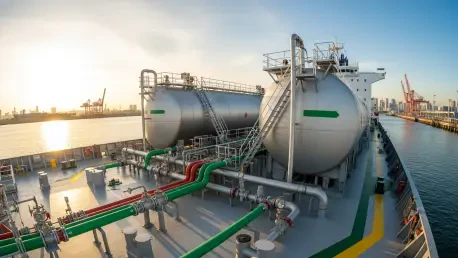

The global maritime industry is currently navigating its most significant transformation since the transition from coal to heavy fuel oil, seeking sustainable alternatives to meet the increasingly stringent net-zero targets established by international regulators. Within this rapidly evolving landscape, ethanol has successfully transitioned from a theoretical laboratory concept to a practical and scalable biofuel candidate for modern merchant fleets. This evolution is being fueled by a strategic combination of regulatory mandates and industry foresight, positioning ethanol as a viable pathway for shipowners looking to reduce their carbon footprint without completely redesigning global trade routes. While other fuels like ammonia and hydrogen garner headlines, ethanol offers a unique set of advantages including existing production infrastructure and a high energy density compared to some gaseous alternatives. By leveraging current agricultural surpluses, the industry is creating a roadmap where renewable liquids play a central role in the energy mix.
Institutional Backing and Empirical Foundations
Major global bunkering hubs, most notably Singapore, have officially recognized ethanol as a legitimate fuel, signaling to the market that it is a serious contender in the long-term energy transition. This institutional backing is not merely symbolic; it provides the regulatory framework necessary for large-scale investment in infrastructure and vessel conversion projects. By establishing clear standards for quality and delivery, these hubs are reducing the perceived risk for early adopters and encouraging a competitive market for bio-derived fuels. Furthermore, the inclusion of ethanol in official bunkering portfolios allows for more accurate tracking of emissions reductions, which is essential for compliance with the latest environmental reporting requirements. As these primary logistics centers formalize their procedures, the maritime industry can expect a trickle-down effect where smaller regional ports begin to mirror these standards, thereby creating a truly global supply chain for sustainable ethanol.
The transition is further reinforced by rigorous pilot programs and exhaustive research initiatives that have moved beyond small-scale testing to analyze engine performance in deep-sea conditions. These efforts provide the critical technical data required to convince conservative stakeholders of ethanol’s long-term operational viability and reliability under heavy loads. Engineers are focusing on how ethanol combustion profiles differ from traditional heavy fuel oils, particularly regarding heat release rates and the formation of nitrogen oxides during the combustion cycle. By bridging the gap between academic theory and real-world deployment, these projects are demystifying the chemical complexities of the fuel and offering clear evidence of its efficiency. Such empirical foundations allow shipowners to make informed decisions based on performance metrics rather than speculative projections, ensuring that the shift toward cleaner fuels is built on a bedrock of proven engineering results and safety data.
Operational Readiness and Safety Standards
Successfully adopting ethanol requires more than just acknowledging its environmental benefits; it demands a high level of operational readiness and a complete overhaul of traditional ship management practices. Technical teams must ensure total material compatibility throughout the fuel delivery system, verifying how ethanol interacts with specialized seals, gaskets, and internal coatings to prevent mechanical degradation. Because ethanol acts as a solvent, it can dissolve certain residues left by previous petroleum-based fuels, potentially leading to clogged filters or compromised fuel injectors if not managed properly. Consequently, rigorous cleaning protocols and the installation of upgraded filtration systems have become standard requirements for any vessel undergoing a conversion to ethanol-capable operations. This meticulous attention to hardware detail ensures that the mechanical integrity of the engine is maintained throughout its lifecycle, preventing costly downtime and ensuring that the vessel remains seaworthy.
The industry finalized the standard safety protocols required for dual-fuel ethanol operations, which allowed shipowners to begin the transition with confidence. Crew members underwent specialized training that combined theoretical chemical knowledge with practical emergency response drills to ensure safe handling of low-flashpoint liquids. Organizations prioritized the installation of advanced vapor detection systems and updated firefighting equipment to address the specific risks associated with ethanol storage. Furthermore, stakeholders established a collaborative data-sharing network that tracked fuel performance across different vessel types, providing a feedback loop for continuous improvement in engine efficiency. These collective efforts secured a resilient framework that balanced commercial viability with environmental stewardship, moving the sector closer to its sustainability goals. By treating the fuel transition as a dynamic process rather than a static goal, the maritime community ensured that its technical and human assets remained aligned with the global shift toward renewable energy.