
The high-altitude rivers of Nepal, born from the melting glaciers of the Himalayas, represent more than just a source of spiritual reverence; they are the literal currents of the nation’s economic future. While the 2024 amendment to the National Parks and Wildlife Conservation Act was deemed unconstitutional, cabinet-level decisions from late 2025 are still being used to justify new construction. This paradox places the country at a precarious crossroads where the immediate lure of energy independence clashes with a constitutional duty to protect some of the most fragile ecosystems on the planet. For a nation that has historically relied on its natural beauty to draw global attention, the pivot toward becoming a regional energy powerhouse through intensive hydropower development suggests a shift in priorities that many fear is irreversible. The tension is not merely about kilowatt-hours or environmental preservation; it is a fundamental debate over the soul of the landscape. As the government aggressively pursues its goal of exporting electricity to neighboring markets, the very wilderness that defines the Nepalese identity finds itself under siege by concrete dams and high-voltage transmission lines. This internal struggle illustrates the difficult choices developing nations face when their most valuable resource is also their most vulnerable, testing whether economic growth can truly coexist with the preservation of natural heritage.
The Judicial Mandate: Challenges and Executive Resistance
The legal foundation for the current environmental defense rests on a landmark ruling issued by the Supreme Court of Nepal in early 2025, which sought to redefine the boundaries of industrial encroachment. The judiciary’s decision was anchored in the constitutional right to a clean and healthy environment, emphasizing the principle of intergenerational equity as a primary legal standard. This principle suggests that the current generation acts as a temporary custodian of natural resources and possesses no legal or moral authority to exhaust or degrade them to the detriment of those yet to be born. By declaring commercial projects in conservation zones unconstitutional, the court effectively challenged the state’s narrative that economic development should always take precedence over ecological integrity. This ruling was specifically designed to invalidate recent legislative attempts that had sought to open protected national parks to luxury hospitality ventures and large-scale hydropower infrastructure. The court envisioned a legal framework where the preservation of the Himalayan wilderness would remain an absolute priority, immune to the shifting winds of political expediency and the persistent demands of the private energy lobby that views these regions as untapped profit centers.
Despite the clear intent of the judicial branch, the practical implementation of this ruling has encountered significant friction within the administrative machinery of the state. While the court provided a comprehensive verbal summary of its verdict, the absence of the finalized, published written text has created a prolonged period of legal ambiguity that the executive branch has been quick to exploit. Government agencies have maintained a “business as usual” stance, continuing to process land-use permits and environmental clearances by relying on older guidelines and cabinet-level directives that the court had intended to nullify. Legal experts and environmental advocates argue that this administrative resistance constitutes a direct subversion of judicial authority, allowing developers to break ground on controversial projects while the definitive legal instructions remain stuck in bureaucratic limbo. This maneuver has allowed a surge of activity in the energy sector during 2026, as officials attempt to finalize as many permits as possible before the full weight of the written verdict can be formally enforced. This tactical delay underscores a deepening rift between the branches of government, where the quest for energy security is treated as a national emergency that justifies the circumvention of constitutional mandates.
Environmental Impact: Consequences of Industrial Expansion
The geographic footprint of this hydropower surge is increasingly concentrated within iconic landscapes, including the Annapurna and Gaurishankar conservation areas. Data from 2026 indicates that the issuance of land-use permits for private energy projects has reached a record pace, impacting thousands of acres of primary forest and alpine meadows. These projects often benefit from a tiered regulatory system where older licenses are “grandfathered” into the system, shielding them from the newer, more stringent environmental standards proposed by the court. The resulting fragmentation of the landscape is not limited to the construction of the dams themselves; it includes an expansive network of access roads and worker settlements that disrupt the quietude of these remote regions. For species like the snow leopard and the red panda, which require vast, uninterrupted territories to thrive, this sudden influx of industrial activity represents an existential threat. The loss of habitat connectivity prevents these animals from migrating, hunting, and breeding across their traditional ranges, leading to isolated populations that are far more vulnerable to local extinction. The scale of development suggests that the biological integrity of these regions is being sacrificed for a version of progress that prioritizes short-term revenue.
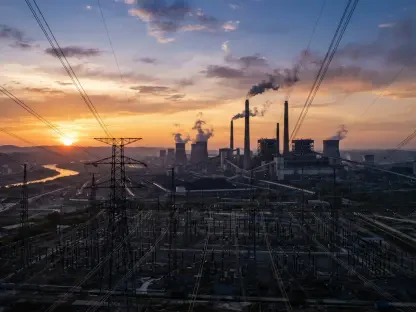
Beyond the immediate impact of the dams, the construction of high-voltage transmission lines through the “buffer zones” surrounding national parks has emerged as a secondary front in the conservation battle. While government officials often argue that these peripheral areas are subject to less rigorous protection than the core wilderness, wildlife experts maintain that these zones are ecologically vital as transition spaces for various species. The installation of massive steel towers and the subsequent clearing of forest corridors for electrical cables create permanent scars on the landscape. These corridors facilitate illegal logging and poaching by providing easier access to previously unreachable areas, while also posing direct physical hazards such as bird electrocutions in areas designated as safe havens. In the Gaurishankar region, the intrusion of energy infrastructure has already begun to alter the movement patterns of local fauna, pushing them closer to human settlements and increasing the frequency of human-wildlife conflict. The government’s insistence that these buffer zones are suitable for industrial use overlooks the complex interdependence of the entire mountain ecosystem. By treating the outskirts of national parks as a dumping ground for infrastructure, the state is effectively eroding the very protections that make the conservation system functional.
The Economic Stance: Industry Influence and Bureaucratic Hurdles
The private energy sector has mounted a vigorous defense of its interests, arguing that any sudden judicial halt to construction would jeopardize billions of dollars in domestic and foreign investment. Developers contend that because they have already committed significant capital toward feasibility studies, environmental impact assessments, and preliminary infrastructure, they have established a “legal expectation” to see these projects through to completion. Industry groups have warned that if the state fails to provide a predictable regulatory environment, it will lead to a collapse in investor confidence that could paralyze the entire energy sector for years to come. This economic argument carries significant weight in a country where hydropower is viewed as the only viable path toward reducing a chronic trade deficit and achieving true energy sovereignty. The narrative presented by the industry suggests that the country is being forced to choose between the abstract benefits of conservation and the tangible, immediate benefits of electricity and revenue. This pressure has led to a situation where the financial risks of a project cancellation are often used as leverage to bypass environmental concerns, creating a climate where economic momentum is prioritized over the rule of law.
Compounding these tensions is a series of administrative crises within the judicial system itself that has further delayed the resolution of these environmental disputes. In recent months, civil unrest and targeted protests resulted in the destruction of essential legal records at several district-level offices, creating a massive backlog and complicating the finalization of the Supreme Court’s written verdicts. This administrative vacuum has provided the executive branch with the political cover it needs to move forward with the expansion of the power grid, as there is no definitive legal document to serve as an injunction against specific projects. The lack of digital redundancies for many of these older records has made the recovery process painfully slow, leaving the legal foundations of conservation policy in a state of flux. This situation has been described by some observers as a “managed chaos” that serves the interests of those who wish to see hydropower development proceed without judicial oversight. As long as the paperwork remains missing or incomplete, the government can claim that it is operating within the existing legal framework, even if that framework has been explicitly rejected by the nation’s highest court. This procedural stalemate highlights the fragility of the legal system when faced with the combined pressure of political will and industrial demand.
Future Frameworks: Navigating the Path to Sustainable Development
The current struggle in Nepal highlights a profound global tension between the pursuit of “green energy” and the necessity of “green conservation.” While hydropower is a renewable resource capable of providing a low-carbon alternative to fossil fuels, its massive physical footprint in pristine wilderness areas creates a difficult paradox for policymakers and environmentalists alike. The government remains steadfast in its belief that energy security is the cornerstone of national prosperity and a vital tool for mitigating the broader impacts of climate change through the reduction of regional carbon emissions. However, conservationists argue that this perspective is dangerously narrow, as it fails to account for the intrinsic value of biodiversity and the ecosystem services provided by intact mountain forests and rivers. Once these unique habitats are submerged behind dams or cleared for transmission lines, they cannot be restored to their original state, regardless of how much “green” energy is produced. The debate has moved beyond the simple question of whether to build, shifting instead toward the question of where and how development should occur to minimize irreversible damage. This requires a more sophisticated approach to spatial planning that recognizes some areas as simply too ecologically precious for any form of industrial activity.
In conclusion, the resolution of the conflict between hydropower expansion and environmental preservation required a decisive shift toward transparent, data-driven governance and a renewed respect for judicial independence. The previous reliance on legal loopholes and administrative delays proved to be an unsustainable strategy that only deepened social divisions and threatened the nation’s long-term ecological health. To move forward, it was essential for the government to formalize a “no-go” zoning policy that strictly excluded high-priority conservation areas from energy development, while simultaneously streamlining the approval process for projects in less sensitive regions. This approach offered a way to meet energy targets without compromising the constitutional rights of future generations. Furthermore, the integration of advanced environmental monitoring technologies and independent oversight committees became necessary to ensure that developers adhered to the highest standards of mitigation. By prioritizing the restoration of legal records and the immediate publication of judicial verdicts, the state could have restored public trust and provided the energy sector with the clarity it desperately needed. Ultimately, the path to a sustainable future was found not in the sacrifice of the wilderness, but in the disciplined application of the law and a recognition that true national wealth was measured by more than just the output of a power grid.