
The massive industrial shift toward sustainable energy has reached a definitive turning point as heavy industries seek viable alternatives to fossil fuels. Alfa Laval recently secured a historic SEK 1.1 billion contract with Acelen to spearhead a monumental biorefinery project in Brazil, marking the company’s largest venture into the Hydrotreated Vegetable Oil (HVO) market to date. This partnership focuses on deploying advanced pre-treatment technologies that allow for the efficient processing of diverse biological feedstocks into high-quality renewable fuels. By targeting a completion date in 2029, the initiative establishes a long-term commitment to decarbonizing sectors that are traditionally difficult to electrify, such as aviation and long-haul maritime shipping. The project represents more than just a financial milestone; it serves as a sophisticated engineering blueprint for industrial-scale sustainability, proving that large-scale investment can effectively bridge the gap between environmental goals and commercial reality.
Advancing Industrial Capabilities: Biofuel Production
Sophisticated Engineering: Pre-treatment and Systems
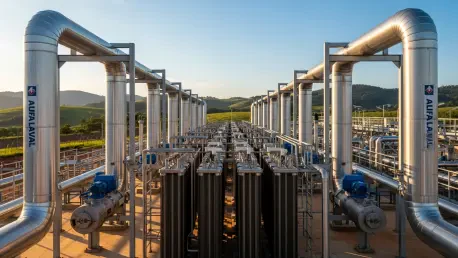
At the heart of this massive Brazilian refinery lies Alfa Laval’s specialized HVO pre-treatment technology, which is designed to handle the rigorous demands of large-scale fuel conversion. The facility utilizes a comprehensive suite of industrial components, including high-efficiency heat exchangers for optimal energy recovery and advanced centrifugal separators that meticulously remove impurities from raw biological materials. These systems are essential for the degumming and adsorption stages, where chemical processes strip away contaminants that could otherwise damage sensitive hydroprocessing equipment. By implementing these sophisticated mechanical solutions, the refinery ensures that the output meets the stringent quality standards required for modern jet engines and heavy-duty diesel motors. Furthermore, the integration of proprietary wastewater treatment technologies allows the plant to manage its environmental footprint responsibly, recycling water and reducing waste in a way that aligns with modern regulatory expectations for industrial operations globally.
Beyond the basic mechanical separation of contaminants, the technological package provided by Alfa Laval includes automated monitoring systems that optimize throughput and reduce energy consumption during the refining process. These innovations are critical for maintaining the economic viability of green fuels, as they lower the operational costs typically associated with high-temperature chemical reactions. The pre-treatment phase is particularly sensitive to fluctuations in the quality of incoming raw materials, necessitating a robust system capable of real-time adjustments to maintain consistent output. By utilizing advanced thermal management techniques, the facility can capture and reuse heat from various stages of production, significantly improving the overall energy balance of the plant. This focus on circularity and efficiency demonstrates how specialized engineering can transform raw biological waste into a high-energy density product that rivals traditional petroleum in performance while drastically reducing the lifecycle carbon emissions associated with transportation.
Diversified Resources: The Role of Macaúba Oil
One of the most distinctive aspects of the Acelen project is its strategic approach to raw material sourcing, which aims to produce over 17,230 barrels of renewable fuel every day. While traditional feedstocks like soybean oil and used cooking oil will play a significant role in the initial stages, the refinery is specifically engineered to process macaúba oil, a native Brazilian palm species. Macaúba presents a unique opportunity for sustainable development because it thrives on degraded pasture land and does not require the clearing of primary forests, a major criticism often leveled against traditional palm oil production in other regions. This integration of native flora allows the facility to leverage local biodiversity to create a resilient and environmentally responsible supply chain. By utilizing land that has been historically underused or damaged, the project supports reforestation and soil recovery efforts, turning ecological restoration into a profitable industrial asset that provides the necessary volume of oil for large-scale production.
The move toward macaúba oil also serves as a hedge against the price volatility and supply constraints often found in the global vegetable oil market. As demand for biofuels increases across the globe, relying solely on food-grade crops like soybeans can lead to market competition and price spikes that impact both the energy and food sectors. By pioneering the industrial use of non-food oils derived from native perennials, the partnership between Alfa Laval and Acelen creates a more stable economic foundation for renewable fuel production. This diversification is crucial for achieving long-term scalability, as it ensures that the refinery can maintain high output levels without being overly dependent on a single agricultural commodity. Moreover, the cultivation of macaúba provides a new economic engine for rural Brazilian communities, creating jobs and fostering agricultural innovation that is tailored to the local climate. This holistic approach ensures that the transition to green energy contributes to both regional economic growth and broader environmental conservation goals.
Strategic Implications: The Global Energy Market
Regional Growth: Energy Security and Infrastructure
Brazil has long been a global leader in biofuel production, supported by a robust agricultural infrastructure and decades of government policy favoring renewable energy. The new Acelen refinery builds upon this established foundation, utilizing the country’s vast natural resources and technical expertise to create a hub for international fuel exports. By situating this massive project in a region with such deep agricultural roots, the partnership minimizes logistical hurdles and taps into a workforce already familiar with large-scale bio-processing. This strategic placement is not just about local convenience; it is about establishing a secure and decentralized node in the global energy network that reduces reliance on traditional oil-producing regions. As geopolitical tensions continue to affect global energy markets, the ability to produce high-grade fuel from domestic crops provides a significant layer of energy security. This shift toward localized, renewable production models represents a fundamental change in how nations view their energy independence and economic stability.
Furthermore, the investment in this facility acts as a catalyst for further infrastructure development across South America, encouraging other nations to explore their own bio-resource potential. The scale of the contract signifies a high level of confidence from international investors and technology providers in Brazil’s ability to lead the green transition. As the project moves toward its operational phase by 2029, it will likely attract secondary industries focused on logistics, maintenance, and chemical supply chains, further strengthening the regional economy. This ripple effect extends beyond the immediate refinery site, fostering a culture of innovation and sustainability that can be exported to other emerging markets facing similar energy challenges. By demonstrating that large-scale biorefining is both technically feasible and economically attractive, the Acelen project sets a new standard for how regional infrastructure can be modernized to meet the demands of the global energy transition while supporting local communities and long-term industrial growth.
Market Projections: Prices and Long-Term Trends
The introduction of over 17,000 barrels of renewable diesel and Sustainable Aviation Fuel (SAF) into the market daily will have profound implications for global commodity prices. Initially, the high demand for feedstocks like used cooking oil and soybean oil might create upward pressure on prices as refineries compete for limited supply. However, the long-term integration of new, high-yield sources like macaúba oil is expected to stabilize these markets by significantly increasing the total volume of available vegetable oils for industrial use. This expansion of the raw material base is essential for making green fuels price-competitive with traditional petroleum products, which is a key requirement for widespread adoption. As production scales up and technology matures, the cost of refined bio-products is projected to decrease, making it easier for airlines and shipping companies to meet their carbon reduction targets without compromising their financial performance. This market evolution is a critical step in moving renewable energy from a niche segment to a mainstream component of the global economy.
Looking ahead from 2026 to 2029, the global energy landscape will likely see a surge in similar large-scale projects as the success of the Brazil deal becomes more apparent. This trend is driven by the urgent need for “drop-in” fuels that can be used in existing engines and pipelines without requiring massive capital expenditures on new hardware. The Acelen facility serves as a critical proof of concept for this model, showing that established industrial players can successfully pivot to sustainable production through strategic partnerships and advanced engineering. As more refineries adopt these pre-treatment and hydroprocessing technologies, the global supply of SAF will become more consistent, allowing the aviation industry to accelerate its decarbonization efforts. This momentum is expected to trigger a virtuous cycle of investment and innovation, where improved efficiency leads to lower costs, which in turn drives higher demand and further expansion. The project thus represents a vital link in the transition toward a more sustainable and resilient global transportation infrastructure.
Future Pathways: Industrial Scaling and Sustainable Strategy
The collaboration between Alfa Laval and Acelen established a transformative precedent for the global energy sector by proving that industrial-scale biorefining was a viable solution for the most challenging carbon-reduction goals. This project successfully integrated innovative agricultural strategies with cutting-edge chemical engineering to create a sustainable fuel source that met the rigorous demands of modern aviation and shipping. By prioritizing the use of native, non-competing crops like macaúba, the initiative addressed critical concerns regarding land use and food security, offering a more ethical path forward for the industry. Moving forward, stakeholders in the energy market should look to this model as a blueprint for diversifying feedstock supplies and investing in high-efficiency pre-treatment systems. The success of this venture suggested that the transition to renewable fuels required not only technological innovation but also a commitment to long-term regional partnerships and infrastructure.