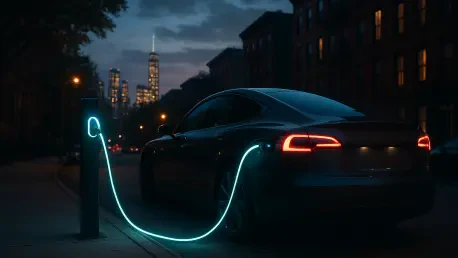

Experts suggest that the administrative burden of utility programs must remain lower than the financial rewards to ensure long-term participation in sustainable energy projects. This principle is currently being tested in New York City as electric vehicle owners navigate the evolving landscape of utility-managed charging. The Smart Charge New York initiative, once celebrated as a blueprint for urban grid stability, now faces significant pushback from participants who feel the goalposts have shifted. As the city continues its aggressive transition toward a zero-emission transportation sector from 2026 to 2030, the relationship between utility providers and consumers has become increasingly strained. What began as a straightforward incentive to shift energy usage to off-peak hours has transformed into a complex regulatory challenge. Drivers are finding that the benefits promised for their flexibility are being eroded by new demands for expensive recertification.
The Financial Friction of Utility Oversight
Evaluating the Economic Impact: Reinspection Costs
The core of the controversy lies in a recent mandate from Con Edison requiring specific program participants to hire professional electricians for a secondary inspection of their home charging setups. For many households, these installations were completed using licensed contractors and verified through official municipal channels within the last few years. The average cost of a professional electrical visit in the metropolitan area can easily exceed several hundred dollars, a figure that matches or surpasses the total annual rebate earned through the Smart Charge program. This creates a situation where the cost of proving compliance effectively cancels out the financial incentive for an entire year of disciplined energy management. When the expense of maintaining a program’s eligibility rivals the actual payout, the underlying value proposition collapses for the consumer. This economic imbalance is frustrating for early adopters who invested in labor to ensure safety.
Addressing the Perceived Injustice: Early Adopter Concerns
Beyond the immediate financial drain, the demand for redundant inspections raises significant questions about the long-term viability of decentralized energy programs. If utilities can retroactively impose expensive verification steps, the trust necessary for large-scale consumer participation begins to evaporate. Many drivers view this move as a “bait and switch,” where the initial ease of enrollment has been replaced by a recurring cycle of bureaucratic hurdles. This sentiment is amplified by the fact that many smart chargers in use are already capable of providing real-time diagnostic data directly to the utility. Instead of leveraging this digital connectivity to verify safety, the current approach relies on physical visits that are both expensive and time-consuming. This reliance on traditional verification methods in an era of smart technology suggests a disconnect between utility policy and the capabilities of modern hardware. The result is a growing sense of frustration.
Navigating Behavioral Shifts and Grid Stability
Managing Potential Displacement: The Rebound Effect
The primary danger of these new administrative requirements is the potential for a “rebound effect” that could severely compromise grid management strategies. The Smart Charge program relies on the willingness of EV owners to delay their charging until midnight or later, reducing the strain on transformers during high-demand periods. However, if the incentives for this behavior are perceived as inaccessible or too costly to maintain, drivers are likely to abandon the schedule and return to charging whenever it is most convenient. Several participants have already signaled that they would rather forgo the rebates and charge during peak hours than pay for a redundant inspection. This shift in behavior would directly counteract the environmental and operational goals of the utility provider, leading to higher peaks and potentially more frequent localized outages. The irony is that a policy intended to ensure equipment safety could ultimately lead to a more unstable and stressed electrical grid.
Seeking Strategic Solutions: Automated Verification
The resolution of the dispute between utility providers and EV owners necessitated a move toward automated, data-driven verification systems. Policy makers recognized that physical inspections should have been reserved for cases where digital telemetry indicated a fault, rather than being a blanket requirement for all participants. To move forward, it was recommended that Con Edison integrate permit databases with their program enrollment software to automatically verify the status of new installations. This integration eliminated the need for manual documentation and reduced the administrative burden for both the utility and the customer. Furthermore, the development of a “certified installer” network provided a pathway for pre-verified setups that bypassed subsequent scrutiny. Stakeholders also emphasized the importance of maintaining clear, multi-year incentive structures that provided financial predictability. By prioritizing transparency, the city ensured that the transition remained attractive.