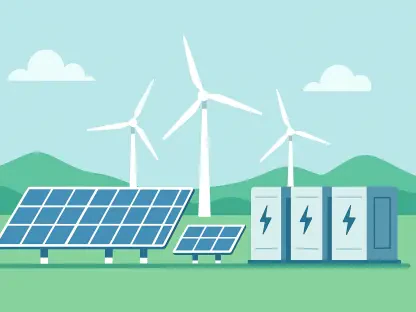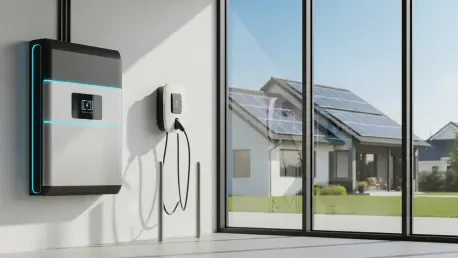

Residential energy consumers who invested heavily in photovoltaic technology under the assumption of long-term savings are discovering that the era of favorable net metering policies has reached a definitive and costly conclusion. As utilities across the nation implement more aggressive time-of-use pricing models between 2026 and 2028, the financial benefit of generating electricity during the peak of the afternoon sun has plummeted significantly. Without a mechanism to capture and hold that energy, homeowners find themselves exporting surplus power for pennies and purchasing it back at premium rates just a few hours later. This discrepancy creates a “duck curve” phenomenon where grid supply exceeds demand mid-day, but the subsequent surge in evening consumption remains unmitigated by rooftop production. The resulting economic friction transformed what was once a reliable investment into a potential liability for those who neglected to integrate modern storage solutions into their initial hardware deployments.
The Financial Impact of Grid Imbalance
The fundamental challenge lies in the widening gap between the wholesale export rate and the retail purchase price of electricity, a gap that has expanded throughout the current fiscal year. Many regional energy providers have adopted frameworks that prioritize grid stability over individual generation incentives by reducing credit values by up to seventy-five percent. For a typical household with a ten-kilowatt system, this shift translates into hundreds of dollars in lost annual revenue if that energy is not consumed immediately or stored for later use. This specific fiscal reality forces a rethink of the residential energy strategy, moving away from simple generation toward active load management and peak shaving. Homeowners are now required to behave like mini-utilities, managing their consumption profiles with granular precision to avoid the steep surcharges that occur when the sun goes down and the local grid experiences its highest levels of operational stress.
Furthermore, the lack of storage capacity prevents homeowners from participating in increasingly lucrative virtual power plant programs that offer financial rewards for grid support services. Utilities are currently incentivizing the deployment of smart batteries to help balance the load across distributed networks, providing payments to those who can discharge energy during periods of extreme demand. Those who possess only solar panels are excluded from these revenue streams, essentially paying a legacy tax for maintaining an outdated, export-only configuration. As the cost of grid-scale upgrades is passed down to consumers through increased delivery fees and fixed charges, the relative value of self-sufficiency has never been higher. Investing in an integrated storage solution is no longer merely a luxury for off-grid enthusiasts but has become a critical requirement for maintaining the internal rate of return on any residential renewable energy project.
Strategic Transitions in Domestic Infrastructure
To address these rising costs, the industry pivoted toward intelligent energy management systems that paired high-capacity storage with predictive software algorithms. These systems analyzed weather patterns and historical usage data to determine the most efficient times to charge or discharge, ensuring that households remained powered by their own reserves during the most expensive billing windows. By prioritizing internal consumption over grid export, consumers effectively bypassed the low compensation rates offered by utilities while insulating themselves from future price hikes. This technical evolution marked a significant departure from the set-it-and-forget-it mentality that characterized early solar adoption, requiring a more proactive approach to domestic energy infrastructure. The deployment of solid-state or high-density lithium batteries provided the necessary physical foundation for this independence, allowing for a continuous and reliable power supply.
Ultimately, the most successful strategy involved the integration of decentralized storage modules that functioned as a buffer against the volatile nature of the public electrical grid. Homeowners who adopted this approach managed to recapture the lost value of their solar arrays by ensuring that not a single kilowatt of generated power was wasted on low-value exports. These individuals transitioned from being passive participants in the energy market to active managers of their own microgrids, utilizing advanced inverters to bridge the gap between production and consumption. The lesson learned from this period was that hardware alone was insufficient; rather, the synergy between generation, storage, and intelligent software became the new standard for residential sustainability. By securing their own energy reserves, these forward-thinking households established a resilient financial model that protected them from the inevitable fluctuations of the utility sector while contributing to overall stability.