
The industrial landscape is currently undergoing a radical transformation as large-scale manufacturing facilities aggressively transition away from volatile fossil fuel markets toward reliable, carbon-neutral energy solutions. At the forefront of this movement, the Saica Group has officially inaugurated its advanced biomass boiler at the Nogent-sur-Seine paper mill in France, representing a pivotal shift in the facility’s operational philosophy. This comprehensive modernization effort was fueled by an €86 million investment, which included substantial financial backing of nearly €15 million from the French government via the Recovery Plan and the European Union’s NextGenerationEU initiative. By integrating these public funds with private capital, the project serves as a cornerstone for the region’s broader decarbonization strategy, effectively moving the plant away from its long-standing reliance on natural gas and establishing a new benchmark for sustainable industrial activity.
Technical Advancements in Thermal Energy Systems
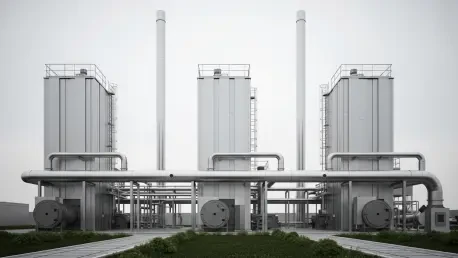
Central to the facility’s technological evolution is a 49.75 MW thermal biomass boiler specifically engineered to generate approximately 450,000 tons of high-pressure steam on an annual basis. This massive thermal output provides the constant energy required for the intensive paper manufacturing processes at the site while simultaneously powering a new 5.5 MWe steam turbine. Through this sophisticated cogeneration arrangement, the mill is now capable of producing roughly 28% of its own internal electricity requirements, significantly buffering the operation against fluctuations in the national power grid. This level of energy autonomy not only enhances the overall resilience of the mill but also illustrates how high-volume production can be maintained without the carbon intensity typically associated with heavy industry. By optimizing thermal efficiency and local power generation, the site has successfully moved toward a more self-contained and predictable energy profile for the current operational era.
The environmental implications of implementing such advanced infrastructure are profound, particularly regarding the immediate reduction of the site’s ecological footprint. By transitioning to renewable biomass and biogas, the Nogent-sur-Seine facility has effectively replaced nearly 90% of its previous fossil fuel consumption, leading to a massive decline in greenhouse gas emissions. Specifically, the new energy center prevents the release of 50,000 tons of CO2 each year, which correlates to a 75% reduction in Scope 1 emissions for the entire mill. These metrics provide a clear quantification of the project’s success in aligning industrial output with national climate targets and the overarching goals of the Paris Agreement. Furthermore, this technological shift demonstrates that substantial carbon abatement is achievable even in sectors that have historically been difficult to electrify, provided there is a dedicated commitment to replacing outdated gas-fired systems with modern alternatives.
Circular Resource Management and Economic Integration
A defining characteristic of this project is its commitment to regional circularity, ensuring that the energy consumed by the mill is sourced and processed within a local framework. The facility now repurposes 97% of the byproducts generated during the paper recycling process as direct fuel for the biomass boiler, creating a nearly closed-loop system for waste management. This internal efficiency is further augmented by a localized supply chain that prioritizes wood waste collected within a 100-kilometer radius of the Nogent-sur-Seine site. By focusing on regional organic materials, the mill supports dozens of specialized jobs in the Aube department while insulating its operations from the volatile price swings found in global energy markets. This strategy emphasizes the importance of territorial synergy, where the industrial facility acts as a hub for local environmental services and economic stability, proving that sustainability and regional profitability are often deeply interconnected.
The successful deployment of this biomass center marks a significant chapter in Saica Group’s broader organizational trajectory as it continues to expand its influence across four distinct business lines: Paper, Natur, Pack, and Flex. With a presence in eleven countries, the company has utilized the Nogent-sur-Seine mill as a flagship model for how its vast industrial network can be systematically modernized to meet contemporary environmental challenges. This multi-year initiative, which involved complex administrative approvals and a construction phase that began several years ago, highlights the long-term vision required to execute large-scale infrastructure changes. As the group’s third major biomass project, it reinforces their reputation for innovation and operational excellence in the sustainable packaging sector. By leveraging global expertise and applying it to local facilities, the organization has demonstrated a scalable approach to industrial decarbonization that remains adaptable to diverse regulatory environments.
Future Pathways for Industrial Decarbonization
The successful integration of the biomass boiler at the Nogent-sur-Seine site provided a definitive roadmap for how heavy industry could transition toward a low-carbon future without compromising on production capacity. It was clear that the project’s success hinged on the strategic alignment of financial investment, technological innovation, and localized supply chain management. Moving forward, other manufacturers should consider the adoption of cogeneration systems as a primary method for achieving both energy independence and emission targets. The partnership between public institutions and private industry proved to be an essential catalyst for overcoming the high capital costs associated with such large-scale energy overhauls. Stakeholders within the packaging and recycling sectors were encouraged to look toward this mill as a blueprint for implementing circular economy principles on a massive scale. Ultimately, the transition away from fossil fuels was shown to be not only an environmental necessity but a sound strategic move for long-term viability.
The implementation of these advanced systems necessitated a comprehensive reevaluation of how industrial waste streams were handled, shifting the perspective from disposal to resource recovery. This transition underscored the importance of securing local feedstock to maintain energy security in an increasingly unpredictable global market. Future industrial developments were advised to prioritize the development of regional ecosystems that could provide consistent organic materials for power generation. Furthermore, the ability to generate a significant portion of on-site electricity served as a critical defense against rising grid costs and potential energy shortages. As the industrial sector continued to evolve, the lessons learned from this modernization effort highlighted the need for continuous technological upgrades to maintain a competitive edge in a green economy. By focusing on these integrated solutions, businesses were able to demonstrate that environmental stewardship and operational efficiency were not mutually exclusive goals, but rather complementary aspects of a modern business strategy.