


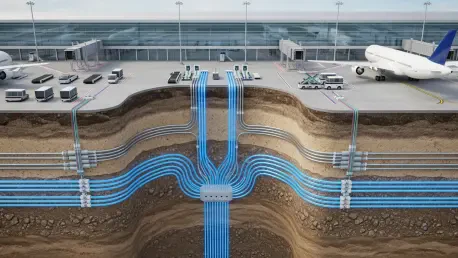

The silent hum of electric baggage tractors and tugs has begun to replace the familiar roar of diesel engines across modern tarmac landscapes, yet this quiet transition masks a burgeoning crisis in electrical capacity. As aviation hubs strive to meet aggressive decarbonization targets by the turn of the decade, the primary obstacle is no longer the availability of electric ground support equipment but rather the physical ability to deliver power to these assets. Many major airports were constructed during an era where electricity was primarily used for lighting and terminal operations, leaving the airside environment with minimal power distribution networks. Transitioning a fleet of hundreds of heavy-duty vehicles to electric power requires a scale of energy delivery that far exceeds the design parameters of existing substations and subterranean cabling. The challenge has shifted from procurement to a complex civil engineering undertaking that necessitates a complete reimagining of energy profiles.
The Mounting Pressure on Grid Capacity
Demand Drivers: The Multifaceted Energy Surge
The requirement for electricity at major aviation hubs is undergoing a radical shift as airports attempt to decarbonize every facet of ground operations simultaneously. Modern ground support equipment, ranging from aircraft tugs to high-capacity belt loaders, necessitates a robust high-voltage charging infrastructure never envisioned in original site blueprints. Beyond vehicle electrification, airports are deploying pre-conditioned air units and ground power systems to allow parked aircraft to shut down their auxiliary power units, which consume significant jet fuel. While these systems reduce localized emissions, they transfer the energy burden directly onto the airport’s electrical backbone, creating massive spikes in demand during peak turnaround windows. This surge in consumption is a sharp upward curve that threatens to exceed the thermal limits of existing transformers. The integration of these systems requires sophisticated load balancing to ensure operational stability.
Furthermore, the electrification of terminal heating and cooling systems adds another layer of complexity to the energy equation as facilities move away from natural gas boilers. The transition to industrial-scale heat pumps and electric chillers represents a significant increase in baseload demand, which remains constant regardless of flight schedules. When combined with the high-intensity charging requirements of airside equipment, the total energy profile of a large international airport resembles that of a medium-sized city. This concentration of demand in a relatively small geographic area places immense stress on the local distribution network, necessitating the installation of dedicated high-voltage lines and onsite energy storage solutions. Engineering teams find that the space required for new electrical substations often competes with valuable operational real estate. The synchronization of these diverse energy needs is now the central focus of airport master planning, moving energy management to a strategic priority.
Infrastructure Timelines: Navigating the Transmission Bottleneck
External constraints on the national power grid are complicating internal airport efforts, with many facilities facing wait times for capacity upgrades that extend well into the next decade. In several major metropolitan areas, the process of requesting additional power from the utility provider and seeing the actual installation of new transmission lines can take fifteen years due to regulatory hurdles and grid congestion. This timeline is fundamentally at odds with the industry’s commitment to achieving net-zero operations by 2030, creating a strategic vacuum where equipment is ready but the power is not. These delays are often the result of broader national infrastructure deficiencies, where aging grids are struggling to keep pace with the general trend of electrification across all sectors. Airports, being high-density energy consumers, are frequently placed at the end of a long queue of projects. This bottleneck forces operators to consider costly alternatives like localized microgrids.
The financial implications of these delays are significant, as airports may be forced to maintain aging diesel fleets far longer than planned, incurring higher maintenance costs and carbon penalties. Regional differences further exacerbate the problem, with some hubs located in areas where the local grid is already at its breaking point, making even modest electrification projects technically unfeasible. This creates a fragmented landscape where some airports can showcase modern green fleets while others are trapped by the physical limitations of their surrounding geography. The lack of a coordinated national strategy for industrial electrification means that airports must often fight for capacity on an individual basis, leading to inefficient development. To bridge this gap, some facilities explore mobile charging solutions and temporary battery storage systems, but these are merely stopgap measures. The urgency is forcing a rethink of how aviation hubs interact with national energy providers for transmission priority.
Structural and Operational Challenges
Organizational Silos: The Integrated Planning Gap
A significant internal hurdle to airport electrification is the historical separation of departments, which often leads to fragmented and contradictory infrastructure strategies. Operations teams might focus on purchasing the most efficient electric vehicles, while the facilities and property departments may be unaware of the specific power requirements for the necessary charging hubs. This lack of communication can result in the procurement of high-tech equipment that sits idle because the electrical work required to support it has not been budgeted or permitted. Integrated planning is essential to ensure that the expansion of high-voltage infrastructure aligns with the delivery of new fleet assets and the renovation of terminal spaces. Breaking down these organizational silos requires a centralized energy management office that has the authority to coordinate between sustainability, finance, and airside operations. Without such a unified approach, airports risk wasting capital on projects or facing unexpected power stalls.
Successful implementation hinges on the ability of airport leadership to communicate long-term value to stakeholders focused on short-term operational costs. Ground handlers and airline partners often operate on thin margins and may be hesitant to invest in electric equipment if the charging infrastructure is not reliable or conveniently located. Collaborative planning sessions that include these third-party operators can help identify the most effective locations for charging clusters, minimizing the impact on turnaround times. Furthermore, the financial risk of these large-scale civil works must be distributed fairly among those who benefit from the transition, requiring new types of commercial agreements. By involving all airside participants in the planning phase, airports can create a more resilient and scalable energy network that meets the diverse needs of different operators. This inclusive approach ensures that the resulting infrastructure is optimized for real-world usage patterns rather than theory.
Operational Integrity: The High Cost of Downtime
Reliability is the cornerstone of airport operations, and the transition to electric power must not compromise the seamless flow of passengers and cargo. Unlike a standard commercial parking garage, an airport cannot afford vehicle downtime due to equipment failure or power shortages; a single uncharged pushback tug can cause a cascade of delays across the entire flight schedule. This necessitates a level of redundancy in the charging infrastructure that is higher than what is typically found in other sectors, including backup power supplies and fail-safe management systems. Operators are discovering that managing an electric fleet requires a fundamental change in logistics, where charging schedules must be precisely synchronized with flight arrival and departure times. If a belt loader is not ready for the next aircraft because of a charging queue, the resulting delay carries significant financial consequences. Therefore, the design of the electrical network must prioritize uptime and visibility.
Managing these operational risks requires a shift toward data-driven energy orchestration, where smart software systems predict demand based on live flight data and weather conditions. For instance, on a cold day, the energy draw from pre-conditioned air units will be significantly higher, potentially reducing the power available for rapid vehicle charging. An intelligent management system can automatically prioritize critical assets, such as emergency vehicles and primary aircraft tugs, while throttling back less urgent demands like terminal aesthetic lighting. This dynamic allocation of power ensures that the most vital operations remain functional even during periods of peak grid stress or limited supply. Additionally, maintenance teams must be retrained to handle high-voltage electrical systems, adding another layer of operational complexity to the transition. The goal is to create a zero-fail environment where the shift to electric power is invisible to the passenger, maintaining safety and efficiency.
Collaborative and Technical Solutions
Shared Infrastructure: The Communal Charging Model
To make the business case for electrification more viable, airports have adopted a shared infrastructure approach that treats charging systems as a common utility for all airside stakeholders. By centralizing the charging hubs and allowing multiple ground handling companies to use the same fast-charging stations, the airport can spread the high costs of civil works and transformer upgrades across a much larger user base. This model, often referred to as Infrastructure as a Service, removes the massive upfront capital burden from individual ground handlers and encourages the rapid adoption of electric fleets. It also prevents a chaotic land grab for power where each operator attempts to install their own proprietary charging systems, which would lead to an inefficient and unmanageable web of cabling. A standardized, communal network ensures that equipment from different manufacturers can utilize the same protocols, fostering a more competitive and open market for ground equipment.
Furthermore, this communal approach allows the airport to negotiate better energy rates with utility providers by aggregating the total demand of all airside operators into a single, high-volume contract. The resulting savings can then be reinvested into further infrastructure improvements or used to lower the access fees for charging stations, creating a virtuous cycle of investment and adoption. In this past year, several leading international hubs successfully implemented these shared-use zones, proving that a centralized model can significantly reduce the total cost of ownership for electric ground equipment. These facilities utilized standardized billing software that accurately tracks energy consumption for each individual user, ensuring fair and transparent cost recovery. Beyond the financial benefits, a unified charging network simplifies the management of the electrical grid, as the airport authority has full visibility and control over all high-demand assets, allowing for better responses.
Smart Management: Digital Grid Orchestration
Beyond the installation of physical cables and transformers, the success of airport electrification has depended on the deployment of sophisticated energy orchestration tools that manage demand in real-time. By implementing advanced load management software, airports were able to smooth out the sharp peaks in electricity consumption that occur during busy turnaround windows, preventing the local grid from becoming overwhelmed. These systems often integrate onsite renewable energy sources, such as solar arrays on terminal roofs and large-scale battery storage units, to provide a buffer against fluctuating power prices and grid instability. For example, excess solar energy generated during the day can be stored and then used to fast-charge tugs during the busy evening departure wave, reducing the reliance on expensive peak-time power from the main grid. This level of technical sophistication turned the airport’s electrical system from a rigid utility into a flexible resource that can actively participate in the market.
The transition to an electrified airport environment moved past the experimental stage and became a core component of aviation strategy, driven by a newfound focus on the underlying power infrastructure. Stakeholders realized that the success of green aviation was inextricably linked to the capacity of the ground-based electrical grid, necessitating a shift from simple vehicle replacement to comprehensive energy management. Strategic investments in high-voltage distribution networks and integrated planning frameworks allowed facilities to overcome the initial bottlenecks that threatened to stall progress toward 2030 targets. By breaking down departmental silos and adopting communal infrastructure models, airports successfully distributed the financial and operational risks of this undertaking. The adoption of smart energy orchestration and onsite generation provided the necessary flexibility to handle surging demand while maintaining the absolute reliability required for flight operations. These actions established a blueprint for sustainable hubs globally.







