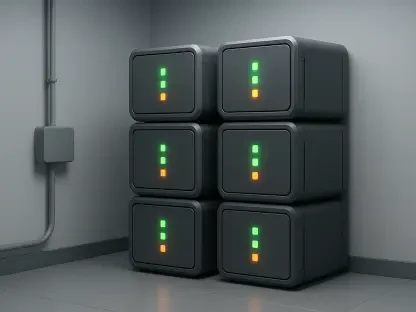

In the sprawling suburban landscapes of Texas, a mere eight-mile stretch of asphalt can transform a routine home energy upgrade into an exhausting multi-month saga of bureaucratic stalling and redundant paperwork. This geographic lottery defines the current state of American energy infrastructure, where the speed of innovation is dictated not by the limits of physics or the availability of capital, but by the whim of local municipal departments. While one homeowner may secure a battery installation permit for forty-five dollars in a matter of hours, their neighbor in a different jurisdiction might face months of silence, multiple in-person visits to a city hall, and nearly a thousand dollars in administrative fees for the exact same hardware.
The disconnect between the urgent demand for a resilient grid and the glacial pace of local approval processes has created a hidden crisis. While national debates often center on high-profile federal environmental reviews and the reform of the National Environmental Policy Act, the most persistent bottleneck for American energy independence actually resides in the twenty-three thousand individual building departments across the country. This local red tape creates a “soft cost” surge that now accounts for a significant majority of the total price of home solar and storage systems, effectively pricing out the very families who would benefit most from lower utility bills and backup power.
The $45 Permit vs. the Twelve-Week Wait
The disparity in permitting experiences between adjacent Texas jurisdictions illustrates a systemic failure in the deployment of residential energy technology. In the first instance, a contractor submitted a digital application, paid a nominal fee, and received approval to install a home battery system almost instantly, followed by a streamlined photo inspection. Just eight miles away, the same installation team encountered a bureaucratic wall that required three separate physical trips to a municipal office and a twelve-week wait for a human reviewer to acknowledge the project. This friction does not enhance safety; rather, it introduces a level of unpredictability that forces installers to raise prices to cover the risk of administrative delays.
When paperwork becomes more expensive than the actual hardware, the economic logic of the energy transition begins to crumble. Recent data indicates that these administrative and soft costs now represent nearly seventy-eight percent of the total price tag for rooftop solar installations in the United States. While the cost of lithium-ion cells and photovoltaic panels has plummeted over the last decade, the savings have been largely offset by the rising complexity of navigating thousands of unique local codes. This financial burden acts as a regressive tax on innovation, ensuring that only the most patient and affluent homeowners can afford to participate in the modern energy economy.
The Fragmented Landscape of 23,000 Jurisdictions
The fundamental challenge of American energy reform is the extreme decentralization of authority. With over twenty-three thousand separate jurisdictions, each possessing the power to set its own rules for wiring, placement, and fire safety, the United States has created a patchwork of inconsistent regulations that are nearly impossible for national companies to navigate efficiently. This fragmentation means that a project approved in one county might be deemed illegal in the next, despite both areas theoretically adhering to the same national safety standards.
This crisis of inconsistency is often most pronounced in cities that publicly champion environmental goals. Many green-friendly municipalities maintain the most restrictive and antiquated permitting processes, creating a paradox where local execution actively undermines broader climate objectives. Furthermore, local building departments frequently ignore rigorous national certifications, such as UL 9540, which already verify the safety of battery systems through third-party testing. By insisting on bespoke local reviews for equipment that has already been vetted at a national level, these departments create redundant hurdles that offer no additional protection to the public while significantly inflating project timelines.
Economic and Global Consequences of Inefficiency
The American approach to energy permitting stands as a stark international outlier, particularly when compared to models like Australia’s. In Australia, the government focuses on accrediting the installers themselves rather than reviewing every individual residential project, a shift that has enabled a thirty-three percent adoption rate for rooftop solar. In contrast, the United States languishes at a mere seven percent adoption rate. The difference in price is equally staggering; a ten-kilowatt system in Australia costs roughly one-quarter of what an American homeowner pays, primarily because Australian permits are issued in a single day through automated systems.
The domestic consequences of this inefficiency extend far beyond mere inconvenience. As installers naturally “route around” jurisdictions known for excessive red tape, low-income urban families are left in the lurch. These households are often trapped in areas with the most complex permitting rules, preventing them from accessing technologies that could reduce their high utility debt. Nationally, utility debt is projected to grow from twenty-five billion dollars to thirty-five billion dollars from 2026 to 2028, reflecting a grid that is becoming increasingly expensive to maintain without the relief of distributed residential capacity.
Expert Insights and Historical Precedents for Reform
Meaningful reform requires moving past the partisan gridlock that has characterized energy policy for decades. Historical precedents suggest that the most effective way to handle local interference with national priorities is through federal preemption. The Telecommunications Act of 1996 serves as a powerful blueprint; by applying the Commerce Clause to prevent local governments from blocking wireless tower siting, the federal government ensured that a modern cellular network could be built without being derailed by thousands of individual zoning boards. A similar logic must now be applied to energy storage and solar infrastructure to prevent local departments from stalling national grid stabilization.
Bipartisan failure at the state and federal levels has allowed this crisis to persist, but the “carrot and stick” approach of the 1980s offers a proven path forward. During that era, the federal government successfully used infrastructure funding as a lever to encourage states to adopt uniform safety standards, such as seatbelt laws. By tying energy grants and grid modernization funds to the adoption of national permitting benchmarks, the federal government could incentivize municipalities to prioritize speed and efficiency. This would compel local officials to view energy permits not as a source of revenue or local control, but as a critical component of national security.
A Blueprint for Modernization: Delete, Simplify, and Standardize
Modernizing the American energy grid requires a fundamental shift toward the principles of deletion, simplification, and standardization. Florida’s HB 683 provides a functional model by implementing a “statutory clock” that forces municipal departments to approve or deny permit applications within a strict timeframe. If the city fails to act, the permit is automatically granted or the fees are refunded, creating a powerful incentive for bureaucratic efficiency. Such laws ensure that homeowners are no longer held hostage by administrative backlogs or understaffed departments.
Technological solutions like the SolarAPP+ software demonstrate that automated, code-compliance reviews can provide instantaneous approvals without sacrificing safety. In jurisdictions where this software is adopted, installers can receive permits the same day they apply, drastically reducing the overhead for small businesses. Texas has also made strides with SB 1252, which creates a universal document package for residential energy technology across the state. By shifting the focus toward distributed capacity and unlocking the power of residential batteries, the United States can stabilize its strained grid and ensure that clean, affordable energy is accessible to every neighborhood.
The investigation into the American permitting landscape revealed that the primary obstacles to energy reform were structural rather than technical. Legislators discovered that the lack of uniformity across thousands of jurisdictions created an insurmountable barrier to the rapid deployment of residential power systems. By the conclusion of these reform efforts, the adoption of automated approval platforms and federal benchmarks finally decoupled the progress of the energy grid from the inefficiencies of local town halls. These actions ensured that the transition toward a more resilient infrastructure moved at the pace of modern demand rather than the speed of a paper-based bureaucracy.