
Christopher Hailstone brings decades of high-level experience in energy management and grid security to the table, specifically focusing on the delicate balance of reliability and modern innovation. As a leading voice in the utilities sector, he has seen the industry transition from traditional fossil fuels to a landscape dominated by renewable assets, making him the perfect guide to navigate the latest federal shifts in hardware regulations. Today, we explore the deep-seated implications of the recent FCC updates and administration policies regarding foreign-made inverters, a move that touches everything from national security to the very heart of the American energy transition. We will examine the current dominance of international manufacturers, the potential for a domestic manufacturing renaissance, and the logistical hurdles that could arise if the supply chain for critical clean energy components is suddenly constricted.
How do you perceive the underlying security concerns that have prompted such a significant federal pivot toward banning new foreign-made inverters?
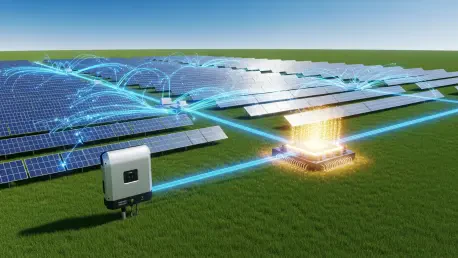
The shift stems from a growing realization that our electrical grid is only as strong as its most vulnerable digital link. Security experts investigating these devices have reportedly discovered communication components that could serve as potential entry points for unauthorized access, raising alarms about the safety of our nationwide critical infrastructure. This isn’t just about hardware; it is about the “invisible” data flowing through the grid, which led several House Republicans to urge the Commerce Department to block future imports of Chinese equipment. When you consider that these inverters are the brains of a solar installation, managing the flow of electricity into the main grid, any vulnerability becomes a strategic risk. There is a palpable sense of urgency in the air as officials weigh the benefits of cheap, imported technology against the sensory dread of a compromised energy system.
With Chinese manufacturers currently supplying approximately 60% of the utility-scale inverter market, what would be the immediate consequences if these restrictions were expanded to products already in use?
If the ban moved beyond “new” products to encompass existing inventory, the impact would be nothing short of drastic for our current momentum. In 2025 alone, the United States successfully built 50 gigawatts of new wind, solar, and battery capacity, a record-breaking achievement that accounted for roughly 92% of all new generating capacity. Cutting off the supply of the most common utility-scale components, like those from Sungrow or Chint Power Systems, would create a massive bottleneck for projects currently in the pipeline. We are looking at a forecast for 2026 where solar is expected to provide 51% of new utility-scale electricity capacity and batteries another 28%. Disrupting that flow would be like slamming the brakes on a train that is finally reaching top speed, potentially stalling hundreds of clean energy projects across the country.
How does the market readiness of the residential solar sector compare to the utility-scale sector when it comes to weathering these new regulatory storms?
The residential sector is actually in a much more stable position, almost like an island of security in a turbulent sea. U.S.-based Enphase Energy and Israel-based SolarEdge, along with Tesla, currently provide about 80% of the inverters needed for rooftop solar systems, which gives that segment a healthy domestic and allied foundation. In contrast, the utility, commercial, and industrial scales are far more reliant on the global market, where Chinese makers hold that massive 60% share. While homeowners might not feel much of a pinch, the developers of massive solar farms are likely feeling a cold sweat as they look at their procurement lists. It creates a lopsided reality where your neighbor’s roof is secure, but the massive field of panels powering the local city is suddenly mired in regulatory uncertainty.
Could you elaborate on the concept of “product obsolescence” and how it might force developers into these new, stricter FCC approval processes sooner than they expect?
In the fast-moving world of electronics, no product stays current forever, and the moment a manufacturer needs to release a new model or a significant update, the clock starts ticking. Even if existing projects don’t have to abandon their current inverters today, they will eventually face a hardware or software requirement—perhaps driven by new cybersecurity or grid functionality standards—that triggers the need for a new FCC ID. Once that happens, any inverter made outside the U.S. is effectively barred from sale unless it can navigate an incredibly narrow conditional approval or waiver process. This means that even the most reliable current models have an expiration date on their legality, forcing a slow but inevitable migration toward domestic technology. It is a game of high-stakes musical chairs where the music is the natural lifecycle of technology, and the chairs are the dwindling number of approved foreign devices.
What specific developments in domestic manufacturing give you hope that the U.S. can fill the vacuum left by these foreign restrictions?
There are some very bright spots on the horizon, particularly in the energy storage space where the outlook is significantly healthier. We are seeing major moves from companies like EPC Power and Tesla, both of which operate substantial domestic capacity, while Spain-based Power Electronics is aggressively scaling up its American manufacturing footprint. Furthermore, GE Vernova has opened an inverter factory in Pittsburgh and has the potential to expand that capacity to meet rising demand. We are also seeing tactical acquisitions, like Nextpower picking up the power conversion business of Zigor and its subsidiary Apex Power to bolster U.S. operations. If these companies can ramp up fast enough, we might avoid the “trouble” that a hard deadline without new imports would surely cause, turning a period of uncertainty into a genuine industrial rebirth.
What is your forecast for the American solar and storage market over the next two years given these shifting rules?
I anticipate a period of intense, localized friction as the industry recalibrates, but I believe the momentum of the 50 gigawatts we saw in 2025 is too strong to be fully extinguished. We will likely see a surge in waiver requests for non-Chinese foreign companies like SMA Solar Technology or Fronius as developers scramble to bridge the gap while domestic plants in places like Pittsburgh reach full scale. The transition will be messy and expensive in the short term, with solar and battery projects perhaps dipping slightly below their 51% and 28% capacity targets for 2026 due to supply chain hiccups. However, by late 2026, the market will likely emerge more resilient and “hardened,” with a supply chain that is much more closely aligned with national security priorities. Ultimately, we are trading the ease of the past for a more secure, albeit more complex, domestic energy future.