
The transition toward a sustainable future has reached a critical juncture where the primary challenge is no longer the generation of renewable power but the physical capacity to transport it across a continent. For many years, the primary concern of European policymakers was the cost and availability of wind turbines and solar panels, yet as of the current landscape in 2026, the focus has shifted entirely toward the wires and substations that form the backbone of the energy system. The energy transition has moved from a pioneering phase of local generation to an industrial phase of continent-wide integration, revealing deep-seated structural issues in the existing transmission networks. This shift necessitates a complete reimagining of how electricity moves across borders, moving away from a model of national self-sufficiency toward a truly interconnected European Energy Union.
The European Grids Package represents the definitive legislative response to these growing infrastructure hurdles, combining immediate administrative reforms with long-term strategic planning. This comprehensive suite of initiatives centers on two primary legislative pillars: the Proposed Directive on Accelerated Permitting and the significantly updated Trans-European Networks for Energy (TEN-E) Regulation. By addressing the “grid gap,” the European Union aims to unlock hundreds of gigawatts of renewable energy that currently sit in connection queues due to a lack of hosting capacity. This policy overhaul is not merely a technical update but a political commitment to ensure that infrastructure becomes an enabler rather than a barrier to the goal of climate neutrality.
The strategic significance of these interconnected networks cannot be overstated, as they serve as the physical foundation for both climate goals and regional energy security. Cross-border infrastructure allows the EU to balance the variability of wind and solar power across different geographic zones, ensuring that a sunny day in the Mediterranean can power industrial hubs in Northern Europe. This interconnectedness also provides a vital layer of resilience against geopolitical shocks, as a more robust grid reduces reliance on single-source energy imports and allows for a more flexible response to supply disruptions. The push for integrated networks is fundamentally about turning twenty-seven national grids into a single, synchronized machine capable of managing the complexities of a decarbonized economy.
In this evolving landscape, the roles of key market players and regulatory bodies are being fundamentally redefined to meet the demands of a high-voltage era. Transmission System Operators (TSOs) are no longer just maintenance providers but are becoming strategic orchestrators of massive capital deployment and digital innovation. At the same time, Distribution System Operators (DSOs) are facing a radical shift as they transition from passive managers of local wires to active players in a decentralized energy market. The European Commission has also taken a more assertive role in grid management, ensuring that national development plans align with the overarching priorities of the Union rather than purely domestic interests.
Modernizing the Backbone of Europe’s Energy Transition
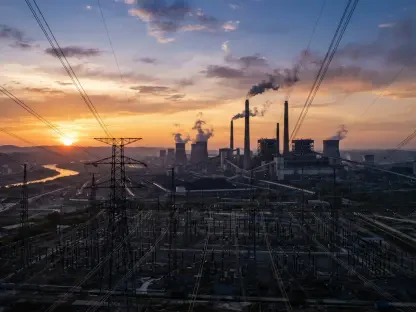
The current state of the European energy industry is defined by a paradox where renewable energy production is often curtailed because the grid cannot handle the surge in supply. This reality has forced a shift in focus from generation to transmission, as developers realize that building a wind farm is often faster and easier than securing a connection to the high-voltage network. The aging infrastructure of the twentieth century was designed for a centralized model of coal and nuclear plants, and it is now being pushed to its limits by the decentralized and variable nature of modern renewables. Without a massive and immediate modernization effort, the investment in green generation risks being stranded, creating a significant economic and environmental liability.
Defining the European Grids Package requires an understanding of its legislative scope, which targets the most persistent bottlenecks in project development. The Proposed Directive on Accelerated Permitting is designed to slash the administrative wait times that have historically plagued large-scale infrastructure projects, sometimes extending timelines to over a decade. Meanwhile, the updated TEN-E Regulation refocuses the criteria for Projects of Common Interest (PCIs), prioritizing those that contribute most effectively to the integration of the internal energy market and the achievement of sustainability targets. These regulations work in tandem to provide a predictable legal environment for investors while mandating a faster pace of physical construction across the Union.
The strategic significance of interconnected networks lies in their ability to maximize the efficiency of every kilowatt-hour produced within the European borders. High-capacity cross-border interconnectors act as a buffer against the intermittency of renewable sources, effectively creating a continental-scale battery. When wind speeds are high in the North Sea but low in the Alps, the grid facilitates the flow of energy to where it is most needed, reducing the need for expensive backup fossil fuel generation. This integration is the only viable pathway toward achieving a cost-effective energy transition that maintains the global competitiveness of European industry while reaching net-zero milestones.
As these projects move forward, the relationship between TSOs, DSOs, and the European Commission is entering a period of unprecedented collaboration and regulatory scrutiny. TSOs are now required to coordinate more closely through the European Network of Transmission System Operators for Electricity (ENTSO-E) to ensure that national grid expansions do not create imbalances elsewhere. Simultaneously, the Commission is providing the necessary oversight to ensure that investment is directed toward projects with the highest “European added value.” This evolving regulatory framework aims to eliminate the siloed approach to energy planning, replacing it with a unified strategy that treats the European grid as a singular strategic asset.
Catalysts for a Continent-Wide Infrastructure Overhaul
Emerging Trends in Digitalization and Proactive Planning
The rise of “smart” infrastructure is transforming the way existing high-voltage networks are managed, allowing operators to squeeze more capacity out of every wire. Implementing real-time data monitoring and digital control equipment enables TSOs to move from conservative, static capacity limits to dynamic line ratings that reflect actual environmental conditions. For instance, sensors can detect when wind is cooling a transmission line, allowing it to carry more current without overheating. This digital layer effectively increases the throughput of the grid without the need for immediate physical expansion, providing a crucial bridge while new lines are being permitted and built.
A significant shift is also occurring toward a model of anticipatory investment, where infrastructure is planned and built ahead of confirmed renewable energy demand. Moving from a reactive model to a proactive one is essential to avoid the “chicken and egg” problem, where developers are hesitant to build wind farms without a grid connection, and TSOs are hesitant to build lines without a confirmed wind farm. By allowing regulatory authorities to approve investments based on projected future needs and regional policy goals, the EU is ensuring that the “plug” is ready when the power plant is completed. This approach reduces the overall time-to-market for green energy and provides the long-term certainty that capital markets require.
The adoption of non-wire solutions is becoming a standard part of the grid management toolkit, offering a way to manage peak congestion without traditional physical expansion. Utilizing large-scale battery storage, demand-side response programs, and flexible connection agreements allows operators to flatten the peaks and fill the troughs of energy demand. These technologies provide the flexibility needed to integrate higher levels of variable renewables without necessitating massive, environmentally sensitive construction projects in every instance. By incentivizing these flexible solutions through updated tariff structures, the EU is fostering a more resilient and adaptable energy system that can respond to the rapid changes in consumption patterns.
Decentralization is placing a growing burden on distribution networks, making DSOs critical hubs for the success of the energy transition. Local distribution grids, which were once simple conduits for power flowing from the high-voltage system to the consumer, are now integrating millions of residential solar installations and electric vehicle charging stations. This shift requires DSOs to adopt more sophisticated management tools and to coordinate more closely with TSOs to ensure that local imbalances do not cascade into the wider system. The Grids Package recognizes this new reality by mandating greater transparency and investment at the distribution level, ensuring that the “last mile” of the energy transition is as robust as the backbone.
Projecting Growth and Investment Requirements through 2040
Quantifying the capacity surge needed to reach climate neutrality reveals the sheer scale of the task ahead for European grid operators. Data-driven projections suggest that the Union must integrate up to 2.4 TW of renewable power by 2040, a staggering increase that requires a fundamental expansion of current network limits. This surge in supply is mirrored by a 60% increase in electricity consumption as the heating and transportation sectors continue to electrify. Meeting this demand requires not just more wires, but wires that are smarter, stronger, and more resilient to the stresses of a high-renewables system.
The financial requirements of this overhaul are equally massive, with the European Commission forecasting a trillion-euro investment gap over the coming decades. Analyzing the €584 billion needed for the current decade and the projected €1.2 trillion required by 2040 highlights the necessity of mobilizing both public and private capital. To facilitate this, the EU is leveraging instruments like the Connecting Europe Facility and encouraging the reallocation of congestion rents toward new infrastructure projects. The goal is to create a financial environment where grid investment is seen as a stable, long-term opportunity that offers both competitive returns and high social value.
Tracking market performance indicators is essential to ensure that these massive investments are yielding the desired results in terms of grid capacity and market integration. The success of Projects of Common Interest is being monitored more closely than ever, with a focus on how quickly they move from the planning stage to operational status. Furthermore, the impact of congestion rent reallocation on infrastructure funding is being analyzed to ensure that the fees collected from market bottlenecks are being used to eliminate those very same constraints. These indicators provide a transparent view of the progress being made toward a unified energy market and help to identify areas where further regulatory intervention may be necessary.
The move toward more granular and transparent data on grid capacity is already changing the behavior of energy developers and investors. By requiring operators to publish monthly capacity maps, the EU is providing the visibility needed to direct investment toward areas where the grid can most easily accommodate new generation. This transparency reduces the risk of “shooting in the dark” when selecting project sites and helps to prevent the further crowding of already congested nodes. As this data becomes more accessible, the market is becoming more efficient at matching generation potential with infrastructure availability, further accelerating the pace of the transition.
Navigating the Obstacles to a Seamless Energy Union
Dismantling the permitting barrier remains the single most critical task for ensuring the success of the European Grids Package. Strategies to overcome administrative delays are focusing on simplifying the complex web of local, regional, and national approvals that have historically extended project timelines to over a decade. By introducing a two-year cap on authorization procedures, the EU is forcing a radical change in the bureaucratic culture surrounding infrastructure development. These time limits are designed to prevent projects from being stalled indefinitely in the planning phase, providing developers with a predictable pathway toward construction and operation.
Technical challenges associated with renewable integration are also a significant hurdle, as aging transmission systems were not designed to handle the variable nature of wind and solar. Managing the inherent variability of these sources requires sophisticated forecasting tools and a much higher degree of grid flexibility than was necessary in the era of coal-fired power. Transmission operators must now balance the system in real-time, using a combination of fast-acting storage, demand-side response, and international interconnectors. This technical evolution is as much about software and data as it is about steel and copper, requiring a workforce with new skills in digital grid management and power electronics.
Geopolitical and security risks have taken on a new urgency in the wake of global tensions, highlighting the vulnerability of physical assets to sabotage and digital networks to cyberattacks. Addressing these threats requires a comprehensive approach that includes both physical hardening of infrastructure and the implementation of state-of-the-art cybersecurity protocols. The Grids Package mandates rigorous risk assessments for all critical energy infrastructure, ensuring that security is integrated into the design and operation of the network from the outset. Furthermore, the push for energy sovereignty means that the EU is becoming more cautious about third-country investment in sensitive parts of the grid, seeking to protect the integrity of the Energy Union.
The “paper project” bottleneck is a persistent issue where connection queues are clogged with non-viable energy projects that have no realistic chance of being built. Implementing financial securities and stricter project milestones is a key strategy for clearing these queues and freeing up capacity for serious investors. By requiring developers to put up significant collateral or meet specific development targets to maintain their place in the line, the EU is ensuring that grid capacity is reserved for projects that are ready to contribute to the energy transition. This “use it or lose it” approach is essential for ensuring that infrastructure is not wasted on speculative ventures that hinder the progress of the entire industry.
A New Regulatory Framework for Rapid Implementation
The Permitting Directive and its strict time limits are central to the EU’s strategy for accelerating the physical build-out of the grid. Analyzing the impact of the two-year cap on authorization procedures reveals a move toward an administrative system that prioritizes speed and efficiency without sacrificing environmental rigor. The introduction of the “tacit approval” mechanism is a groundbreaking change, where a lack of response from a competent authority within a deadline is considered an approval for certain project steps. this prevents projects from being held hostage by bureaucratic silence or administrative understaffing, shifting the burden of proof to the regulators to provide timely feedback.
Overriding Public Interest (OPI) is a legal concept that is being applied to grid projects to help them overcome local administrative and environmental objections. By prioritizing energy infrastructure as a matter of supreme public importance, the EU is signaling that the climate crisis requires an emergency response that can, in specific and justified cases, take precedence over other local concerns. This legal status provides a powerful tool for developers to navigate the “not in my backyard” (NIMBY) sentiment that has derailed many vital projects in the past. While environmental protections remain important, the OPI designation ensures that the broader societal benefit of a decarbonized energy system is given its proper weight in the legal balancing act.
Transparency and data accessibility mandates are creating a new era of openness in the way European grids are managed and developed. New legal obligations for operators to publish monthly capacity maps and connection request status updates are designed to eliminate the information asymmetry that has often disadvantaged smaller developers. By providing a clear and up-to-date picture of where capacity is available and where the grid is congested, the EU is allowing the market to function more effectively. This transparency also builds trust among stakeholders and provides the data necessary for more accurate long-term planning by both public and private entities.
Centralizing strategic planning is another key feature of the new regulatory framework, with the European Commission taking a more direct hand in the development of the Ten-Year Network Development Plan. By aligning grid planning with high-level public policy goals rather than the commercial interests of individual national operators, the EU is ensuring that the grid evolves in a way that supports the 2050 climate targets. This top-down approach helps to coordinate national investments into a coherent continental strategy, preventing the duplication of efforts and ensuring that resources are directed toward the most impactful projects. The TYNDP is no longer just a technical exercise; it is now a strategic roadmap for the industrial integration of the entire continent.
The Future Landscape of the Integrated Energy Union
The Clean Industrial Deal and its focus on global competitiveness are deeply intertwined with the modernization of the European grid. How a modernized grid will lower energy costs for heavy industry is a central question for the future of European manufacturing, as high energy prices have long been a disadvantage compared to other global markets. By integrating more cheap renewable energy and reducing market congestion, the EU aims to provide its industries with a stable and affordable supply of clean power. This infrastructure-led strategy is expected to attract long-term investment in sectors like green steel and chemicals, positioning Europe as a leader in the global clean-tech economy.
Ownership transparency and de-risking are becoming increasingly important as the EU seeks to protect its critical infrastructure from foreign interference. Future regulations regarding third-country investment in sensitive energy assets are being designed to ensure that European sovereignty is not compromised in the pursuit of capital. By requiring project promoters to disclose their ultimate beneficial owners and subjecting foreign investments to rigorous security screenings, the EU is creating a more secure environment for the energy transition. This focus on security is a recognition that the grid is not just an economic asset, but a vital component of national and continental security in an increasingly fragmented world.
The evolution from national networks to a continental machine represents the final step in the creation of a truly integrated Energy Union. This process involves the physical synchronization of different regions, as exemplified by the ongoing projects to link the Baltic states with the Continental Europe Synchronous Area. These regional synchronization projects are essential for energy security, as they allow smaller or more isolated markets to benefit from the stability and resources of the wider European system. As these links are completed, the EU grid is becoming a unified, synchronized energy ecosystem that can manage the challenges of the twenty-first century with unprecedented efficiency and resilience.
Innovations in cross-border synchrony are opening up new frontiers for grid expansion, particularly in the realm of subsea interconnectors and high-voltage direct current (HVDC) technology. Future growth areas are likely to include massive offshore wind hubs in the North Sea and the Atlantic, which will require complex networks of subsea cables to bring power to the mainland. These projects represent the cutting edge of energy engineering and will serve as the testing grounds for new technologies in grid management and undersea maintenance. By investing in these innovative solutions today, the EU is laying the groundwork for a future where energy can flow freely and securely across the entire continent and beyond.
Summary of Prospects for the European Energy Grid
Synthesizing the impact of grid reform shows how the combination of legislative speed, digital optimization, and massive capital injection is finally beginning to solve the energy bottlenecks that once seemed insurmountable. The European Grids Package has provided the necessary tools to move past the era of administrative delay and technical hesitation, creating a clear pathway for the physical build-out of the network. By addressing both the high-level strategic planning and the granular details of local permitting, the EU has created a comprehensive framework that supports the rapid integration of renewable energy. This reform is not just about building more wires; it is about creating a smarter and more flexible system that can adapt to the needs of a modern economy.
Strategic recommendations for investors and developers now center on navigating a “queue” system that is more transparent but also significantly more demanding in terms of financial and project readiness. Leveraging new financial mechanisms and understanding the nuances of the “anticipatory investment” model are essential for success in this new landscape. Developers who can demonstrate the viability and strategic importance of their projects will find a more welcoming regulatory environment, but they must also be prepared to meet stricter milestones and provide greater transparency. The move toward a more disciplined and efficient connection process is ultimately a benefit to the entire industry, as it ensures that limited grid capacity is used for projects that will actually deliver power to consumers.
The final outlook on the 2030 and 2050 targets is one of cautious optimism, as the Grids Package has provided the decisive factor needed to move from pioneering efforts to industrial-scale integration. The success of the energy transition now depends on the effective implementation of these reforms at the national level and the continued mobilization of investment toward the most critical infrastructure nodes. While the challenges remain significant, the coherent roadmap provided by the European Union offers a viable way forward for a continent that is determined to lead the global shift toward sustainability. The grid is no longer the silent bottleneck; it has become the active catalyst for a cleaner, more secure, and more competitive European energy future.
In previous decades, the European energy system operated as a collection of independent islands, yet the regulatory shifts of the mid-2020s transformed these into a single, synchronized continental machine. Policymakers successfully implemented the Overriding Public Interest designation, which allowed critical high-voltage links to bypass years of administrative deadlock. This legal framework, combined with a trillion-euro investment strategy, enabled the integration of nearly two terrawatts of renewable capacity by the late 2030s. The transition proved that while generation technology was the spark of the energy revolution, it was the modernization of the transmission infrastructure that provided the fuel for long-term industrial growth. As the Union moved toward its mid-century goals, the grid evolved into a digitized, resilient asset that secured both economic competitiveness and climate neutrality for all Member States.