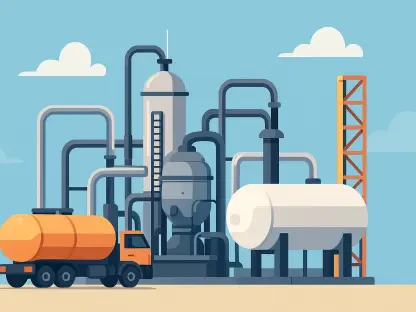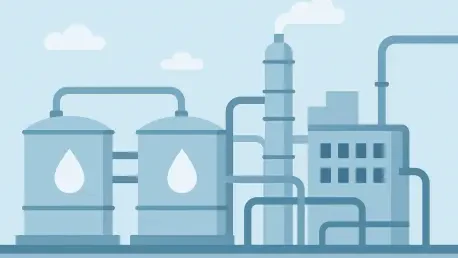

The ambitious 13.967 billion yuan investment into coal-to-ethanol production faces a logistical hurdle as its most critical construction contract remains unawarded. This massive industrial initiative, located within the Shihu New Material Industrial Park in Shihezi, Xinjiang, aims to revolutionize the regional chemical landscape by scaling up a 600,000-tonne-per-year production capacity. The recent setback occurred when the primary engineering and construction tender for Section 3, the core ethanol unit, was declared invalid after the October opening failed to attract at least three eligible bidders. Consequently, the procurement process for the production line and its essential utility facilities has been forced into a restart. While this delay presents a temporary challenge, it does not diminish the overall momentum of a project designed to serve as a national demonstration of technical efficiency and industrial modernization within the energy-rich Xinjiang region.
Progress Amidst Procurement Challenges
Despite the specific delay in the ethanol unit tender, the broader development of the Shihu complex remains firmly on track with several foundational infrastructure contracts already successfully finalized. Aerospace Long March Chemical Engineering has taken the lead on the sophisticated gasification units, while China Tianchen Engineering Corporation is overseeing the integration of whole-plant systems and the expansive tank farms required for safe storage. Additionally, China United Engineering Corporation has been tasked with the development of heating and air separation stations, ensuring that the necessary physical infrastructure is ready for the eventual installation of the core processing modules. Financial stability for these operations was further solidified through a recent capital injection that increased the registered capital to 3.359 billion yuan. This robust funding structure underscores the commitment of the stakeholders to see the facility through to completion despite the complexities of high-stakes industrial procurement.
The strategic importance of this facility lies in its pioneering role as China’s first industrial-scale demonstration of the coal-to-methanol-to-ethanol-to-ethylene-to-PVC production pathway. By adopting this innovative sequence, the plant intends to modernize the manufacturing of polyvinyl chloride by moving away from the traditional calcium carbide-based methods that have dominated the industry for decades. The technical framework utilizes high-pressure hydrogenation combined with alumina-catalyzed dehydration to synthesize polymer-grade materials with remarkable precision. This transition is not merely about changing the feedstock; it represents a fundamental shift toward more sustainable chemical engineering. The engineering design provides the facility with significant operational flexibility, allowing it to pivot between the production of ethanol and ethylene based on real-time market fluctuations. Such adaptability ensures that the massive capital investment remains economically resilient while setting a new standard for chemical production in coal-rich provinces.
Environmental Impacts and Future Trajectories
Environmental stewardship serves as a central pillar of this technological overhaul, specifically targeting the elimination of mercury pollution, which remains a significant drawback of conventional PVC manufacturing. The traditional carbide process has long been criticized for its environmental footprint, but this new coal-based alternative offers a path toward significantly cleaner industrial operations. Beyond removing toxic heavy metals from the production cycle, the facility is engineered to lower overall energy consumption and drastically reduce carbon emissions per unit of output. By integrating advanced carbon capture and efficiency-enhancing technologies, the project demonstrates that coal-intensive regions can still align with modern ecological standards. The shift to a mercury-free model is a proactive response to international environmental regulations and domestic health concerns, positioning the Shihu project as a template for future industrial parks. This commitment to green manufacturing reflects a broader strategy to decouple economic growth from environmental degradation in the energy sector.
Stakeholders recognized that the successful restart of the Section 3 bidding process was the final piece needed to unify the various facets of this ambitious project. Moving forward, the focus shifted toward ensuring that the new procurement round attracted a more diverse pool of qualified engineering firms capable of managing the high-pressure hydrogenation requirements. Industry analysts noted that the project’s long-term viability depended on maintaining the delicate balance between technical innovation and economic scalability. Future considerations centered on replicating this mercury-free model across other coal-rich districts to phase out aging, high-pollution infrastructure entirely. The project provided a clear roadmap for integrating chemical production with regional resource advantages while prioritizing ecological health. As the industry observed the results of these industrial-scale tests, the pathway for transitioning from traditional coal use to high-value chemical manufacturing became increasingly evident. The integration of flexible production lines served as a critical safeguard against global commodity volatility.