
The relentless expansion of hyperscale data centers across the Seoul metropolitan area is rapidly colliding with the structural limitations of a power grid that was never designed to accommodate the exponential energy demands of generative artificial intelligence. South Korea, as a global leader in semiconductor manufacturing and high-tech infrastructure, finds itself at a critical crossroads where its digital ambitions are being checked by physical energy constraints. As companies like Samsung and SK Hynix ramp up production of high-bandwidth memory chips, the localized demand for stable, high-capacity electricity has surged beyond the immediate capabilities of the existing transmission network. This bottleneck is not merely a technical hurdle but a systemic crisis that threatens the nation’s competitive edge in the global AI race. While the government has pledged significant investments in power infrastructure, the centralized nature of the Korean electricity market creates friction for private enterprises seeking rapid, flexible energy solutions.
Navigating the Bottlenecks of a Centralized Power Market
The primary obstacle to modernizing the energy landscape remains the deep-seated financial and structural instability of the Korea Electric Power Corporation, the state-owned utility that maintains a near-total monopoly on the distribution and sale of electricity. Despite the soaring global price of liquefied natural gas and coal over recent years, the domestic retail price of electricity has often been suppressed by political considerations, leading to staggering deficits for the utility provider. This financial burden has severely constrained the ability to fund necessary grid upgrades and the construction of high-voltage transmission lines required to move power from coastal generation sites to the inland industrial hubs. Furthermore, the lack of a competitive market framework prevents independent power producers from directly selling renewable energy to corporate buyers without navigating cumbersome bureaucratic channels. Without significant reform to the pricing mechanism and market competition, the national grid will struggle to meet the load.
Beyond the financial distress of the national utility, there is a profound geographical mismatch between where electricity is generated and where it is most desperately needed by the burgeoning AI sector. The majority of South Korea’s nuclear and thermal power plants are located along the southern and eastern coastlines, yet the vast majority of data center development and semiconductor fabrication facilities are concentrated within the Gyeonggi Province. Transporting massive amounts of electricity across the mountainous peninsula requires the installation of high-voltage direct current lines, projects that frequently face intense local opposition and protracted legal battles from residents concerned about environmental and health impacts. This spatial disconnect has forced some tech giants to consider decentralized energy solutions, such as on-site fuel cells or microgrids, though these currently lack the scale to replace traditional grid power. The failure to resolve these delays could result in a scenario where finished facilities sit idle while waiting for power.
Integrating Advanced Nuclear Technology and Renewables
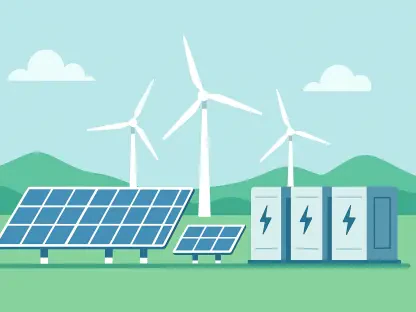
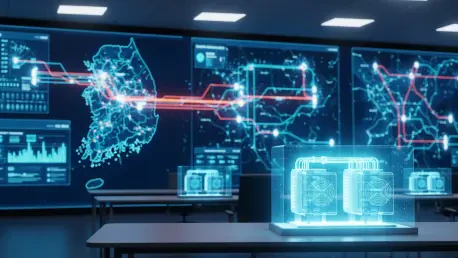
In response to the escalating power crunch, the 11th Basic Plan for Electricity Supply and Demand, spanning from 2026 to 2038, has placed a renewed emphasis on nuclear energy as the foundational source of carbon-free power for the high-tech sector. The government has accelerated the deployment of small modular reactors, which offer a flexible and localized alternative to traditional large-scale plants. These reactors are viewed as a potential game-changer for the AI industry because they can be sited closer to industrial parks, reducing the dependency on long-distance transmission infrastructure. Simultaneously, the push for carbon neutrality has led to an increased focus on hydrogen power and wind energy, though these sources still face challenges regarding intermittency. Integrating these diverse energy sources into a single, cohesive smart grid requires sophisticated management software and energy storage systems that can balance the fluctuating supply with the constant, high-level demand typical of data processing centers that run around the clock.
The path forward demanded a paradigm shift where the government and private sector collaborated to treat energy infrastructure with the same urgency as national security. Policymakers ultimately recognized that the transition to an AI-driven economy was impossible without a resilient and liberalized energy market that prioritized efficiency over legacy monopolies. They implemented a tiered deregulation strategy that allowed major tech firms to invest directly in renewable energy projects and permitted the sale of surplus power back to the grid. This encouraged a wave of innovation in energy-saving technologies and the adoption of liquid cooling systems within data centers to reduce the overall thermal load. By streamlining the permitting process for transmission lines and offering incentives for regional power independence, the nation successfully bridged the gap between supply and demand. These steps ensured that the technological infrastructure remained robust enough to lead the global market, while setting a new standard.