
Hydrogen was sold as a silver bullet, but markets have since corrected the story. The sector is moving from press releases to purchase orders, from gigawatt talk to megawatt projects that prove what works and what does not. That shift is healthy. It exposes the central truth of hydrogen: it creates value only where electrons cannot do the job, or where molecules already matter.
The task ahead is not to rekindle hype. It is to build a coherent industrial strategy that matches hydrogen’s strengths with specific use cases and investable infrastructure. It means fewer slogans, more bankable contracts. Read on how to adapt to this new market that demands fewer moonshots and more clusters that close the cost and carbon equations.
From Gigawatts to Bankable Megawatts
The market has pivoted toward 2–20 megawatt projects for good reason. Developers face three blockers on very large builds: uncertain offtake, volatile power prices, and immature supply chains. Smaller projects de-risk those variables. They validate performance in real duty cycles, test balance-of-plant complexity, and reveal where permitting and grid interconnection slow progress.
This is not lost momentum. It is staged learning. Each project shortens procurement cycles and improves plant operations under partial-load conditions. Electrolyzer cost trajectories vary sharply by geography. The IEA reports that Chinese alkaline systems now cost $750–1,300 per kilowatt for installed capacity. In contrast, Western alkaline and PEM equivalents range from $2,000 to $2,450 per kilowatt. This divergence is driven by factors such as scale, automation, and domestic supply chains, which are reshaping global project economics.
The Economics Start With Power, Not Hardware
Hydrogen’s levelized cost is debated as a single number. In reality, it is a formula driven by three dominant levers.
Electricity price and profile. Cheap, clean power at high availability is the primary cost driver. According to a peer-reviewed techno-economic review published in the International Journal of Hydrogen Energy, renewable electricity costs below $20–30 per megawatt-hour are essential for green hydrogen to approach cost parity with fossil-based production. That is a threshold that only the most favorable solar and wind resources consistently meet today. Projects that can combine those power economics with 4,000 to 6,000 operating hours per year have the clearest path to competitive cost.
Load factor discipline. Electrolyzers that chase volatile spot prices underperform. If utilization drops too far, fixed costs dominate, and the cost per kilogram rises fast. Pairing dedicated renewables with firming strategies, or connecting to grids with high renewable penetration and predictable correlation rules, is often cheaper than cycling.
Capex and balance-of-plant. Stack prices matter, but so do power electronics, water treatment, compression, and heat integration. Integration choices can swing total installed cost by double-digit percentages. Thermal integration with nearby industrial processes can improve round-trip efficiency and reduce opex.
Where Hydrogen Actually Earns Its Keep
Direct electrification will decarbonize most low-temperature heat, short-range mobility, and large swaths of building energy. Hydrogen should be reserved for where electrons lose on physics or process chemistry.
Feedstock first. Ammonia, methanol, and refinery hydrotreating already consume large hydrogen volumes. Swapping grey hydrogen for low-carbon hydrogen cuts emissions without redesigning entire plants. Major European shipping companies, including Maersk, MSC, CMA CGM, and Hapag-Lloyd, have collectively ordered over 200 methanol-powered vessels since 2022, creating a durable demand signal for clean methanol and, by extension, clean hydrogen.
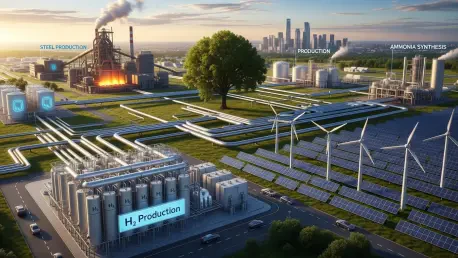
Iron and steel. Direct reduced iron with hydrogen can displace coal in primary steelmaking when high-quality ore and a predictable hydrogen supply align. Projects in the Nordics are designed around this logic directly. The HYBRIT initiative is a joint project between SSAB, LKAB, and Vattenfall in northern Sweden. It has completed a pilot hydrogen storage facility in a lined rock cavern near Luleå, demonstrating 94% availability over 3,800 operating hours, with simulations showing that storing hydrogen during cheap electricity periods and deploying it during expensive periods could reduce variable operating costs by up to 40%.
High-temperature process heat. Glass, ceramics, certain chemicals, and cement precalcination require temperatures that resist economical electrification today. Hydrogen blends or oxy-fuel designs with hydrogen can bridge the gap while electric solutions mature.
System balancing and seasonal storage. As renewables dominate generation, hydrogen can turn surplus electricity into a storable molecule for later use in turbines or fuel cells. It functions as an insurance policy for multi-day and seasonal variability where batteries become uneconomic.
Policy Is Rewiring Market Design
Hydrogen does not compete in a vacuum. Incentives and rules define project viability as much as engineering does. The United States 45V tax credit, introduced through the Inflation Reduction Act of 2022, was finalized by the Treasury in January 2025. It offers up to $3 per kilogram for clean hydrogen. This funding is available for hydrogen produced with lifecycle greenhouse gas emissions below 0.45 kilograms of CO2 equivalent per kilogram of hydrogen. The act establishes a tiered structure that encourages global project pipelines to favor sites with cheap renewables and low upstream emissions.
In Europe, the RFNBO framework established by EU Delegated Regulation 2023/1184 phases in three binding requirements for hydrogen to qualify as renewable:
Additionality (electricity must come from new renewable capacity built within 36 months of the electrolyzer),
Temporal correlation (production must match renewable generation within the same hourly window from 2030, with monthly matching permitted through 2029), and
Geographical correlation (generation and electrolysis must occur in the same or directly interconnected bidding zone).
These rules shape where and how plants connect to the grid and have become the central variable in European project design. Market design matters as much as support levels. Poorly designed subsidies reward production regardless of demand. Smart design connects payments to verified emissions intensity, real offtake, and operating discipline, keeping capital focused on clusters that create durable industrial value rather than stranded assets.
Hydrogen as a Location Strategy
Hydrogen access is now a site-selection filter for energy-intensive industry. It signals future-proofed permits, lower carbon intensity of products, and cost certainty. Three practical implications follow for executives making location decisions.
Prefer hubs over standalones. Shared pipelines, compression, storage, and certification systems reduce unit costs and shorten permitting. The European Hydrogen Backbone initiative proposes a network of nearly 28,000 km by 2030 and approximately 53,000 km by 2040, connecting industrial clusters, ports, and hydrogen valleys across 28 European countries, with roughly 60% of the 2040 network based on repurposed natural gas infrastructure.
Anchor with feedstock demand. Clusters that start with existing hydrogen users, such as refineries and ammonia producers, can switch from grey to green and then expand to new applications. That anchors early electrolyzer utilization and improves financing terms.
Match resource and demand. Iberia’s solar and wind profiles can support low-cost hydrogen exported by pipeline to Northern industry. Ports with bunkering potential can build ammonia and methanol value chains. The Nordics can pair offshore wind with steel and chemical clusters.
Move Molecules Wisely: Pipelines, Ammonia, or LOHC
Transport choices dictate cost and carbon outcomes.
Pipelines win at scale and distance onshore. Repurposed gas lines are cost-effective if materials and compression are suitable. Hydrogen embrittlement risks require engineering discipline and regular inspections.
Ammonia is the dominant maritime carrier. It is energy-dense, ships well, and has an existing global value chain. Cracking ammonia back to hydrogen adds loss and cost, so direct ammonia use in fertilizer or as a fuel is often preferable.
Liquid organic hydrogen carriers simplify handling but add conversion penalties. They can enable early volumes to reach niche markets while pipelines are built.
Infrastructure decisions should be sequenced: start with on-site offtake and trucked compressed gas for small volumes; add pipelines and port infrastructure when predictable scale appears; avoid building expensive import terminals before anchor buyers are under contract.
A Realistic Outlook
Hydrogen is in its execution era, with the deals becoming smarter and the economics more honest. The projects that will hold are those built where cheap, clean power is abundant, where molecules already do real work, and where contracts and certification create traceable trust.
Setbacks are predictable. Electrolyzer supply chains will strain. Power markets will stay volatile. Some clusters will overbuild, and some offtakers will hesitate when budgets tighten. These are the normal pressures of a sector formalizing its cost structure, not signals of structural failure.
The metrics worth tracking are capacity factor, verified emissions intensity, and long-term offtake signed at prices that survive board scrutiny. The key unresolved issue is that hydrogen’s most effective applications are highly specific, yet the infrastructure necessary to support them requires broad and coordinated commitment. Industries and governments that treat hydrogen as a universal energy solution will misallocate capital. Those that treat it as a precision industrial input, deployed where the physics and economics of electrification fall short, will find it a defensible competitive position. That distinction is now the real investment decision.