
The relentless climb of gasoline prices toward the five-dollar mark has transformed a routine trip to the pump into a significant financial burden for millions of American families who are already grappling with broader inflationary pressures. As the national discourse shifts from theoretical policy to immediate survival, the role of the U.S. Department of Energy has come under intense scrutiny. Public frustration is mounting, and the government is under immense pressure to deploy every available fiscal tool to stabilize retail prices before they further erode consumer confidence.
Examining the Current State of U.S. Energy Policy and Fuel Taxation
The landscape of domestic energy costs is currently defined by a delicate balance between fiscal responsibility and public necessity. American drivers are navigating an environment where fuel expenses dictate everything from grocery budgets to housing choices. To manage these retail price spikes, federal authorities have traditionally relied on strategic reserves, but the magnitude of the current crisis suggests that more direct interventions are required to shield the economy from a prolonged downturn.
Central to this debate is the federal gas tax, a levy of 18.4 cents per gallon on gasoline and 24.4 cents per gallon on diesel. Since its inception, this tax has served as the primary lifeblood for the Highway Trust Fund, providing the necessary capital to maintain the nation’s vast network of roads and bridges. Any adjustment to this revenue stream involves a complex trade-off between lowering costs for the individual and maintaining the structural integrity of national transportation infrastructure.
Recent developments have been heavily influenced by the policy pivot of Energy Secretary Chris Wright. Moving toward a more pragmatic, consumer-focused strategy, Wright has indicated a willingness to entertain a temporary suspension of fuel levies. This shift reflects a broader administrative realization that the transportation sector acts as the foundation for the entire U.S. economy. When fuel costs rise, the price of every transported good follows, making energy affordability a cornerstone of national economic stability.
Analyzing Market Shifts and Economic Projections for Fuel Relief
Geopolitical Triggers and Evolving Consumer Behavior
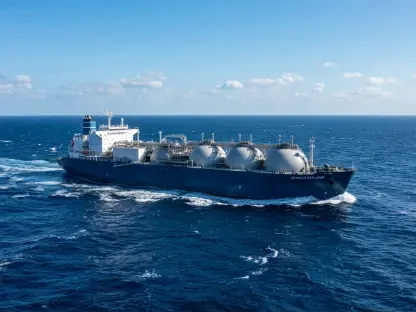
The primary catalysts for the current price surge are found far beyond domestic borders. Persistent instability in the Middle East and systemic disruptions in global supply chains have repeatedly pushed the national average gas price beyond the $4.50-per-gallon threshold. These external shocks have forced a reevaluation of traditional fiscal conservatism, leading to a “kitchen table” focus on affordability that transcends partisan lines.
In response to public outcry, political leaders are increasingly viewing the “tax holiday” as a necessary short-term band-aid. While structural changes in energy production are preferred for long-term stability, the immediate volatility of global markets requires a more agile response. This shift in political will highlights the tension between long-term strategic goals and the immediate need to prevent a full-scale consumer spending collapse.
Market Data and Forecasted Savings for the American Economy
Quantifying the actual benefit of a tax pause requires a deep dive into household performance indicators. Estimates suggest that a full 18-cent reduction per gallon could save the average multi-car household several hundred dollars annually. While this might seem marginal to high-income earners, it represents a critical margin of safety for low-income workers who spend a disproportionate share of their earnings on commuting and essential services.
Furthermore, the commercial sector stands to gain even more significantly from a suspension of diesel taxes. Logistics and freight projections indicate that a tax holiday could save the trucking industry billions of dollars in operating costs. This reduction in overhead would likely have a cooling effect on inflation, as lower transportation costs eventually trickle down to retail prices for food and consumer electronics. The price elasticity of demand suggests that while lower prices might slightly increase fuel consumption, the primary result would be sustained economic stability during a period of extreme uncertainty.
Addressing the Obstacles of Suspending Federal Fuel Levies
The most significant barrier to a gas tax pause is the looming infrastructure funding gap. If the federal government stops collecting these revenues, the Highway Trust Fund will face a massive deficit, potentially halting thousands of ongoing road and bridge repair projects. Finding a way to backfill this revenue without increasing the national deficit remains a primary concern for fiscal watchdogs and state transportation departments alike.
Another persistent worry is the retail pass-through problem. Historical precedents suggest that oil companies and retailers do not always pass the full savings of a tax cut to the end-user. Instead, there is a risk that these entities might absorb the 18-cent reduction into their own profit margins, leaving the consumer with little to no actual relief at the pump. Ensuring that the tax holiday results in a direct price drop requires rigorous oversight and a transparent pricing mechanism.
Navigating the Regulatory Landscape and Legislative Requirements
A federal tax pause is not an executive order away; it requires the explicit authorization of Congress. Changing established tax codes is a notoriously complex process that involves navigating various legislative hurdles and partisan interests. Lawmakers must weigh the immediate popularity of a tax holiday against the long-term logistical nightmare of adjusting tax collection systems for a temporary period.
Moreover, a tax pause must interact with existing environmental and energy standards. Some critics argue that lowering the price of gasoline contradicts national goals aimed at reducing carbon emissions and promoting fuel efficiency. There is also the matter of compliance, as fuel distributors must be prepared to adjust their billing and reporting systems almost overnight to adhere to new pricing structures during a temporary tax holiday.
The Future Path of U.S. Energy Independence and Innovation
Long-term price stability will ultimately depend on the expansion of domestic production. The current administration has outlined plans to increase drilling permits and refinery capacity to ensure that the U.S. is less susceptible to foreign supply shocks. By boosting domestic output, the government hopes to create a more resilient energy market that does not require frequent fiscal interventions or tax holidays to remain affordable.
Simultaneously, the diversification of the energy mix is accelerating. Investment in nuclear power, domestic natural gas, and renewable energy sources is seen as a way to reduce the overall reliance on volatile oil markets. As technological advancements in electric vehicles and alternative fuels continue to gain market share, some analysts believe the federal gas tax may eventually become obsolete as the primary funding mechanism for infrastructure.
Assessing the Viability of a Federal Gas Tax Holiday
The evaluation of a federal gas tax pause revealed a complex landscape of economic trade-offs. While the suspension offered immediate financial relief for citizens struggling with inflation, it also threatened to undermine the long-term maintenance of the nation’s physical infrastructure. Policymakers discovered that a tax holiday functioned best as a psychological reprieve rather than a permanent solution to energy volatility. The data suggested that while the pause provided a necessary cushion for the logistics sector, it did not address the deeper supply and demand imbalances that continued to drive prices upward.
Strategic next steps involve a dual-track approach to energy security. Moving forward, the most effective path involves combining fiscal flexibility with an aggressive push for domestic production and refinery modernization. Future considerations must include the development of a secondary funding mechanism for the Highway Trust Fund to ensure that temporary tax relief does not lead to permanent infrastructure decay. Ultimately, achieving energy independence required a transition away from reactive fiscal maneuvers and toward a robust, diversified energy portfolio that could withstand global disruptions without burdening the American taxpayer.