
The decision made by the United Arab Emirates to formally withdraw from the Organization of the Petroleum Exporting Countries marks a pivotal moment in the history of global energy markets and sovereign wealth management. This strategic departure is not merely a dispute over production quotas but a fundamental realignment of national interests aimed at maximizing sovereign wealth before the global energy transition accelerates. By operating outside the restrictive framework of collective bargaining, the Emirates have gained the necessary flexibility to monetize their vast subterranean assets at a pace that suits their domestic industrial diversification goals rather than the fiscal requirements of less efficient oil producers. This pivot allows the nation to leverage its low-cost extraction capabilities to capture market share in an increasingly competitive landscape where long-term demand remains uncertain. As the world moves toward a decarbonized future, the UAE recognizes that being the last major producer standing requires an agility that the rigid structure of a cartel simply cannot provide in this high-stakes environment.
Market Dynamics: Divergent Economic Visions and Production Growth
The tension between the UAE’s aggressive expansion plans and the cartel’s price-stabilization mandates had been simmering for years before the final fracture occurred. While the group traditionally favored production cuts to prop up global prices, the Abu Dhabi National Oil Company had already committed billions of dollars to boost its maximum sustainable capacity to five million barrels per day. Maintaining a significant portion of this capacity offline to satisfy the collective needs of the group became an untenable financial burden for a country seeking to fund its industrial strategy. This mismatch in economic priorities created a growing divide, as the Emirates viewed their idle capacity as wasted capital that could otherwise be fueling the transition into high-tech sectors, artificial intelligence, and renewable energy infrastructure. The departure allows the state to finally align its production reality with its massive capital investments, ensuring that the return on investment for these projects is realized on a timeline that benefits the local economy.
Financial Sovereignty: Establishing Independent Energy Benchmarks
Furthermore, the UAE has sought to establish its own independent benchmarks for crude oil pricing, most notably through the launch of the Murban futures contract on the ICE Futures Abu Dhabi exchange. This move toward market transparency and financial independence directly contradicted the opaque and often political decision-making processes inherent in the cartel’s traditional structure. By allowing the market to determine the value of its oil, the UAE has attracted a broader range of international investors and trading partners who value predictability over collective intervention. This autonomy has also facilitated deeper bilateral energy partnerships with major Asian economies, ensuring long-term demand security through direct state-to-state agreements. The ability to negotiate these terms without being tethered to the fiscal requirements of less efficient producers has allowed the Emirates to optimize their trade routes and refine their role as a sophisticated global financial and energy hub, separate from regional volatility.
Future Trajectory: Technological Leadership and Decarbonization
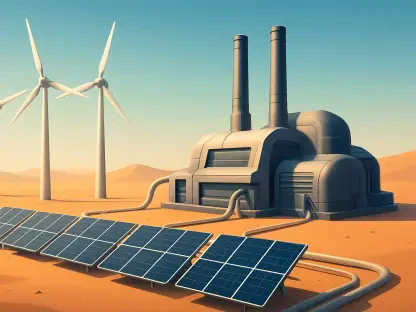
The strategic exit ultimately empowered the UAE to pursue a dual-track energy strategy that balanced immediate hydrocarbon monetization with long-term leadership in the hydrogen and nuclear sectors. By freeing itself from production constraints, the nation successfully redirected its oil revenues toward the development of the Barakah Nuclear Energy Plant and some of the world’s largest solar parks. This financial maneuverability enabled the state to achieve a first-mover advantage in the emerging green hydrogen market, establishing supply chains that reached European and East Asian markets. The government implemented policies that treated oil not as a permanent crutch, but as a finite bridge to a diversified technology-driven economy. This approach allowed the Emirates to maintain their influence on the global stage, proving that energy security and climate goals could coexist when a nation possessed the sovereign freedom to dictate its own terms. Future progress will likely depend on scaling these decarbonization technologies to a global level.