
The tectonic plates of the North American energy corridor are currently shifting as a long-dormant titan from South America begins to stir, directly challenging the established dominance of the Canadian oilsands. For nearly a decade, Canadian producers have enjoyed a near-monopoly on the supply of heavy crude to the massive refining complex of the United States Gulf Coast. However, recent adjustments in American foreign policy and a series of strategic licenses granted to global energy firms have reopened the gates for Venezuelan oil. This transition marks the beginning of a high-stakes market recalibration where geographical proximity, technical specifications, and political stability will determine the future of energy security in the Western Hemisphere. The primary objective of this analysis is to evaluate whether Venezuela can realistically regain its lost market share or if the structural advantages of the Canadian energy sector are now too entrenched to be displaced.
The current 2026 energy landscape is characterized by a delicate balance between traditional supply chains and the sudden re-emergence of a historical rival. While the United States continues to lead the world in total petroleum production, its refineries remain hungry for the specific “heavy, sour” crude that is the hallmark of both the Athabasca and Orinoco basins. This dependency creates a lucrative prize for any nation capable of providing a steady, reliable stream of heavy barrels. As the industry monitors the first significant waves of Venezuelan exports hitting American shores in years, the focus has shifted toward the sustainability of this recovery and the potential impact on Canadian Western Select pricing.
The Resurgence of Venezuelan Crude and the New Heavy Oil Rivalry
The emergence of this rivalry is rooted in the fundamental reality that American shale oil is largely incompatible with the high-complexity refineries located along the Gulf Coast. These facilities, representing billions of dollars in sunk capital, were specifically built to process heavy crudes that yield higher margins for diesel and jet fuel. When Venezuelan production cratered due to systemic neglect and geopolitical isolation, Canada stepped in as the primary benefactor, increasing its exports to the U.S. to record levels. The current struggle is not just about volume but about the technical fit within a refining system that has spent the last five years optimized for Canadian blends.
Historical context reveals that this is a return to a competition that defined the energy markets before the 2010s. For decades, Venezuela was the cornerstone of the American heavy oil diet, bolstered by its ownership of Citgo and a massive logistics network. The collapse of the Venezuelan state-run oil firm, PDVSA, allowed Canada to solidify its position, turning the oilsands into a vital component of North American energy independence. However, the current pivot in Washington suggests that the U.S. is once again willing to diversify its heavy oil sources, even if it means re-engaging with a politically volatile partner in Caracas to manage global price pressures.
Understanding the Geopolitical and Technical Foundations of Heavy Crude
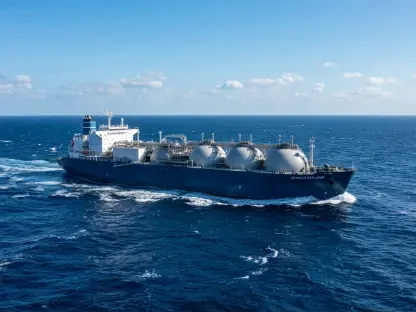
The competition between these two energy giants is dictated by the specific chemistry of the oil they produce. Heavy crude is characterized by its high viscosity and sulfur content, requiring sophisticated “coking” units to break down the long hydrocarbon chains into usable fuels. Canadian bitumen and Venezuelan extra-heavy crude are remarkably similar in this regard, making them perfect substitutes in the eyes of a refinery manager. However, the logistical methods for moving these products differ significantly. Canada relies on an extensive, albeit often bottlenecked, pipeline network, while Venezuela leverages its coastal access for direct maritime transport.
Moreover, the role of “diluents” plays a critical part in the cost structure of both nations. Because heavy oil is too thick to flow through pipelines or onto tankers naturally, it must be mixed with lighter hydrocarbons like naphtha or condensate. Canada has developed a sophisticated internal market for these diluents, whereas Venezuela has historically struggled with shortages, often relying on imports from abroad to keep its exports moving. This technical vulnerability means that even when Venezuela has the oil in the ground, its ability to deliver it to the U.S. market depends on a fragile international supply chain of mixing agents.
Navigating Infrastructure Decay and Market Realities
The Technical and Financial Barriers to Recovery
While the prospect of Venezuelan oil returning to the market is a major talking point, the physical reality of its infrastructure tells a more sobering story. Decades of underinvestment have resulted in a system that is currently a shadow of its former self. Upgraders—the massive industrial plants that convert raw bitumen into lighter synthetic crude—are operating at a fraction of their designed capacity. Restoring these facilities to their peak performance from 2026 to 2030 will require an injection of capital that far exceeds the current risk appetite of most global lenders.
Furthermore, the environmental degradation of the Orinoco belt has created operational hazards that do not exist in the more regulated environment of Northern Alberta. Frequent power outages and a lack of spare parts for drilling rigs continue to throttle production efforts. Even with the best intentions from international partners, the sheer physical scale of the repair work needed on pipelines, storage tanks, and export terminals means that any increase in Venezuelan supply will be measured in years rather than months.
Corporate Skepticism and the Role of Early Adopters
The behavior of major energy corporations serves as a barometer for the long-term viability of the Venezuelan resurgence. While some firms have moved quickly to capitalize on new U.S. licenses, the broader industry remains hesitant. The memory of assets being nationalized without compensation is a powerful deterrent that keeps many boardrooms focused on safer jurisdictions. This skepticism creates a tiered market where only a few “early adopters” with specific legal protections are willing to put significant skin in the game.
In contrast, the Canadian oilsands benefit from a transparent legal framework and a long history of honoring contracts. This institutional stability has allowed Canadian firms to attract high-quality investment even in a climate of fluctuating oil prices. For the U.S. refiner, the reliability of a Canadian barrel, backed by a stable government and a functioning legal system, often outweighs the slight discount that might be offered by a riskier Venezuelan alternative. The “risk premium” associated with Venezuelan oil remains a significant hurdle that prevents it from being a true one-to-one replacement for Canadian supply.
Canadian Resilience and the Shift Toward Global Diversification
Canadian producers have not been idle while their southern neighbor looks for new partners. The sector has undergone a massive transformation, focusing on cost reduction and the expansion of export routes. The completion of major pipeline projects has finally provided the industry with the capacity to move more oil toward the Pacific coast. This strategic shift is designed to break Canada’s “captive customer” relationship with the United States, allowing oilsands producers to tap into the burgeoning demand from Asian refineries.
By diversifying its customer base, Canada is insulating its economy from the whims of American trade policy. The ability to ship heavy crude from the West Coast to China or India provides a pricing floor that was previously non-existent. This resilience is a key factor in the 2026 market analysis, as it demonstrates that Canadian producers are no longer solely dependent on the U.S. Gulf Coast. If Venezuelan oil begins to crowd out Canadian barrels in Texas or Louisiana, the Athabasca producers now have the infrastructure to simply pivot their volumes toward the Pacific.
Future Trends in North American Energy Security
The trajectory of the heavy oil market will be increasingly influenced by the intersection of energy security and environmental policy. As both nations look toward the late 2020s, the “carbon intensity” of their production will become a major competitive factor. Canada has made significant strides in implementing carbon capture and storage technologies, aiming to position the oilsands as the cleanest source of heavy crude in the world. This environmental branding is intended to attract institutional investors who are under pressure to meet strict sustainability mandates.
Conversely, Venezuela’s ability to compete on an environmental basis is almost non-existent at this stage. The country lacks the regulatory oversight and the capital to invest in green technology, which may eventually lead to a “carbon tariff” or other trade barriers in a world that is increasingly decarbonizing. Economic experts predict that while Venezuela may offer a cheaper barrel in the short term, the long-term trend favors producers who can align their operations with global climate goals. This disparity could create a bifurcated market where Canada retains the premium, ESG-compliant customers while Venezuela is relegated to markets with fewer environmental restrictions.
Strategic Takeaways for Industry Stakeholders
For businesses and investors navigating this complex landscape, the primary strategy involves a balanced approach to geographic risk. The analysis indicates that while Venezuela is a growing competitor, it is far from being a dominant force. Stakeholders should prioritize investments in midstream infrastructure that facilitates the movement of Canadian oil to diverse markets. The expansion of storage capacity and the enhancement of rail-to-ship logistics are essential components of a robust energy portfolio in 2026.
Moreover, market participants must remain vigilant regarding the regulatory environment in both Washington and Ottawa. Trade rhetoric can shift rapidly, and the utilization of oil as a diplomatic tool is a recurring theme in the 2020s. Proactive hedging against potential tariffs or sudden changes in sanctions regimes is no longer optional; it is a fundamental requirement for maintaining profitability. The most successful players will be those who recognize that energy security is now synonymous with supply chain flexibility and a low carbon footprint.
The Long-Term Outlook for Global Heavy Oil
The strategic assessment determined that the rivalry between Canada and Venezuela was a necessary catalyst for the modernization of the North American energy sector. Analysts observed that the threat of a Venezuelan comeback pushed Canadian firms to accelerate their cost-saving measures and environmental initiatives. The market recognized that while Venezuela possessed the geological reserves to be a superpower, it lacked the institutional stability to guarantee a reliable flow of energy to global consumers. Investors signaled their preference for the transparency of the Canadian system, even as they monitored the incremental gains made by South American production.
The industry moved toward a more fragmented but resilient model, where multiple sources of heavy crude coexisted to satisfy different regional demands. Producers evaluated the long-term risks of over-reliance on a single refining hub and decided that the path to growth lay in reaching global markets via the Pacific. Ultimately, the competition revealed that the strength of an energy partner was measured not just by what was in the ground, but by the reliability of the pipes and the stability of the laws that brought it to the surface. The shift toward a multi-polar energy market provided a much-needed buffer against the volatility that had previously plagued the heavy oil trade.