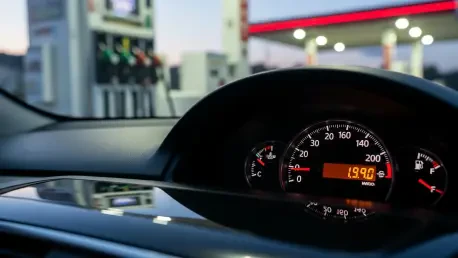

The sight of gasoline prices dipping below the three-dollar mark has become a distant memory for millions of American commuters navigating the current economic landscape. This persistent reality stems from a complex interplay of global politics and energy logistics that shows no sign of immediate resolution. American drivers who remember filling their tanks for under $3.00 may need to hold onto those memories for a few more years, as the national average currently hovers around $4.04 per gallon.
Energy Secretary Chris Wright recently signaled that the relief consumers are looking for is likely parked behind a 2027 deadline. This assessment leaves many to wonder if the sub-$3.00 milestone is gone for good or simply delayed. As the market remains in a state of flux, the distinction between a temporary spike and a long-term structural shift in energy costs becomes increasingly blurred for the average citizen.
Why the Price at the Pump Is a Global Issue
The cost of regular unleaded gasoline is no longer just a reflection of local supply and demand but is tethered to a volatile geopolitical landscape. When domestic prices surged from $2.90 to over $4.00 following the outbreak of hostilities earlier this year, it highlighted the extreme vulnerability of the American economy to foreign conflict. For most households, this shift is an inflationary pressure that affects everything from the price of groceries to the feasibility of the daily commute.
Moreover, the interconnected nature of modern energy markets means that a disruption in one hemisphere triggers a price shock in another. Domestic refineries rely on global crude benchmarks, making it impossible for the United States to isolate itself from international turbulence. This dependency ensures that the timeline for price stabilization remains a matter of urgent national concern rather than a simple matter of domestic policy.
The Strait of Hormuz and the Core of the Energy Crisis
The primary obstacle to lower fuel prices lies thousands of miles away in the Strait of Hormuz, a narrow maritime corridor facilitating the transit of 20% of the world’s petroleum. Current Iranian restrictions on this channel have effectively throttled global supply chains, creating a bottleneck that keeps domestic costs artificially high. Even as market analysts suggest that prices may have finally peaked, the persistence of maritime aggression prevents any immediate return to pre-war pricing levels.
Reports of forces firing on commercial tankers continue to undermine the stability of international shipping lanes. These security risks drive up insurance premiums and freight costs, which are ultimately passed down to consumers at the pump. Until the safety of these maritime passages is guaranteed, the global supply of crude will remain constrained, regardless of domestic production levels or strategic reserve releases.
Expert Outlook on Market Volatility and Diplomacy
During a recent House Appropriations Subcommittee hearing, Energy Secretary Chris Wright emphasized that achieving sub-$3.00 pricing is contingent upon a formal resolution of the U.S.-Iran conflict. While envoys are slated to meet in Islamabad for ceasefire negotiations, the situation remains precarious. Data from AAA and GasBuddy reinforce this cautious outlook, suggesting that the restoration of safe shipping lanes is the only true prerequisite for long-term relief.
Market volatility is further exacerbated by the lack of a clear diplomatic timeline. Experts argue that even if a ceasefire is reached tomorrow, the logistical backlog in the energy sector would take months to clear. Consequently, analysts maintained that the road to affordable energy would be long and heavily dependent on the complete restoration of international cooperation and maritime security.
Strategies for Managing Sustained High Fuel Costs
Since the journey toward 2027 is long, consumers looked for ways to navigate this period of energy flux without draining their savings. Planning for a multi-year window of elevated prices involved optimizing vehicle maintenance to improve fuel efficiency and utilizing real-time tracking apps to find the most competitive local rates. These small adjustments served as a buffer against the immediate sting of high costs at the pump.
Additionally, staying informed on diplomatic progress in the Middle East provided a leading indicator for when domestic markets finally began to cool. Households that adopted a proactive stance on energy consumption found it easier to manage long-term financial planning in a high-cost environment. By focusing on efficiency and alternative transit options, the public adapted to the reality of sustained energy prices while waiting for global tensions to subside.