
The global economy currently rests upon a precarious equilibrium as the United States attempts to secure the Strait of Hormuz, a narrow passage where even a minor tactical miscalculation could trigger a catastrophic surge in international energy prices. This 104-mile-long waterway has become the center of an intense maritime standoff, forcing the administration to pivot toward a new strategic initiative known as Project Freedom. The primary objective is to move away from the high-intensity offensive operations of the recent past and establish a sustainable defensive posture that protects the flow of commercial goods. However, as the military presence intensifies, the core challenge remains whether hardware alone can restore the confidence of a global shipping industry that is increasingly wary of being caught in a regional crossfire. This analysis explores the friction between these military ambitions and the harsh economic realities of navigating a contested chokepoint.
Navigating the Ambitions of Project Freedom
Project Freedom represents a high-stakes strategic transition designed to stabilize the most critical maritime corridor in the Middle East. After months of kinetic engagement under the banner of Operation Epic Fury, which aimed to neutralize immediate missile threats and prevent further nuclear proliferation, the U.S. military has shifted its focus to a commerce-centric mission. The current administration views this operation as a necessary bridge to restore global trade, utilizing a mix of traditional naval power and advanced surveillance to ensure that the Strait remains open to international traffic. Defense officials maintain that this shift signals a return to a rules-based maritime order, yet the transition is occurring under a cloud of significant geopolitical tension.
The success of Project Freedom is currently measured by its ability to facilitate the safe passage of commercial vessels through a zone that was, until recently, a theater of active combat. By deploying a massive array of assets, including guided-missile destroyers and unmanned surface platforms, the U.S. seeks to project a permanent “safety bubble” over the shipping lanes. However, the mission’s scope has drawn intense scrutiny from those who question the sustainability of such a resource-heavy commitment. While the administration frames the operation as a stabilization effort, the reality on the water suggests that Project Freedom is a complex experiment in naval deterrence that faces an uphill battle against regional volatility.
The Geopolitical Legacy of a Global Chokepoint
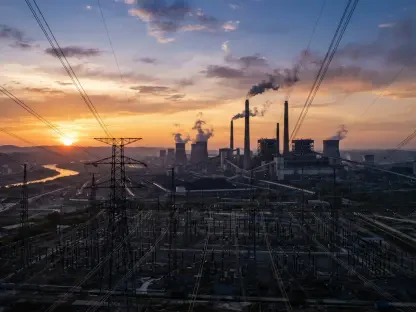
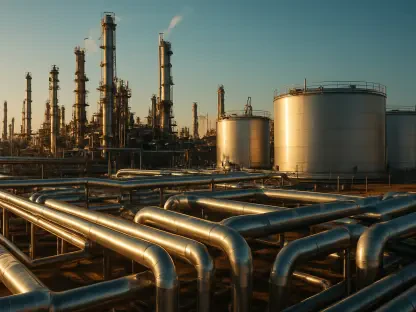
To comprehend the magnitude of the current crisis, one must acknowledge the historical and economic weight of the Strait of Hormuz, which facilitates the passage of approximately one-fifth of the world’s oil supply. This narrow passage is not just a geographical feature; it is the jugular vein of the global energy market. Historically, any threat to the free flow of goods through this waterway has resulted in immediate spikes in crude oil prices, which subsequently inflate the costs of manufacturing, transportation, and consumer products worldwide. The current strategic intervention was precipitated by a series of escalations that threatened to permanently decouple regional energy producers from their international consumers, creating a vacuum that the U.S. felt compelled to fill.
The background of the current operation is rooted in the aftermath of intensive strikes that were intended to curb the influence of regional actors. Project Freedom was born from the necessity of moving beyond simple destruction toward a state of active preservation. However, the legacy of past conflicts in the region complicates this mission, as local adversaries have spent decades refining their ability to disrupt trade through low-cost, high-impact means. This historical context underscores why simple naval dominance may not be enough to secure the waterway; the deep-seated political grievances and economic pressures that originally closed the Strait remain largely unaddressed, leaving the “freedom of navigation” in a fragile state.
The Friction Between Military Objectives and Commercial Realities
Bridging the Gap: Escorted Transit and Market Confidence
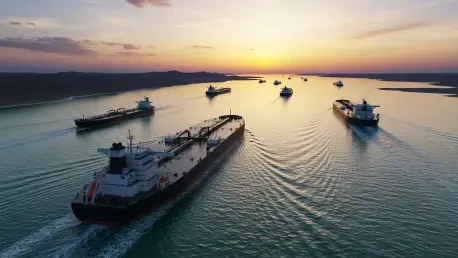
The administration often cites the successful passage of U.S.-flagged commercial ships under military escort as evidence that Project Freedom is achieving its primary goals. From a purely tactical perspective, the presence of advanced destroyers provides a significant deterrent against large-scale surface attacks. Defense planners argue that by dictating the rhythm and flow of maritime traffic, the U.S. military has effectively wrested control of the waterway from regional adversaries. Nevertheless, there is a fundamental disconnect between a military victory and commercial viability. For the global shipping industry, the presence of warships is a double-edged sword; while it provides protection, it also serves as a visible reminder that the region remains a high-risk combat zone.
Commercial operators do not just weigh the physical safety of their vessels; they must also contend with the soaring costs of insurance and the logistical delays inherent in escorted convoys. Many shipping firms remain hesitant to return to the Strait because the “uncertainty of transit” persists despite the heavy naval presence. A military escort might prevent a ship from being seized, but it cannot prevent the market volatility caused by the persistent threat of a localized skirmish. Consequently, the psychological barrier to entry for the international market remains high, and the administration’s declarations of safety have yet to translate into a significant reduction in maritime insurance premiums.
Tactical Constraints: The Reality of a Narrow Waterway
Geography remains the most uncompromising adversary for Project Freedom, as the Strait of Hormuz narrows to a mere 21 miles at its most constricted point. This physical reality makes it nearly impossible to maintain a comprehensive security perimeter for the sheer volume of daily traffic. With an average of over 100 vessels attempting to pass through the region daily, the logistical requirement for individual escorts is simply unfeasible. Despite the commitment of 15,000 service members and an extensive fleet of aircraft, the U.S. military is forced to prioritize specific convoys, leaving a vast majority of commercial traffic to navigate the waters with only general surveillance for protection.
Critics of the current strategy point out that this creates a “resource trap” where the U.S. must maintain an exhausting pace of operations just to provide a semblance of security. The narrow shipping lanes also limit the maneuverability of large naval vessels, making them potential targets for land-based batteries or coastal assets. This geographic vulnerability means that the defensive bubble is often thinner than the administration admits, and the reliance on a “one size fits all” security model fails to account for the diverse speeds and profiles of modern commercial shipping. As long as the physical constraints of the waterway exist, the defensive strategy will be inherently reactive rather than proactive.
Asymmetric Threats: The Limits of Conventional Deterrence
Despite the overwhelming technological superiority of American naval forces, regional actors continue to hold significant asymmetric leverage through the deployment of mines, suicide drones, and small-boat swarms. These tools are designed to exploit the gaps in conventional defense systems, allowing for high-impact disruptions at a very low cost to the attacker. While a guided-missile destroyer is capable of engaging sophisticated targets, it is less efficient at fending off dozens of low-tech, high-speed boats or detecting silent, bottom-dwelling mines. These swarm tactics are specifically intended to overwhelm the sensory and defensive capacities of even the most modern fleets.
There is a growing realization among industry analysts that high-tech solutions have limited efficacy against low-tech disruption. The persistent threat of a drone strike or a mine collision keeps the risk profile of the Strait at an “extreme” level, regardless of how many aircraft carriers are stationed nearby. This reality debunks the misconception that military hardware alone can neutralize every possible threat to commerce. As long as these asymmetric capabilities are maintained by regional powers, the Strait will remain closed to the broader, more cautious international market, effectively nullifying the tactical successes that Project Freedom has achieved on a vessel-by-vessel basis.
Future Projections for Maritime Security and Global Trade
Looking ahead, the evolution of maritime security in the region will likely depend on the integration of unmanned surface vessels and AI-enhanced surveillance systems. These technologies offer a way to expand the monitoring “mesh” across the Strait without the massive logistical footprint of traditional crewed ships. However, these technological advances are expected to be met with sophisticated electronic warfare and cyberattacks designed to blind GPS systems and disrupt communications. The future of the Strait is moving toward a “gray zone” of permanent instability where technological superiority is constantly challenged by digital and electronic countermeasures, making the concept of a “safe” waterway increasingly elusive.
Economically, the situation is further complicated by the ongoing naval blockade in the Gulf of Oman, which creates a paradoxical environment for trade. While the U.S. seeks to open the Strait for commerce, its simultaneous effort to isolate regional adversaries financially ensures that the underlying motivations for conflict remain at a boiling point. Many market analysts predict that without a fundamental diplomatic breakthrough, the region will settle into a long-term pattern of sporadic disruptions. This environment will likely force global energy markets to permanently price in a “Hormuz risk premium,” leading to sustained higher costs for consumers and a gradual shift in global trade routes away from the Middle East.
Strategic Takeaways for the Global Energy Market
The current analysis of Project Freedom reveals that tactical success does not necessarily equate to a strategic resolution. For businesses and energy professionals, the primary takeaway is that maritime security in the Middle East is now permanently intertwined with broader political settlements. The ability to move a single convoy through the Strait is a testament to naval proficiency, but it is not a sustainable model for global commerce. Actionable strategies for the energy sector must now include a permanent focus on diversifying supply routes and maintaining significantly higher strategic reserves to mitigate the impact of sudden, unavoidable chokepoint closures.
Furthermore, the situation serves as a stark reminder that military might is only one component of a functioning trade strategy. Professional organizations must recognize that the stability of the global energy market is as much about diplomatic de-escalation as it is about naval escorts. The ongoing operations in the Strait demonstrate that while the U.S. can protect its own assets, it cannot unilaterally guarantee the safety of the entire international merchant fleet. Therefore, market participants should prepare for a future where maritime security is fragmented and dependent on specific bilateral agreements rather than a universal guarantee of freedom of navigation.
The Sustainability of Naval Deterrence in the Middle East
The deployment of Project Freedom acted as a pivotal experiment in the application of modern naval power within a confined and hostile environment. While the operation successfully cleared a path for specific high-priority assets, it ultimately failed to dissipate the cloud of interference that hovered over the regional shipping industry. Geopolitical analysts observed that the heavy reliance on destroyers and aircraft carriers provided only a temporary reprieve from the underlying threats of asymmetric warfare and electronic disruption. The initiative demonstrated that while a lane could be forced open through sheer military presence, the restoration of global confidence required a level of stability that hardware alone could not provide.
The regional dynamics remained locked in a cycle of provocation and response, which ensured that the Strait of Hormuz stayed a volatile theater throughout the mission. Actionable insights from this period suggested that the free flow of goods was no longer a given but a condition that had to be negotiated through both strength and statecraft. Leaders in the energy sector and maritime logistics were forced to adapt to a reality where the “freedom of navigation” was sporadic and dictated by the intensity of regional tensions. Ultimately, the transition from temporary convoy operations toward a state of genuine regional security was hindered by the absence of a comprehensive political resolution that addressed the core grievances fueling the standoff.