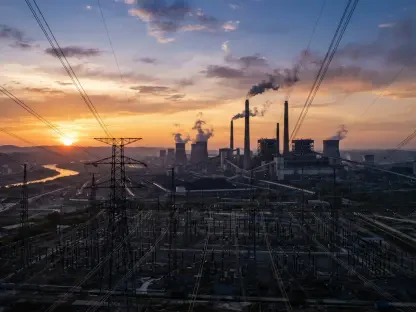

The total reimagining of the electrical grid infrastructure as a fluid and bidirectional ecosystem replaces the static centralized architecture that has defined global power distribution for over one hundred years. This evolution is driven by the rapid proliferation of distributed energy resources such as residential solar arrays, localized battery storage units, and utility-scale wind farms that demand a new management philosophy. As these technologies facilitate a complex bidirectional flow of electricity, traditional consumers have transitioned into prosumers who both draw from and contribute to the national supply. This transformation enhances environmental sustainability but introduces technical hurdles that exceed the capabilities of existing utility frameworks. Leading this transition is Javad Khazaei, an assistant professor at Lehigh University, who was recently recognized with a National Science Foundation CAREER award for his pioneering work. His research focuses on a geometry-based control paradigm that addresses the nonlinear dynamics of millions of decentralized energy devices simultaneously. By bridging the gap between hardware requirements and software limitations, his methodology provides a stable foundation for the digital infrastructure of a modern energy landscape.
Addressing the Limitations of Current Power Flow Strategies
Computational Burdens: The Challenge of Centralized Grid Management
Traditional grid management relies on a strategy known as optimal power flow, which requires a central controller to harvest and analyze data from every node across the network. This model-centric approach was manageable when the grid was composed of a few large power plants and predictable loads, but in the current landscape of 2026, the proliferation of millions of edge devices has created a data deluge that overwhelms these centralized systems. The mathematical complexity of processing millions of variables in real time leads to latency that can compromise the stability of the entire network. Instead of instantaneous corrections, utility providers face processing delays that hinder their ability to respond to rapid changes in demand or supply, highlighting an urgent need for decentralized alternatives that can distribute the computational load. By shifting away from these exhaustive centralized models, the industry can unlock a more responsive and efficient digital grid that maintains high performance regardless of system size.
The shift from a small number of controlled generators to millions of active prosumers necessitates a fundamental change in how power flow is calculated and managed. Current software often struggles to scale because the underlying algorithms were designed for linear growth rather than the exponential expansion of energy resources at the grid edge. This scalability gap creates a bottleneck where high-potential green technologies are underutilized simply because the control infrastructure cannot keep pace with their operational data. Engineering teams are now witnessing the limits of legacy optimization strategies, which prioritize absolute precision over the speed and agility required to manage a high-frequency, decentralized ecosystem. Addressing these limitations requires a transition toward decentralized control architectures that allow localized clusters of devices to manage their own stability. This reorganization ensures that the central authority is no longer a single point of failure, enhancing the overall robustness of the power supply.
Renewable Volatility: Managing Unpredictable Energy Sources
Renewable energy sources like solar and wind are inherently volatile, with outputs that fluctuate significantly based on shifting atmospheric conditions and local weather patterns. Traditional physics-based models rely on rigid mathematical structures that assume a high degree of predictability, which often fails when confronted with the noisy and intermittent nature of green energy. These models struggle to provide accurate forecasts because they cannot easily account for every environmental variable that influences a wind turbine’s rotation or a solar panel’s efficiency. As a result, grid operators often maintain excessive backup reserves, which increases costs and reduces the overall efficiency of the renewable transition. The current difficulty lies in creating a control system that is robust enough to handle this uncertainty without relying on conservative, outdated assumptions that limit the potential of clean energy. Moving beyond these models is the primary hurdle for modern utility providers.
To overcome the limitations of rigid physics-based modeling, researchers are advocating for more agile, data-driven frameworks that can adapt to real-time environmental changes. Unlike traditional strategies that require exhaustive internal data from every device, these modern approaches prioritize external behavioral patterns to predict system stability. This shift allows the grid to operate more closely to its physical limits without risking failure, as the control algorithms can learn from historical data to anticipate fluctuations before they occur. By moving away from deterministic models and embracing stochastic analysis, utility providers can better integrate variable resources into the broader energy mix. This evolution is essential for maintaining a reliable power supply as the share of intermittent renewables continues to grow across the global energy market. Engineering a system that views volatility as a manageable variable rather than a disruptive threat is the key to achieving a truly resilient and carbon-neutral electrical infrastructure.
Implementing the Geometry-Based Paradigm and Global Scalability
Behavioral Shaping: Mapping System Reliability and Modeling
The core of the new paradigm developed by Khazaei involves a departure from tracking every internal nuance of a device through thousands of complex differential equations. Instead, the research team focuses on the behavioral shape of the system, using geometric boundaries to define the safe operating limits of various energy resources. This geometry-focused perspective allows the controller to represent the entire state of a microgrid or a localized cluster of solar panels as a single, manageable shape in a multi-dimensional space. By understanding how these shapes deform or shift in response to different conditions, operators can maintain stability without needing to solve for every individual variable within the network. This approach simplifies the complex dynamics of the grid into a visual and mathematical framework that is far more intuitive and computationally efficient. It represents a significant leap forward in our ability to visualize and control the invisible forces that govern modern electricity.
To implement this geometric strategy, the research leverages machine learning algorithms that analyze vast data streams to identify essential system dynamics. These algorithms create reduced-order models, which are streamlined mathematical versions of the energy system that retain critical behavioral information while discarding unnecessary noise. This reduction in complexity is vital for maintaining the millisecond-level response times required for modern grid stability, as it allows the digital infrastructure to issue commands almost instantaneously. By focusing on the boundaries of system behavior rather than the minutiae of internal operations, the control system becomes significantly more agile. This ensures that even as millions of new devices are added to the grid, the management software remains responsive and capable of preventing localized disruptions from cascading into widespread power outages. The result is a highly scalable framework that adapts to the unique needs of both urban centers and rural energy cooperatives.
Proactive Resilience: Advancing Decarbonization and Equity
A critical component of this research is the seamless integration of artificial intelligence to shift the grid from a reactive state to a proactive one. AI can process sensor data from millions of points across the network nearly instantaneously, identifying potential issues before they manifest as actual failures. For instance, if a sudden cloud cover reduces solar output in a specific region, the AI-driven geometric controller can autonomously adjust battery discharge rates across the neighborhood to compensate. This predictive capability significantly enhances the resilience of the grid against both extreme weather events and sophisticated cyber threats that might target energy infrastructure. By automating these high-speed adjustments, the system reduces the need for human intervention in routine stability tasks, allowing operators to focus on long-term strategy and system health. This proactive stance is essential for maintaining public confidence in the reliability of renewable energy systems.
The implementation of this geometry-based paradigm facilitated the large-scale integration of renewable resources, moving the global energy sector closer to its ambitious carbon-neutrality goals. This research provided a transparent framework that allowed for the successful deployment of microgrids, which operated independently or in harmony with the national supply to ensure continuous power. By streamlining grid control and reducing operational costs, these innovations led to more stable pricing and improved energy access for diverse communities. To maintain this momentum, utility providers prioritized the adoption of open-source geometric modeling standards that simplified cross-border energy sharing. The transition toward an adaptive and resilient network supported energy democratization, empowering individuals to take control of their own production and consumption patterns. Ultimately, the work at Lehigh University established a new standard for digital infrastructure, proving that sophisticated mathematical models solved the most pressing challenges of the green economy.