
The sight of shimmering solar arrays atop sprawling suburban rooftops has long been a symbol of environmental stewardship and financial savvy that remained frustratingly out of reach for the nearly forty-four million households currently renting their homes in the United States. While homeowners have enjoyed the benefits of falling hardware costs and federal tax incentives for over a decade, apartment dwellers have traditionally been tethered to the fluctuating prices of the local utility grid without any viable means of self-generation. This disparity is finally beginning to dissolve as balcony solar systems emerge as a disruptive force in the American energy market, offering a streamlined and portable alternative to permanent installations. These compact kits, which can be mounted on a railing or placed on a terrace, represent more than just a technological curiosity; they are a fundamental shift toward energy equity. By allowing tenants to harvest sunlight and feed it directly into their living spaces through a standard wall outlet, the industry is witnessing the birth of a decentralized power model that prioritizes individual agency over institutional control. As energy costs continue to pose a significant burden on low-to-middle-income families, the rise of plug-in solar suggests that the transition to renewable energy may finally be entering its most inclusive phase yet.
Technical Functionality: The Mechanics of Plug-and-Play Solar
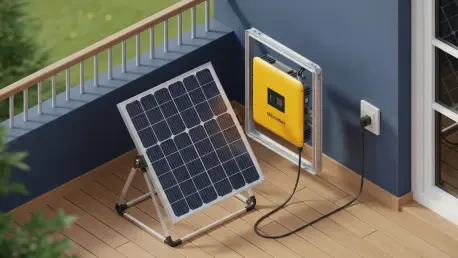
The operational core of a balcony solar system lies in its technical simplicity, functioning essentially as an appliance that generates power rather than consuming it. Each kit typically comprises one or two lightweight photovoltaic panels paired with a specialized micro-inverter that performs the critical task of converting direct current into the alternating current required by household electronics. Unlike traditional rooftop systems that necessitate complex hardwiring into a building’s electrical panel, these units are designed to be plugged into a standard 120-volt grounded outlet. Once connected, the electricity flows into the home’s existing wiring, where it is consumed by active loads such as refrigerators, televisions, and charging stations. This “plug-and-play” architecture allows the generated energy to take precedence over grid power, effectively slowing down the utility meter and reducing the amount of electricity purchased from the provider. Because the system is not permanently attached to the building structure, it offers a level of portability that is essential for renters who may need to relocate their equipment at the end of a lease.
The economic appeal of this technology has intensified as residential electricity prices have remained volatile, prompting many consumers to seek immediate relief from rising monthly expenses. Entry-level balcony kits have become increasingly affordable, with many high-quality options now retailing for approximately $400 to $600, a price point that makes the technology accessible to a broad demographic. Even a modest 400-watt setup can generate enough electricity to offset up to 25 percent of a typical apartment’s energy usage, depending on the geographic location and the orientation of the balcony toward the sun. This provides a tangible return on investment within a few years, far outperforming the financial timeline of larger, more expensive residential arrays. For millions of individuals who were previously excluded from the solar market due to the high cost of entry or lack of roof ownership, these systems provide a practical pathway to lower utility bills and greater financial predictability. The ability to monitor energy production through integrated smartphone applications further empowers users by providing real-time data on their savings and environmental impact.
Global Success: Lessons from European Energy Markets
The proof of concept for decentralized balcony solar is most visible in Europe, where nations like Germany have pioneered the mass adoption of these systems through progressive regulatory frameworks. By the start of 2026, millions of “balcony power plants” were already operational across German cities, contributing significantly to the national renewable energy mix. The European model succeeded largely because regulators chose to treat these small-scale systems as consumer electronics rather than industrial infrastructure. This distinction removed the need for professional installation or complex permitting processes, allowing residents to purchase a kit at a local hardware store and set it up themselves in less than an hour. The German government further supported this transition by raising the allowable power limit for plug-in systems and simplifying the registration process with grid operators. This streamlined approach demonstrated that when the barriers to entry are lowered, public enthusiasm for clean energy can scale rapidly, creating a more resilient and distributed power grid that benefits society as a whole.
In the United States, the legal landscape is beginning to mirror this international progress as more states recognize the inherent right of tenants to access renewable energy. Utah became a central figure in this movement by passing landmark legislation that officially authorized the use of plug-in solar devices, effectively ending the period of regulatory uncertainty that had hindered domestic growth. Currently, over thirty other states are in various stages of developing similar policies intended to prevent landlords or homeowners’ associations from blocking solar installations on private balconies. These legislative efforts focus on creating a uniform set of rules that prioritize consumer choice while ensuring that property owners’ concerns about building aesthetics or structural integrity are addressed fairly. By codifying these rights, policymakers are signaling that energy independence should not be a privilege reserved solely for property owners. This shift is expected to trigger a surge in domestic demand, encouraging manufacturers to refine their products and further drive down costs for the average American renter.
Regulatory Battles: Overcoming Safety Concerns and Policy Resistance
Despite the clear benefits and successful precedents, the rollout of balcony solar has encountered significant resistance in certain regions where established interests remain skeptical of decentralized power. In states like Illinois, legislative attempts to facilitate the adoption of plug-in solar have frequently stalled due to intense lobbying from utility companies and licensed electrical contractors. These groups often cite safety concerns, arguing that feeding electricity into a home through a standard outlet could lead to circuit overloading or pose a risk to utility workers during grid maintenance. Critics of the technology suggest that existing electrical codes were not designed for bidirectional power flow at the residential outlet level, and they advocate for mandatory professional inspections for every installation. These arguments, while framed as safety precautions, are often viewed by proponents as a form of economic protectionism designed to maintain the monopoly of centralized utilities and the traditional labor models associated with the solar industry.
The technical debate surrounding these safety concerns often centers on the performance of modern micro-inverters and their ability to comply with rigorous safety standards. Proponents of balcony solar point out that high-quality systems are equipped with “rapid shutdown” and “anti-islanding” features, which ensure that the system stops generating power instantly if the grid goes down or if the unit is unplugged. This prevents any risk of electrical backfeed that could endanger technicians working on power lines. Furthermore, advocates argue that a 400-watt or 800-watt system draws less current than many common household appliances, such as a portable air conditioner or a high-end microwave, and therefore poses no unique threat to the integrity of modern home wiring. As long as the equipment is certified by recognized organizations like Underwriters Laboratories, there is little empirical evidence to suggest that balcony solar is more hazardous than other consumer electronics. Resolving these regulatory disputes will require a balance between legitimate safety oversight and the need to provide citizens with affordable, sustainable energy options.
Implementation Strategies: Steps Toward Energy Independence
The initial wave of balcony solar adoption demonstrated that urban dwellers were eager to reclaim their energy independence regardless of their property ownership status. Early adopters in states like Utah successfully navigated the first generation of plug-in solar kits, proving that these devices could operate safely without disrupting local grids. As these pioneers integrated decentralized power into their daily routines, they provided the necessary data to convince skeptical regulators that the risks were minimal. This shift in perception allowed for a more nuanced discussion about energy rights, where the ability to generate power became viewed as a basic consumer freedom rather than a luxury reserved for the landed gentry. The lessons learned during this period of rapid expansion underscored the importance of clear communication between tenants and landlords to ensure mutual benefit. This historical progress has set the stage for a new era where the focus moves from proving the technology’s viability to maximizing its impact across diverse urban environments.
To move forward effectively, interested individuals should prioritize selecting products that carry the latest safety certifications, specifically looking for the UL 1741 mark on inverters. It is equally important for tenants to engage proactively with their property managers or landlords to discuss the installation, perhaps by highlighting how these systems can increase the overall energy efficiency and attractiveness of the building. Drafting a simple addendum to a lease that outlines the responsibility for the equipment and ensures it will be removed upon departure can often alleviate landlord concerns regarding liability. Additionally, renters should stay informed about state-level developments regarding the “Right to Solar,” as participating in local advocacy can help accelerate the passage of supportive laws in areas that still lack clear guidelines. By documenting their energy savings and sharing their experiences within their communities, balcony solar users can help demystify the technology and build the collective momentum necessary to transform the national energy landscape from the bottom up.