
The rapid escalation of energy prices following the commencement of the regional conflict in Iran earlier this year has forced millions of Americans to reconsider their daily commutes and seasonal travel plans as costs at the pump surge toward historic highs. Since February 2026, the national average for a gallon of regular gasoline has climbed steadily to $4.50, while drivers in Western states like California are grappling with prices exceeding the $6.00 mark. This inflationary pressure is not merely a statistical anomaly but a significant burden on low-income families and the logistics industry, which relies heavily on diesel fuel for the transport of essential goods. In response to this growing economic strain, a proposal to suspend the federal gas tax has emerged as a central pillar of a new strategy to provide immediate relief. By targeting the 18.4 cents per gallon tax on gasoline and the 24.4 cents tax on diesel, proponents hope to ease the financial weight on the American consumer.
The Economic and Geopolitical Drivers of Rising Energy Costs
The Impact of Global Conflict on Domestic Fuel Markets
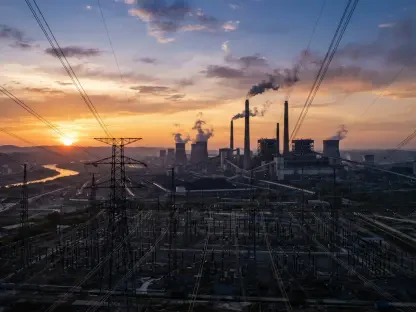
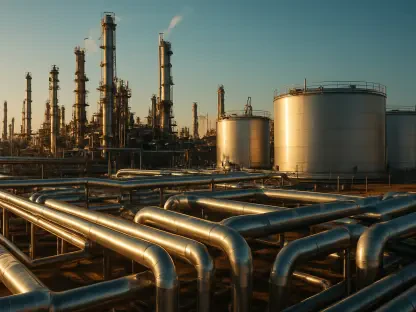
The current volatility in the energy sector traces its roots directly to the geopolitical instability in the Middle East, specifically the war in Iran that began earlier this February. This conflict has disrupted established supply chains and induced a 50% spike in global crude oil prices within just a few months, creating a ripple effect that touches every corner of the United States economy. Refineries are struggling to maintain consistent output while facing increased procurement costs, which are inevitably passed down to the end consumer at the service station. Unlike previous market fluctuations that were driven by gradual shifts in demand or seasonal maintenance cycles, this sudden upward trajectory is fundamentally tied to high-stakes international relations. The resulting economic environment has left policymakers searching for tools that can exert some level of control over domestic pricing structures even as global markets remain outside of direct federal influence.
Beyond the immediate price at the pump, the surge in fuel costs is beginning to permeate other sectors of the economy, driving up the price of groceries, consumer goods, and public transportation services. Logistics companies that manage the distribution of essential products have seen their operational overhead skyrocket, leading to surcharges that further exacerbate the inflationary environment seen throughout 2026. This systemic pressure creates a feedback loop where energy costs dictate the overall cost of living, making the search for a fiscal remedy more urgent for the federal government. While domestic oil production remains a long-term talking point, the immediate need for a circuit breaker to stop the rapid depletion of household savings has brought the concept of a gas tax holiday to the forefront of the national conversation. It serves as one of the few levers available to the administration that could provide a visible reduction in prices almost instantly.
Legislative Responses and Proposed Policy Interventions
The political momentum behind the tax suspension has unified various factions within the government, even as the specific details of the implementation remain a subject of intense negotiation. Senator Josh Hawley has taken a proactive stance by introducing legislation that would mandate a minimum 90-day suspension of federal fuel taxes, aiming to cover the period of peak demand during the summer travel season. Similarly, Representative Anna Paulina Luna has indicated that a companion bill is being prepared for the House of Representatives to ensure that the legislative path for relief is clear and expedited. These current efforts build upon a foundation laid by Senators Mark Kelly and Richard Blumenthal, who had previously explored bipartisan pathways for similar relief measures. The convergence of these political interests suggests a growing consensus that the government must act decisively to prevent a full-scale economic contraction driven by energy poverty.
Despite the broad political appeal of reducing taxes, the legislative process faces hurdles regarding how the lost revenue will be accounted for in the broader federal budget. Lawmakers are currently debating whether the suspension should be a complete moratorium or a graduated reduction that could be adjusted based on the price of crude oil in the coming months from 2026 to 2027. This flexibility is seen by some as a way to protect the government’s fiscal health while still delivering a tangible win for voters who are frustrated by the lack of progress in stabilizing energy markets. However, the urgency of the situation has led many to favor the simplest version of the plan, which is a direct and total pause on the collection of the 18.4 cents per gallon. The goal is to bypass complex bureaucratic adjustments and deliver a clear signal to the market that the federal government is willing to sacrifice short-term revenue to bolster consumer confidence.
Evaluating the Efficacy and Long-Term Consequences of Tax Relief
Financial Realities and Potential Savings for American Households
While the prospect of a tax holiday is popular among the general public, economic analysts from organizations such as Moody’s and the Tax Foundation have raised significant questions about how much of these savings will actually reach the average driver. Historical data suggests that when a tax is removed at the federal level, retailers and distributors often absorb a portion of the difference to cover their own rising operational costs or to increase their profit margins. Conservative estimates suggest that consumers might only see a net reduction of 10 to 12 cents per gallon at the pump, rather than the full 18.4 cents. In an environment where prices have already climbed by nearly two dollars, a ten-cent decrease might be perceived as a marginal gain that fails to fundamentally alter the financial trajectory of most households. This discrepancy between the political promise and the economic reality remains a primary point of contention.
Furthermore, the impact of a tax holiday on consumer behavior could inadvertently lead to higher demand, which might put additional upward pressure on prices and negate the initial tax savings altogether. If the cost of fuel drops even slightly, it may encourage more driving, which in turn tightens the already strained supply of gasoline and diesel available in the market. Economists argue that without a corresponding increase in supply or a significant decrease in global crude prices, fiscal adjustments at the pump are often temporary and easily overshadowed by the larger forces of international trade and war. The challenge for the administration is to manage these expectations and ensure that the policy is paired with other measures that address the root causes of the energy shortage. Without a comprehensive strategy, the tax holiday risks becoming a symbolic gesture that provides more political capital than actual financial relief for the people who are struggling the most.
Infrastructure Funding and the Future of the Highway Trust Fund
One of the most significant risks associated with the suspension of the federal gas tax is the potential depletion of the Highway Trust Fund, which serves as the primary source of revenue for the nation’s transportation infrastructure. This fund is responsible for financing the construction and maintenance of federal highways, bridges, and public transit systems, and it is already facing a substantial deficit due to long-term shifts in vehicle efficiency and the rise of electric cars. Experts warn that even a temporary suspension of revenue could push the fund into a critical state, jeopardizing essential projects that are currently underway or scheduled to begin later this year. Removing the 18.4 cents per gallon revenue stream without a guaranteed replacement from the general fund could lead to a deterioration of road safety and a slowdown in the modernization of the national transit network. This trade-off between immediate relief and structural integrity presents a difficult choice.
The proposed tax holiday served as a focal point for a much larger discussion regarding the balance between short-term economic relief and the fiscal sustainability of national infrastructure. To move forward, policymakers considered several alternative funding mechanisms, such as transferring funds from the general treasury or implementing temporary windfall taxes on energy producers to bridge the gap in the Highway Trust Fund. These measures aimed to protect ongoing construction projects while ensuring that the 10 to 12 cents of relief reached the public without compromising the safety of the nation’s bridges and roads. Ultimately, the debate highlighted the need for a more resilient energy policy that reduced dependence on volatile global markets. Moving into the next phase of economic planning, the focus shifted toward diversifying energy sources and investing in localized production to prevent future price spikes from having such a devastating impact. The administration prioritized long-term stability over temporary fiscal fixes to ensure lasting security.