
As energy demands surge and geopolitical tensions tighten their grip on global markets, Christopher Hailstone stands as a critical voice in the conversation regarding grid stability and infrastructure resilience. With decades of experience in energy management and utility security, Hailstone offers a pragmatic perspective on the delicate balance between immediate consumer relief and the long-term health of our national transit systems. In this discussion, we explore the complexities of federal fuel taxes, the ripple effects of the conflict in the Middle East on domestic prices, and the fiscal challenges of maintaining a crumbling infrastructure while the national debt exceeds the country’s total economic output.
Summarizing the core themes of our conversation, we delve into how a suspension of the federal gas tax might jeopardize the Highway Trust Fund and delay vital road repairs. We also examine the logistical hurdles of ensuring tax savings reach the average driver and look toward broader solutions for stabilizing energy costs in an era of global volatility.
Diesel prices have climbed to $5.64 per gallon, yet the taxes on that fuel are the primary source for the Highway Trust Fund. How would a federal tax holiday specifically affect the timeline of active road repairs, and what safety risks emerge when infrastructure maintenance loses billions in revenue?
A federal tax holiday creates an immediate vacuum in the Highway Trust Fund, which is the lifeblood of our nation’s transit maintenance. When you consider that diesel is sitting at $5.64 per gallon, the 24.4-cent tax attached to it represents a predictable stream of revenue that contractors rely on to keep projects moving. If this funding evaporates, we see an immediate stalling of federal highway construction and public transit improvements, effectively blowing a hole in the budget required for essential safety upgrades. The real-world consequence is a degraded transit system where potholes go unfilled and bridges miss critical inspections, creating tangible safety risks for the heavy trucks and passenger vehicles that share these roads. Without a steady flow of tax dollars, the efficient movement of goods across the country is hindered, potentially leading to more accidents and longer transit times as infrastructure continues to crumble.
Federal fuel taxes are collected at the wholesale level rather than directly at the pump. What mechanisms could ensure these savings actually reach consumers, and how do we address the concern that an 18-cent reduction is insufficient compared to the recent $1.50 price surge?
The fundamental problem with a gas tax holiday is that the 18.4-cent federal tax is levied far up the supply chain, making it very difficult to guarantee that the savings aren’t just absorbed by wholesalers or retailers. Lawmakers and industry experts are rightly concerned that these “literal pennies” may never actually reach the driver’s wallet, especially when gas prices have already spiked by roughly 50% since the start of the Iran war. When a consumer is looking at a $1.50 per gallon increase, an 18-cent reduction feels like a drop in the bucket that fails to address the underlying volatility of the market. To make this work, we would need unprecedented transparency and monitoring of the supply chain to ensure that the price at the pump actually reflects the tax suspension. Even then, the relief is marginal compared to the massive price hikes of $4.50 for gas and $5.64 for diesel that we are currently seeing across the country.
The national debt recently surpassed 100% of the GDP, and pausing fuel taxes could add over $10 billion to the deficit within months. What alternative revenue streams could replace these lost funds, and how would a funding gap impact long-term contracts for the construction industry?
The fiscal reality is quite sobering because the Committee for a Responsible Federal Budget has already projected that a mere three-month tax holiday could add $10.5 billion to a national debt that is already exceeding 100% of our GDP. For the construction industry, this creates a climate of extreme uncertainty; firms cannot sign multi-year contracts for bridge or highway projects if the primary revenue source is subject to political whims and pauses. Without a guaranteed replacement fund, many projects would likely be shelved, leading to job losses in the construction and engineering sectors. Alternative revenue streams, such as direct infusions from the general treasury or new mileage-based fees, are often discussed, but they lack the immediate “pay-as-you-go” efficiency of the current fuel tax. A funding gap doesn’t just delay a project; it often increases the total cost of construction due to the logistical nightmare of stopping and restarting massive infrastructure works.
With the Strait of Hormuz largely blocked, a significant portion of the global oil supply is currently inaccessible. Beyond temporary tax relief, what specific logistical steps are required to stabilize domestic energy costs, and how would reopening these shipping lanes compare to a tax holiday’s impact?
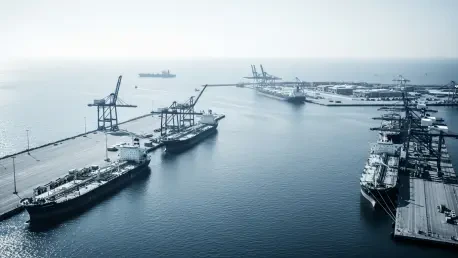
The blockage of the Strait of Hormuz is the primary driver of our current crisis, as it normally facilitates the passage of one-fifth of the world’s daily oil supply. While a tax holiday offers a psychological reprieve, the most significant way to bring gas prices down is to restore the flow of oil through these vital shipping lanes. To stabilize domestic costs, we must focus on geopolitical de-escalation and perhaps look toward diversifying our supply routes to mitigate the impact of such regional conflicts. Reopening the strait would likely do more to lower prices than any 18-cent tax cut ever could, as it addresses the scarcity that drove prices up to $4.50 a gallon in the first place. Until that logistical bottleneck is cleared, the global market will remain in a state of high tension, keeping prices elevated regardless of domestic tax policy.
Policy proposals for tax suspensions often face bipartisan skepticism regarding whether savings are simply absorbed into the supply chain. What transparency measures would be necessary to track these funds, and how should lawmakers balance immediate cost-of-living relief with the need for a functional national transit system?
To prevent the supply chain from “sucking up” the intended savings, we would need a rigorous auditing process that tracks price adjustments from the terminal to the retail pump. Lawmakers are caught in a difficult position; they want to offer immediate relief to families struggling with high costs, but they cannot ignore the long-term necessity of a functional national transit system. Many skeptics argue that offering “literal pennies on the dollar” is a poor trade-off for bankrupting the Highway Trust Fund, which is vital for the safety of our roads. A balanced approach would likely require a mandatory “pass-through” provision in any tax holiday legislation, ensuring that the 18.4 cents per gallon is explicitly subtracted from the final retail price. Ultimately, the government must decide if a temporary political win is worth the risk of leaving our bridges and highways without the billions of dollars required for their upkeep.
What is your forecast for the future of federal infrastructure funding and fuel costs?
I anticipate a period of high volatility where fuel costs remain pegged to the intensity of the conflict in the Middle East, likely hovering near current highs until the Strait of Hormuz is fully operational again. Regarding infrastructure, we are reaching a breaking point where the traditional gas tax model is no longer sustainable, especially if it becomes a recurring target for political “holidays.” I expect to see a shift toward more diverse funding mechanisms, such as vehicle-miles-traveled fees, to stabilize the Highway Trust Fund and protect it from the fluctuations of global oil prices. In the short term, the construction and trucking industries will likely face a “wait-and-see” environment, as projects are prioritized based on dwindling revenues rather than actual infrastructure needs. Safety and reliability will remain the primary concerns as we navigate this transition toward a more resilient energy and transit policy.