
Christopher Hailstone joins us today to navigate the complex intersection of geopolitical strife and record-breaking market performance. As a veteran in energy management and grid security, he provides a unique vantage point on how the closure of the Strait of Hormuz and the stalling of international diplomacy are reshaping the global financial landscape. In this discussion, we explore the resilience of the South Korean markets, the stark divergence within the technology sector, and the strategic maneuvers institutional investors are employing to safeguard their portfolios amidst rising inflation and Middle Eastern tensions.
Brent crude is trading above $104 per barrel as the Strait of Hormuz remains closed. How are regional markets balancing these energy costs against economic growth, and what specific factors allowed the Kospi to reach record highs despite this volatility?
When Brent crude futures for July climb to $104.66 per barrel, you typically expect a chilling effect on manufacturing-heavy economies, yet the Kospi’s 3.67% jump to a fresh record shows a remarkable decoupling. This surge was largely powered by the sheer momentum of the semiconductor industry, with index heavyweight SK Hynix skyrocketing 9.61% as it tracked the explosive growth of U.S. chip equities. Regional markets are essentially betting that the technological revolution and the high demand for AI hardware are more potent drivers than the immediate pain of the Strait of Hormuz closure. While the atmosphere in Seoul feels electric with this record-breaking momentum, there is an underlying grit as industries scramble to manage the 3.39% increase in West Texas Intermediate prices. It is a high-stakes balancing act where the “new economy” of chips is currently winning the tug-of-war against the “old economy” of fossil fuel costs.
Negotiations with Iran have stalled after a recent proposal was rejected, even as a high-level U.S. summit in China approaches. What are the broader implications for international trade, and what step-by-step strategy should businesses use to navigate these fluctuating diplomatic relations?
The rejection of the latest proposal from Tehran—which the U.S. leadership labeled as “totally unacceptable”—creates a dense, suffocating fog of uncertainty just as a major summit in China looms. For international trade, this means the risk of prolonged sanctions and expensive supply chain bottlenecks remains a heavy weight on global logistics, particularly as Israeli leadership warns the conflict is far from over. Businesses must adopt a “preparedness-first” strategy, beginning with a comprehensive audit of their exposure to Middle Eastern transit routes and shifting toward diversified logistics providers immediately. Second, companies should aggressively hedge their energy costs to lock in rates before further escalations drive gas prices even higher. Finally, maintaining a flexible capital structure is essential so that firms can pivot their supply chains toward more stable regions like Australia or the domestic U.S. market when diplomatic tides turn.
SK Hynix recently surged nearly 10% following global chip trends, while Nintendo shares dropped significantly due to hardware pricing shifts and lower sales forecasts. How do you explain this divergence in the tech sector, and what specific data points should investors monitor to identify similar risks?
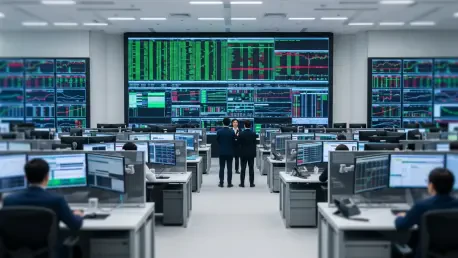
The divergence we see between SK Hynix’s 9.61% gain and Nintendo’s 6.63% drop is a classic tale of two tech sub-sectors moving in opposite directions under different pressures. While SK Hynix is feasting on the massive, almost desperate appetite for high-end memory chips, Nintendo is feeling the cold bite of consumer hesitation after announcing Switch 2 price hikes and bracing for a decline in console sales. Investors should keep a hawk-like eye on “book-to-bill” ratios for semiconductor firms and “inventory turnover” metrics for consumer electronics to spot these pitfalls before they lead to a sharp sell-off. The sensory reality of the trading floor right now is one of hyper-specialization; being “in tech” is no longer enough to guarantee safety. You must be positioned in the specific segments that provide the essential infrastructure of the future, rather than those vulnerable to discretionary spending cuts.
U.S. futures are currently sliding despite a multi-week rally in the S&P 500 and Nasdaq. Given the rising tensions in the Middle East, how can institutional investors protect their gains, and what are the trade-offs of shifting toward safer assets in this high-inflation environment?
Watching the S&P 500 and Nasdaq break their six-week winning streaks as futures slide by 0.3%—or about 143 points for the Dow—is a sobering reminder that geopolitical gravity still exists. Institutional investors are currently looking to lock in the substantial gains from last week’s 4% Nasdaq rally by rotating into defensive postures like treasury inflation-protected securities or gold. However, the trade-off is significant; shifting toward “safe” assets often means sitting on the sidelines during the sharp, volatile recoveries that characterize modern markets. There is a palpable tension among fund managers who fear the “inflation tax” on cash while simultaneously dreading a further spike in energy costs that could derail the broader economy. To survive this, many are employing “barbell strategies,” holding onto high-growth tech like SK Hynix while balancing it with heavy positions in energy-resilient utilities.
What is your forecast for global energy markets?
My forecast is that we will see a sustained “war premium” on prices, with Brent crude likely testing even higher ceilings if the diplomatic impasse over the Strait of Hormuz persists. With West Texas Intermediate already hovering near $98.65, the pressure on global supply chains will force a much faster transition toward grid reliability and renewable solutions that are decoupled from Middle Eastern geography. Expect a bifurcated market where energy-secure nations thrive while those dependent on vulnerable maritime bottlenecks face a grueling period of economic recalibration and high gas prices. The energy market is no longer just about supply and demand; it has become a theater of geopolitical leverage where the cost of a barrel is determined as much by social media posts as by the actual flow of oil. Until we see a definitive breakthrough in the upcoming China summit, the trend line for energy costs remains tilted toward the upside.